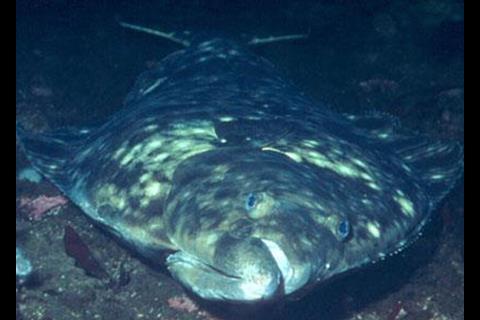
Halibut is one of the most prized commercial fishery resources in the North Pacific Ocean because of its high market price and large size. But west coast North American fishermen believe their future is being threatened by circumstances seemingly beyond their control.
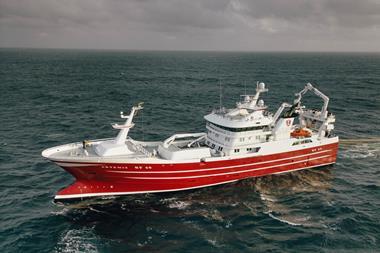
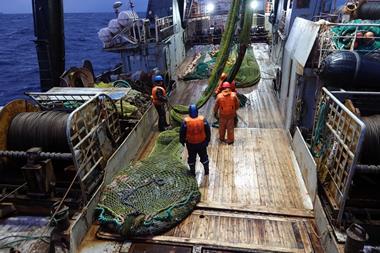
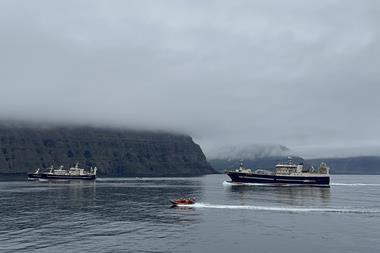
Pacific halibut (Hippoglossus stenolepis) fisheries have long been sustainably managed through a treaty between the United States and Canada, which follows the recommendations of the International Pacific Halibut Commission (IPHC), and yet young halibut are becoming increasingly vulnerable to capture by the expanding fleets of overseas bottom trawlers that are fishing in the north east Pacific.
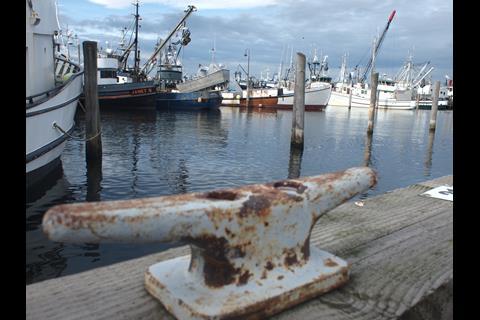
On a recent visit to Seattle’s Ballard Port to learn more about the commercial halibut fishery, WF was told these foreign trawlers were threatening the long-term viability of the west coast fleet.
“This is a well-managed fishery but big trawlers catch in a day what we catch in a month,” said Seattle fisherman Brian Harber. “The problem is they catch everything. Bycatch is a very big issue and these trawlers are a huge worry for us.”
Mr Harber, a deckhand on one of Seattle’s 100-or-so commercial hook-and-line halibut and black cod boats, has some $300,000 (€207,624) of quota, and he’s fiercely protective of his investment.
Jeremy Brown, a fellow fisherman and a member of the Bellingham-based Seafood Producers Co-op, which processes and markets halibut and black cod (known also as sablefish) as well as wild salmon caught by its 500 members, also confirmed trawlers “are the biggest threat” to the halibut-catching sector.
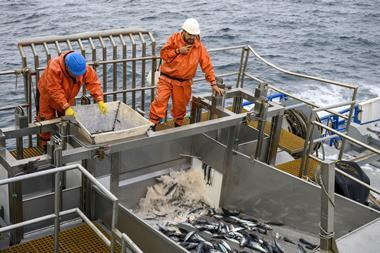
There is a ban on retaining any halibut caught using nets in the Pacific fishery. This is because the mesh-size of the gear used in the commercial trawl fishery – while well suited for the capture of flounder, cod and other groundfish – tends to catch an unduly large number of young halibut. Such halibut have not reached their optimum or best harvesting size, said Mr Brown.
IPHC research programme manager Greg Williams said the huge draw for the trawlers is not the halibut but the vast quantities of pollock that are caught on those grounds. And yet the downside is they “incidentally” catch a lot of halibut, he said.
The halibut resource has been exploited for centuries, while the first records of it being commercially exploited date back to the 1880s. The IPHC, which was one of the first international fisheries organisations in the world to be established, was created in 1923 and has been managing the halibut fishery ever since from its headquarters in Seattle.
Up until the early I960s the commission mainly concerned itself with the commercial fishing of halibut and, according to Mr Williams, fostered a “wonderful” relationship with the fishing industry, which in turn saw the organisation as a means of keeping its fishermen’s livelihoods intact.
“We did a lot of research on the history of the species and looked at annual yields. But in the 1960s there was considerable growth of foreign fishing off the coast of Alaska and west coast Canada. That brought us the issue of bycatch – halibut being caught by other fisheries,” he said.
The arrival of the trawlers led to the start of international fisheries negotiations between the US, Canada and those other countries, including China and Korea. Meanwhile, these vessels’ bycatch of small, juvenile halibut quickly became a crucial concern for the North American halibut fishermen.
“By catching juveniles they were taking away valuable future resources,” explained Mr Williams.
The late 70s saw 200-mile limits introduced in the US and Canada and at that point in both countries federal agencies stated playing a bigger role in invoking fish management. But the bycatch problem hasn’t gone away; in fact it has been exacerbated by the increased catching efficiency of the pollock trawlers.
Question of sport
A further problem for the commercial halibut catchers is sport fishing. Recreational salmon fishing on North America’s west coast used to be huge business but as it declined sports fishermen looked for other opportunities and very quickly, halibut sport fishing became popular.
“Right now, we have a large sports fisheries harvest that is upwards of 10 million pounds (4,536t) annually,” said Mr Williams. “The commercial fisheries catch around 40 million pounds (18,144 t), so the allocation of resources between user groups has become a very important issue.”
IPHC is in charge of estimating how much halibut is available and sets limits on the commercial fishery harvest. However, regional councils have a different responsibility for the local government, such as managing the sports fisheries and so the commission has to work ever more closely with these councils to set regulations for sport allocations.
“The pie is only so big,” said Mr Williams. “There’s only so much halibut that can be caught each year.”
“We pride ourselves on our close co-operation with the fishing industry, and our role is to make sure there are adequate measures to sustain the fishery. We have to make sure the fish is there for the long-term.”
Falling quotas, natural cycles
At its 87th annual meeting in Victoria, BC, Canada, earlier this year the IPHC recommended 2011 catch limits totalling 41 million pounds (18,629t) to the governments of the US and Canada. This represented an 18.9% decrease from the 2010 catch limit of 50.7 million pounds (22,984t).
The decline of the stock – due to both natural drops in recruitment, lower growth rates, and higher than target harvest rates in most areas – motivated this change in the recommendations, said IPHC. The season started 12 March and will end on 18 November.
“We weren’t very popular when we announced those cuts,” conceded Mr Williams. “But we felt it was necessary to help stocks rebound. We hope the decline is bottoming out but only time will tell.”
IPHC does not collect economical data, but Mr Williams told WF a “ballpark figure” for the value of the commercial halibut fishery last year was $200m (€138.4m). He added that there are less than 2,000 hook-and-line fishing boats in the commercial halibut fleet, including about 1,200 in Alaska, 430 in DC and around 100 in Seattle.
“Right now the resource is in a bit of a decline. Ten years ago the quota was 100 million pounds (45,359t), of which 74 million pounds (33,566t) was caught. We’re now down to a TAC of 74 million pounds and the commercial fishery catches 41 million pounds of that – all to be caught hook-and-line,” said Mr Williams, who highlighted that as well as this year’s 10 million pound sport, there will be a further 1 million pounds (454 t) “subsistence” and 12 million pounds (5,443 t) of bycatch.
“We’re confident the decline is part of a natural cycle of the resource,” he said. “One of the advantages the IPHC has is its data goes back to 1923, and even preceding that. This information tells us the health of the resource and what it looked like through the years from a size and age perspective.
“Back when I started with the commission in the 1970s we had a commercial quota of just 26 million pounds (11,793t), much lower than it is right now. But back then the fish were much larger, with a greater average weight. In more recent years there has been a declining growth rate – halibut are definitely smaller for their age now than back then.”
Reasons for this marked fall in average weight include food availability and decline, competition with other fish species for habitat. The same aged fish that weighed 30 pounds (13.6kg) 20-30 years ago are more like 18 pounds (8.2kg) today. The growth rate has even slowed down to the point whereby some of the males will not reach the 32-inch minimum landing size in place for the commercial fishery.
“It is a natural, cyclical thing and we fully believe it will come back, but halibut is a slow-growing species. The commercial fishing fleet is probably catching fish that are as much as 35-40 years of age. These fish can reach weights of 400 pounds (141.4kg).”
In March, the first landings from the new commercial halibut season were met with typical fanfare and the prices being paid on local markets were extremely high – halibut is at its highest value when it’s fresh.
Big bucks, future generations
Under the Halibut and Sablefish Individual Fishing Quota (IFQ) Program, introduced in 1995, fishermen are today getting 10 times the price that they were in the old olympic/derby system.
“We’re making more money but catching less,” said Mr Harber. And yet no-one is getting rich – fuel costs more than $1,000 (€692) per trip and whilst the halibut fishery was Marine Stewardship Council (MSC) certified along with black cod some six years ago, the fish are not achieving higher prices than uncertified catches.
From an industry perspective, the main thing IFQ has brought is a more responsible approach to fisheries management, which is apt as when Alaska became a state in 1959, seafood sustainability was written into its constitution.
“It’s changed significantly,” explained Mr Harber. “The old ‘derby-style’ fishing season, when we were all out fishing hard on the first day of the season spoiled the market. It wasn’t good in terms of waste or for the environment, and factories were inundated with fish. Since the change over to IFQ, a good fresh market has been created, along with a strong processing industry.”
It is today, as any stakeholder will testify, a very well managed fishery. But beyond this is the amazing ownership the fishermen demonstrate towards the halibut. They take the role of stewards very seriously and are determined to protect their way of life and this iconic fish for their children and grandchildren.
As a fishermen’s leader told WF, these proud catchers have created a legacy. This explains why fishermen Harber, Brown et-al are so concerned by the super trawlers who are inadvertently undermining the west coast halibut industry.