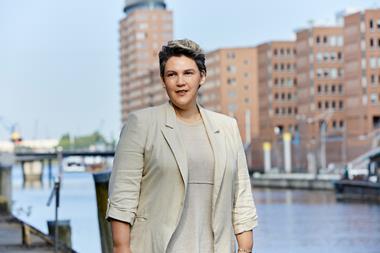



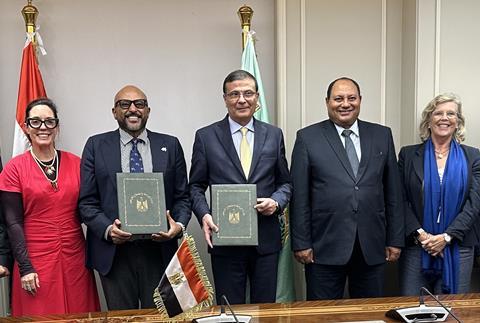
Egypt’s Minister of Agriculture and Land Reclamation Alaa Farouk renewed the agreement to continue hosting WorldFish in a move that seals Egypt’s pivotal role on the African continent as a leading producer of aquatic foods and a hub for cutting edge research in sustainable aquaculture development.
Hosted since 1997, the international research centre for aquatic food systems, WorldFish has been an integral part of Egypt’s journey in becoming a powerhouse of aquaculture production, increasing it 12-fold in 25 years and opening an avenue for job creation, income generation and economic growth in the country.
“It is important for Egypt to drive more investments in its aquaculture sector in Egypt and Africa. In working with WorldFish, we can develop an integrated action plan for developing the sector, as the centre brings scientific expertise that can raise the efficiency of producers and help Egypt’s producers achieve global standards, necessary to connect to foreign markets,” Farouk said at the signing ceremony, held 4 December 2025 in Cairo.
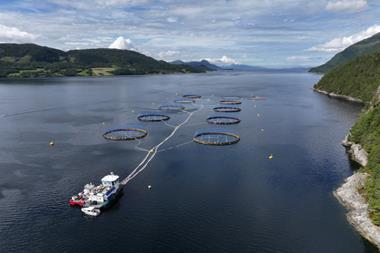
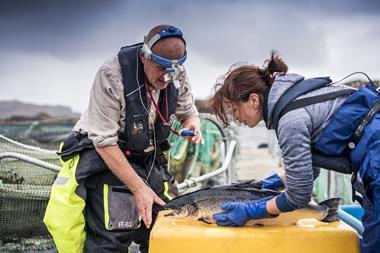
At the heart of Egypt and WorldFish’s collaboration is WorldFish’s Abbassa Research and Training Centre, a hub for climate-smart aquaculture research, training and capacity building. The centre leverages a systems approach, focusing its research on enhancing Nile tilapia performance, feed, fish health and strengthening the market systems, so they are inclusive of women.
A breakthrough innovation from the centre has been the Abbassa strain of Nile tilapia that reduced environmental impact by 36% while growing up to 28% faster, enabling Egypt to sustainably intensify its fish production. Today, the Abbassa strain is providing a solution to develop aquaculture in arid regions.
“WorldFish is honoured to be hosted by Egypt for another 25 years, cementing our longstanding collaboration. WorldFish is committed to work with Egypt and to bring its cross-cutting scientific expertise that can help the country and the wider region unlock the many benefits of sustainable aquaculture and related value chains—strengthening nutrition, women empowerment and economic growth,” said Dr Essam Yassin Mohammed, WorldFish Director General.
Under the newly-signed agreement, Egypt will continue to host the Abbassa Research and Training Centre in Sharqia Governorate for another 25 years, where WorldFish works to both advance research and strengthen research capacity in the region to promote sustainable development of fisheries and aquaculture sector in the African region.
Since 1999, through Abbassa, WorldFish, in collaboration with the Egyptian International Centre for Agriculture and the Soy Excellence Centre of the US Soybean Export Council, has delivered training programmes, reaching over 15,000 stakeholders from over 100 countries, including women retailers, youth, extension officers, and farmers.
Future plans for Egypt-WorldFish collaboration include aiming to continue the genetic improvement of tilapia and reaching 35% of tilapia farms with the improved Abbasa strain, sustainable and cost-effective fish feed, renewable energy technologies in the fish value chain, and certification of fish farms for export requirements.
Studying the impact of climate change on the sector and the application of biosecurity measures with national authorities are also on the agenda to ensure the sustainability and quality of farmed fish production.