




EXCLUSIVE: Nanoantibodies offer new sea-lice hope
Hamburg-based biotechnology company AquaNab is developing a feed-based nanoantibody technology aimed at tackling sea lice, one of the aquaculture industry’s most persistent and expensive challenges.

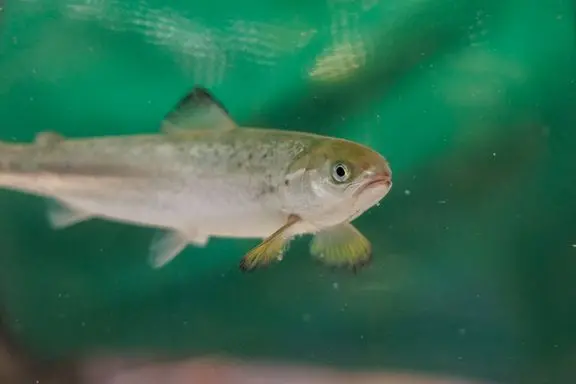
Backed by Finland-based Nordic Foodtech VC, AquaNab says it is the first company to apply alpaca-derived nanoantibodies through fish feed. The company has demonstrated that its nanoantibodies, known as AquaNabs, can cross the intestinal barrier of Atlantic salmon and become available in the fish’s bloodstream.
The company is now moving towards efficacy testing against sea lice, with chief executive and co-founder Dr Ruth Tamara Montero describing the programme as a progression from laboratory proof-of-concept towards larger validation studies.
“Currently, we are producing nanoantibodies against sea lice and are showing very good reactivity with different sea lice targets,” Montero said. “Working with nanoantibodies and oral delivery is not an easy task.”
Proof-of-concept
She said the company’s proof-of-concept programme was built around three key milestones, two of which have now been achieved.
“So far, we have demonstrated that orally delivered nanoantibodies can be taken up through the gastrointestinal tract and become systemically available in salmon,” Montero said.
“We have also generated and characterised the first nanoantibodies targeting sea lice with very good results. Efficacy testing is starting in the upcoming weeks.”
She added: “We are currently advancing from laboratory proof-of-concept toward larger validation studies.”
Sea lice are estimated to cost the aquaculture industry around US$4 billion each year through treatment costs, lost production and fish mortality. Existing control methods include chemotherapeutic treatments delivered through medicated feed or baths, as well as mechanical and thermal delousing.
While these approaches can reduce parasite burdens, they can also present challenges involving resistance, environmental impact and fish welfare. Mechanical treatments, in particular, can require repeated handling of fish, potentially causing stress and physical damage.
No need to change existing infrastructure
AquaNab says its technology is intended to complement existing sea-lice management rather than require major changes to farm infrastructure.
“We envision AquaNab as a next-generation integrated sea lice management solution,” Montero said.
“Our nanoantibody-based technology is specific, therefore increasing effectiveness. Furthermore, it is designed to fit into existing production systems and complement current prevention and treatment strategies, without requiring major infrastructure changes or creating a high additional operational burden for farmers.”
On cost, she said: “We will reach the market with competitive prices.”
The company says its approach could offer a biological alternative as the aquaculture sector faces increasing pressure to improve sustainability and animal welfare. However, regulatory approval remains a key step before commercial deployment.
“Regarding regulation, AquaNab is a protein-based biological solution — Precision Immunotherapeutics for Aquaculture, PIA,” Montero said. “With the product claims we planned, AquaNabs against sea lice will be categorised as VMP.”
“As with any novel biological product, regulatory pathway is a journey in itself, however, we are already in contact with relevant authorities to optimize the process to make our product available in the shortest term possible to the farmers.”
Sustainable
Environmental effects are also being assessed. Montero said the company expects the protein-based technology to be biodegradable and highly specific, limiting persistence beyond its intended application.
“AquaNab’s nanoantibodies are designed to be highly specific and biodegradable,” she said. “The nanoantibodies are selected to recognise defined molecular targets associated with the pathogen rather than broadly affecting biological processes in the host or other organisms.”
The company is assessing binding specificity and cross-reactivity, while also examining the stability and degradation of the nanoantibodies after feed delivery and under relevant environmental conditions.
AquaNab was co-founded by Montero, chief scientific officer Dr Alejandro Rojas Fernandez and Gunnar Johildarson. Rojas has previously worked on neutralising nanoantibodies against SARS-CoV-2 and other viruses.
The company’s lead programme is being developed for Atlantic salmon, but AquaNab says its platform could ultimately be adapted to bacterial, viral and parasitic diseases affecting other aquaculture species.
Nordic Foodtech VC’s investment is its first outside the Nordic region. AquaNab is now seeking additional investment while expanding collaborations with salmon producers, feed manufacturers and animal health companies to advance its technology towards commercialisation.
Related Articles
 AQUACULTURE
 AQUACULTURE
 AQUACULTURE