



The Center for Aquaculture Technologies (CAT) has signed an exclusive licensing agreement with the University of Maryland, Baltimore County (UMBC) to commercialise two patents covering Morpholino-based sterility induction in finfish — a development the partners say could accelerate the next generation of sustainable breeding technologies.

Announced on 24 November 2025, the agreement strengthens CAT’s intellectual property portfolio as it scales up genome-editing solutions aimed at improving production efficiency, environmental safeguards and animal welfare in aquaculture.
Sterility is an increasingly important area of innovation for the sector. Preventing sexual maturation can improve feed conversion, support faster growth, reduce stress and mortality, and protect wild stocks from genetic introgression in the event of escapes. CAT CEO Dr John Buchanan said sterility will be a cornerstone of responsible genome editing as global demand for protein rises.
“Our partnership with UMBC allows us to bring pioneering sterility technology closer to commercial reality,” Buchanan said. “With a growing global population to feed, sustainable aquaculture solutions have never been more critical.”
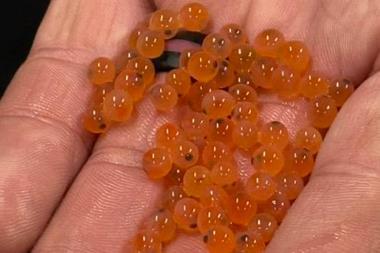
The patents licensed by CAT focus on the use of Morpholinos — antisense molecules already approved by the FDA for treating Duchenne muscular dystrophy — to silence genes essential for germ-cell development. Delivered via bath immersion at the embryo stage, the method produces fish that grow normally but remain sterile, without the performance drawbacks sometimes associated with triploidy.
UMBC researchers Dr Yonathan Zohar and Dr Ten-Tsao Wong said the collaboration, which includes a sponsored research agreement, aims to achieve 100% sterility in Atlantic salmon and could be applied across finfish species.
“This agreement can accelerate our efforts to expand this technology to produce sterile fish,” Wong said. “We look forward to collaborating with CAT to bring this technology to market.”
CAT says the Morpholino platform is complementary to its genome-edited sterility programmes, offering a rapid, flexible option for species with long breeding cycles or for producers not using genome editing.
“Sterility is a critical issue for the aquaculture industry,” Buchanan added. “This gives us another reliable tool we can call on.”