




Scottish salmon farming innovation drive nears £200m
Innovation investment in Scotland’s salmon farming sector has climbed to almost £200 million over the past eight years, underlining the scale of technological change underway across the industry, according to a new independent review.
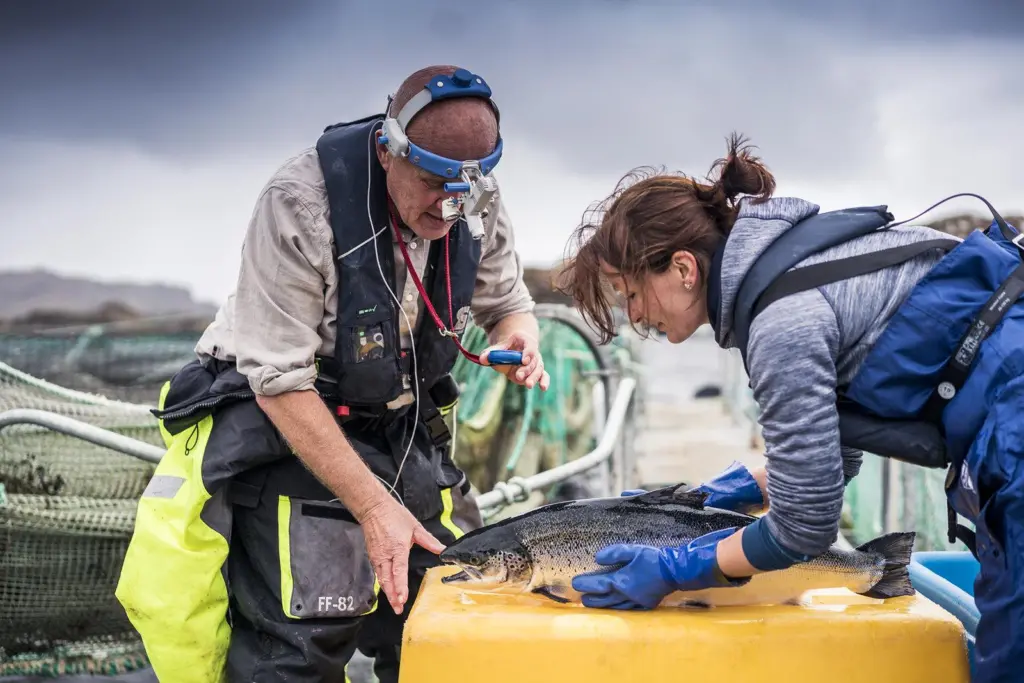
The analysis, carried out by consultancy Frontline and commissioned by the Sustainable Aquaculture Innovation Centre (SAIC) and trade body Salmon Scotland, found that 268 publicly-supported projects worth more than £183 million have been delivered since 2018. The figure excludes initiatives funded entirely by companies, suggesting total investment in innovation is significantly higher.
The review concludes that innovation activity now spans every major area of salmon farming, with a strong emphasis on fish health and welfare. More than £83 million has been directed towards vaccines, diagnostics, welfare tools and disease prevention, alongside substantial investment in sea lice management, including biological controls, new treatment technologies and AI-enabled detection systems.
The findings have been welcomed by the Scottish Government, which has backed aquaculture innovation for more than a decade. Cabinet Secretary for Rural Affairs Mairi Gougeon said the report demonstrated the value of long-term public investment in “world class aquaculture science” and highlighted the sector’s ability to adapt to a changing marine environment.
Frontline Director Dr Suzanne Hamilton said the review showed how research funding was increasingly translating into practical outcomes for farms. However, she cautioned that innovation often takes years to deliver full impact and warned that a more uncertain funding landscape ahead could slow progress unless targeted support continues.
Genetics and breeding have also emerged as a major focus. One of the largest initiatives highlighted is the £8.5 million BBSRC-funded Drivers of Salmon Robustness programme, delivered with Mowi Scotland and the Roslin Institute. The project aims to breed salmon that are more resilient to farming challenges and is already producing tools to identify high-performing fish and improve health and welfare outcomes.
Across the companies interviewed for the study, 88% said employment would have been lower without innovation activity, while 76% reported turnover would also have been reduced. Much of the work has been carried out in partnership with Scotland’s universities, covering faster disease detection, improved breeding strategies and enhanced environmental monitoring.
The review also points to barriers that can slow adoption, including short-term funding cycles and lengthy regulatory processes, which can make it harder to trial and scale new technologies quickly. It calls for longer-term support and faster routes to testing if the current momentum is to be maintained.
Among the projects highlighted is WellFish Tech, a spin-out from the University of the West of Scotland, which provides rapid, AI-driven blood diagnostics to help farmers monitor fish health, with results returned within 24 hours.
Further investment is on the horizon, with a £17 million national aquaculture technology hub due to open this year at the University of Stirling.
Dr Iain Berrill, Head of Technical at Salmon Scotland, said the review demonstrated the scale of innovation now embedded in the sector, particularly in fish health, welfare, breeding and environmental monitoring. Sarah Riddle, Head of Research and Innovation at SAIC, added that the breadth of activity highlighted Scotland’s position as a global leader in aquaculture, while stressing that continued strategic support would be essential to sustain competitiveness and resilience in the years ahead.
Related Articles
 AQUACULTURE
 AQUACULTURE
 AQUACULTURE