




Pressure mounts over Chausey habitats
Environmental groups have called on French and European authorities to strengthen protections for fragile marine habitats around the Chausey archipelago, warning that rare maerl beds remain at risk from bottom-towed fishing despite existing conservation designations.
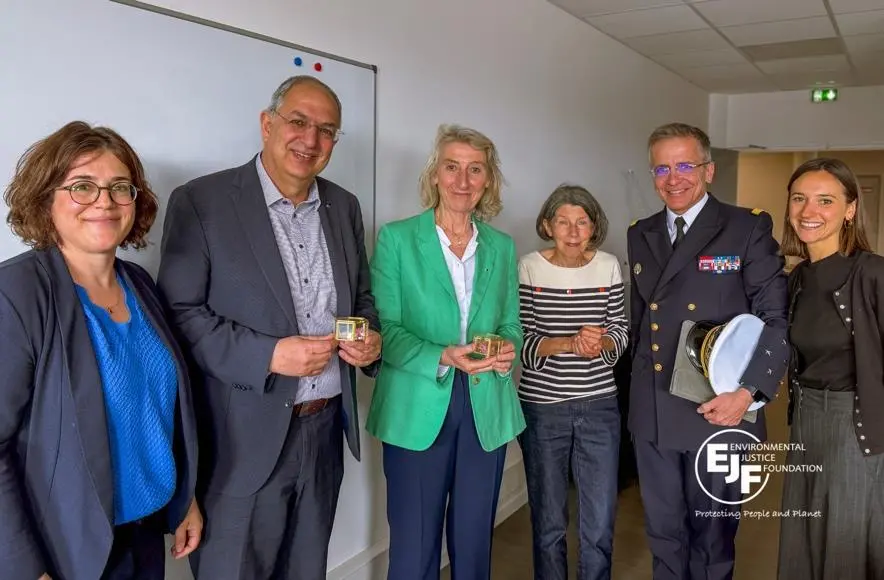
Representatives of Manche Nature and the Environmental Justice Foundation (EJF) raised their concerns during a meeting on 9 June with EU Commissioner for Fisheries and Oceans Costas Kadis and France’s Minister for the Sea and Fisheries, Catherine Chabaud.
Also attending were Marc Chappuis, Prefect of Manche, Benoît de Guibert, Maritime Prefect for the English Channel and the North Sea, and Stéphanie Yon-Courtin, Member of the European Parliament and vice-chair of the Committee on Fisheries.
“Protecting maerl is not just about protecting marine biodiversity,” said Laura Touvet, president of Manche Nature. “Preserving marine nurseries today means safeguarding the resources, livelihoods and food security of tomorrow.”
Marie Colombier, campaign lead at EJF, added: “Socio-economic considerations must naturally be taken into account, but they should above all guide the support needed for necessary transition, not be used to weaken protection measures where significant risks to protected habitats have been identified.”
“Protecting maerl beds is not about choosing fishing against conservation. It is about protecting the habitats that underpin the productivity of fisheries.”
READ MORE: Protected seabeds see life return
During the meeting, the organisations presented a sample of maerl, a slow-growing coralline algae often referred to as the ‘pink treasure’, to highlight both the ecological importance and vulnerability of the habitat found beneath the waters of the Bay of Mont-Saint-Michel.
Maerl beds and seagrass meadows act as vital marine nurseries, supporting more than 1,000 species and providing feeding, spawning and shelter grounds for commercially important stocks including scallops, lobsters, sole and clams. However, environmental groups argue that these habitats can be destroyed within minutes by bottom-towed fishing gear despite taking centuries to develop.
The discussions took place as France conducts a fishing risk assessment across marine Natura 2000 sites to evaluate the impacts of fishing activities and determine future management measures.
Related Articles
 FISHERIES
 FISHERIES
 FISHERIES