



Scotland’s fishermen should receive long-term compensation when offshore wind developments restrict fishing grounds, damage businesses and threaten livelihoods, according to the Scottish Fishermen’s Federation (SFF).
The federation’s call follows comments by Scottish Government Minister for Europe, External Affairs and Energy Stephen Gethins, who said people affected by major energy infrastructure should be ‘properly compensated’.
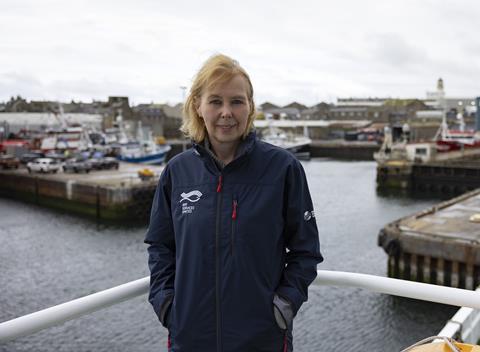
Elspeth Macdonald, chief executive of the SFF, said the principle should apply equally to Scotland’s fishing industry.
“The principle the minister has set out is an important one: where people are directly affected by major energy infrastructure, they should be properly compensated,” she said.
“That principle cannot stop at the shoreline.”
The SFF says Scottish Government analysis indicates offshore wind development could have significant, long-term negative impacts on the fishing fleet, including reduced access to productive grounds.
“If it is right to compensate somebody because major energy infrastructure changes the landscape around their home, it must also be right to compensate people and businesses when that infrastructure directly affects their ability to earn a living,” said Macdonald.
The federation is calling for a moratorium on further offshore wind consents until impacts on fishing have been fully assessed and workable compensation arrangements agreed.
It says compensation should reflect genuine losses and help ensure Scotland’s fishing fleet remains viable and profitable as increasing areas of sea are allocated for energy development.
The campaign has received public support, according to national polling commissioned as part of research into perceptions of the fishing industry. Some 65% of respondents agreed that further offshore wind approvals should be paused until impacts on fishermen are assessed and compensation arrangements established.
Meanwhile, 79% supported requiring energy companies to provide fair compensation where developments restrict fishing grounds or cause financial losses.
“This is not about opposing renewable energy,” added Macdonald. “It is about making sure Scotland’s transition is fair, properly planned and does not sacrifice one established and sustainable industry in order to build another.”
The SFF says fishermen should not face permanent economic losses while arrangements to recognise and compensate those impacts remain unresolved.