




Black Sea oyster renaissance
Ukraine, Russia, and Georgia harbour plans to expand oyster production in the Black Sea, eyeing not only domestic but also international markets
The Black Sea has a long history of oyster production. In the early 20th century, three industrial oyster farms operated in Crimea and on the southern shores of mainland Ukraine. Together with its wild oyster catch, Ukraine produced up to five million oysters per year.
Extensive catches at the end of the 19th century depleted oyster resources, leading several businessmen to launch the first oyster farms in the Russian Empire. Those farms failed to survive the Russian Revolution, and oyster production in this corner of the world came to an end.
“Ukraine has to return to its fame of oyster supplier to the world’s market,” said Alexander Kornienko, leader of the governing political party Servant of the People. “Ukraine can become the world’s leader in the production of some aquaculture species, including oysters. During the times of the Russian Empire, southern Ukraine exported aquaculture products all around the world. Now, the country must become an oyster giant again.”
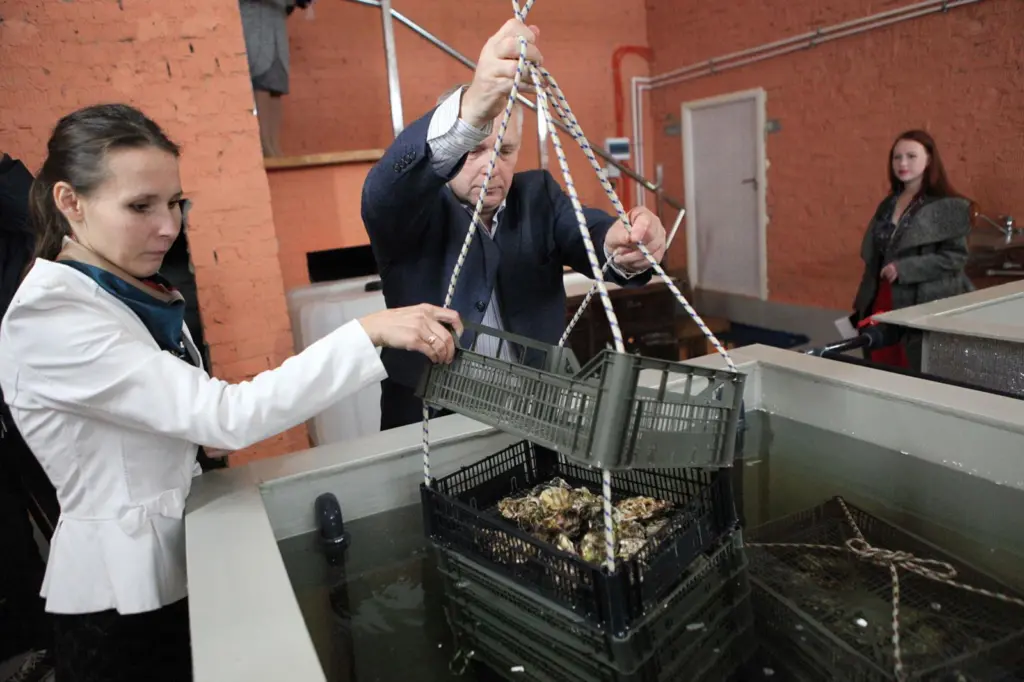
This statement was made during a visit to a private oyster farm in the Mykolaiv region, believed to be the only industrial oyster producer in mainland Ukraine currently in operation. The farm was founded by a private entrepreneur Andrey Pigulevsky, who has become a trailblazer of oyster production in Ukraine, launching his farm with the capacity of 16 to 17 tonnes per year in 2016. However, growing oysters in the Black Sea appeared to be a challenging business.
“When a storm comes, all the bags are scattered, or they are being stolen [by locals]. Or you buy juvenile oysters, plant them, and after three months they die, and you can’t say why,” he said, adding that despite the difficulties, he aims to double oyster production every year and launch export in the foreseeable future.
“Neighbouring countries have a strong interest in our product. And we are still the only commercial supplier of Black Sea oysters,” Andrey Pigulevsky said.
Several companies announced plans to launch oyster production in Ukraine in recent years, but none have yet been implemented.
Forbidden Crimean oysters
The real oyster boom is currently in Crimea, even though the peninsula is still subjected to the strictest Western sanctions, which effectively prohibit foreigners from buying or selling anything to the region, let alone investing in local production.
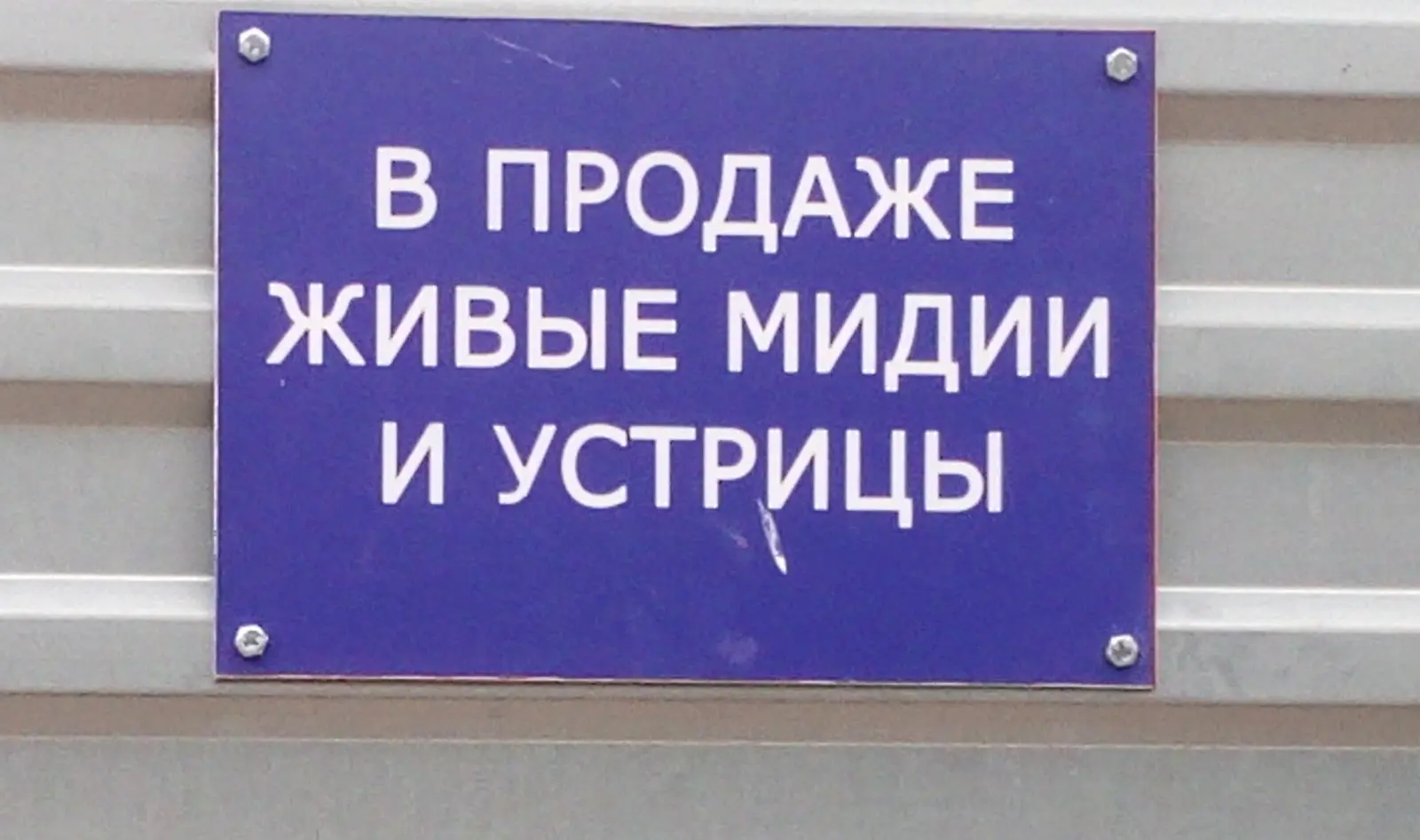
“In 2021, we expect production of mussels and oysters to reach 1700 tonnes,” said Andrey Ryumshin, Crimean Agricultural Minister, adding that Crimea is supplying oysters to not only local hotels and restaurants but also to Moscow, St. Petersburg, and other Russian cities.
Speaking during a press conference last month, Ilya Shestakov, director of the Russian Federal Agency for Fisheries, said that for the first time, Russia had become self-sufficient in oysters to an extent thanks to the Crimean farms.
In 2020, the combined production of oysters and mussels in the peninsula reached 1577 tonnes, 11% up compared to the previous year, Andrey Ryumshin estimated. However, with domestic oyster production close to matching demand, there is a question of how to keep increasing sales. Crimea has plans to export oysters, but the list of potential sales markets so far is limited to Russian political allies: Kazakhstan, Armenia, and Belarus.
Black Sea oysters are projected to compete on the global market even with those from France, as local farmers are confident their products can taste even better.
“Oyster flavour may vary depending on the habitat. Our shellfish tastes better than those caught in the Mediterranean. And this is not our statement. We have repeatedly participated in various harvest and wine festivals, where the French and Italians, who we met there, noticed that our oysters were more tender and tasty,” said Sergey Grishchenko, chairman of the Crimean Aquaculture Association.
Crimea’s water salinity is 17 permille – exactly the same as in France – believed to be ideal for oysters. However, Crimean farmers reportedly struggle with a lack of equipment and technology, which remain unobtainable due to sanctions – although this problem is not recognised officially. These same circumstances could limit development of exports – but not everyone agrees.
“You just need to open an office in Krasnodar Krai, and you are not subjected to the European sanctions, no matter where your production is located,” commented a source in the Russian aquaculture industry who wished not to be named, adding there are some well-known strategies to bypass restrictions.
“Nobody checks. You keep quiet and don’t attract too much attention. Quite a few Crimean companies use this approach to avoid sanctions these days, and I don’t see why oyster farmers can’t do the same. Nobody can tell for sure in which region of the Black Sea oysters were grown,” he added.
Georgia keeps up
In Georgia there is one oyster farm in operation, with government plans to expand this industry.
Launched in 2020, Mariculture Georgia runs an offshore oyster farm with a processing plant in the Adjara region and a freezing facility in Tbilisi. The company took advantage of a soft loan provided by the government of 470,000 lari ($150,000).
“Georgia has great potential in developing both aquaculture and mariculture. This potential must be maximised. Mariculture Georgia has taken the first steps,” commented Georgian Agriculture Minister Levan Davitashvili.
The farm covers 70 hectares, producing 30 tonnes of mussels and 10-15 tonnes of oysters per season.
Live products are sold from May to October. During the rest of the year, the company sells frozen production. The company is also forming export plans, with its eye on Azerbaijan, Russia, Hong Kong, Canada, and Ukraine.
“For more such successful projects, it is necessary to continue allocating state support [to aquaculture companies],” Levan Davitashvili said, adding that the government plans to design an integrated approach to boost industry development.
Mounting scepticism
Oyster farming has become a trendy business in the post-Soviet space. However, there are concerns, given the limited export prospects and low demand on local markets, that prospects could be enormously overrated.
“Salmonids and crustaceans grown in the Black Sea will be more in demand on the Russian market than mussels and oysters,” said Efim Kozhurin, head of the Azov-Black Sea branch of the Russian fish industry institute VNIRO.
“Salmon, shrimp, and other crustaceans are enjoying the strongest demand on the Russian market [among all aquaculture species],” he said, adding that the import of shellfish is very low, indicating a lack of consumer interest.
A Russian mariculture farm sells on average only 60% of all products, Efim Kozhurin said, adding that in general, Russia achieved substantial progress in developing fish farming in recent years, but now farmers must think about what species they want to produce and what the market needs, not least with the shrinking purchasing power of Russian consumers.
More than 80% of Russians are believed to have never tasted oysters, and most of them are not planning to, and the wealthiest consumers tend to opt for imported products – so, despite the optimism, there may be limits to the future of a Black Sea oyster industry.
Related Articles
 PROCESSING & REFRIGERATION
 PROCESSING & REFRIGERATION
 PROCESSING & REFRIGERATION