


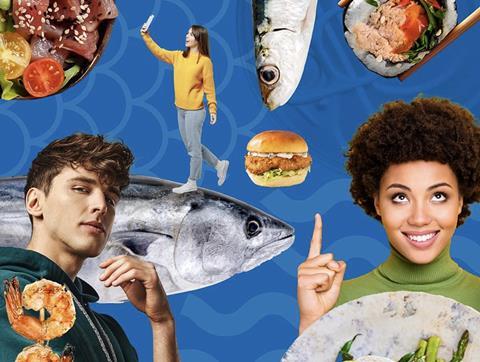
Not only are young consumers less likely to choose seafood over other food groups, it’s also been ascertained that as a demographic they are moving out of the category faster than any other consumer group. This unwelcome trend was recognised at the 2025 Seafood Futures Forum, held at the Seafood Expo Global, hosted by the Marine Stewardship Council (MSC), which heard it’s not a dislike of seafood that’s putting them off in their droves, instead, the departures are being driven by a lack of confidence in both the selection and preparation of products, together with an overwhelming amount of alternative purchasing options.
“Every single day we’re presented with choose this versus this. You go to a grocery store, there’s new products every time, and making decisions on how you’re sourcing and what you’re feeding yourself or doing for yourself has become much more challenging,” Chef, content creator and MSC ambassador Charlotte Langley said.
“I would also say it’s a category or sector that’s harder to feel confident in the kitchen with. You know, if you’re looking at a tuna steak, it has a high value that you spend money on. You put your dollars in that product, but if you mess it up, make a mistake, overcook it or forget about it at the back of the fridge, you are not going to be as keen to go back for that product again.”
Establishing confidence and engaging consumers is an increasingly important part of the strategy for UK fish supplier New England Seafood International (NESI), owned by Sealaska, a for-profit Alaskan Native Corporation.
“Our brands do a good job of that,” NESI Head of Marketing Lisa Cowell told the forum. She gave the example of “Fish said Fred”, launched five years ago and named after the company’s founder Fred Stroyan with the intention to take the risk and confusion out of buying fish.
“Fish Said Fred is all about wrapping our arms around consumers, showing them how quick and easy it is to cook with seafood,” Cowell said. “We also work with influencers, chefs, and we do a lot through social media. We also work closely with retailers, bringing those stories to life at the fixture with recipe cards, things like that, to inspire consumers.”
Price over planet
Younger consumers are also being influenced in their decision-making by sustainability issues and are widely seen as being more environmentally-aware when it comes to buying products. Indeed, recent analysis from global insight consultancy GlobeScan and the MSC determined these demographics are most likely to take action to protect the ocean with 27% of 18-to-24 year-olds and 22% of 25-to-34 year-olds reducing their seafood consumption for this reason.
The survey of over 27,000 people across 23 countries also found that 9% of 18-to-24-year-olds and 6% of 25-34 year-olds have stopped eating seafood altogether, while over 70% of people in both age groups said they are prepared to do more for ocean protection. Furthermore, 33% of 18-to-34-year-olds were found to be eating less fish compared to two years ago, with just 12% eating more. Meanwhile, 39% from this age group are eating more vegetables, and 21% are eating more plant-based alternatives.
MSC also conducts regular surveys across some 20 markets, with part of the questioning tasked with ascertaining what could drive more seafood consumption. MSC Chief Communications Officer Ishbel Matheson said what comes through loud and clear in these findings is that for younger consumers, environmental issues and sustainability are important contributors. However, the studies also confirm these factors sit well behind cost and affordability, particularly in the current economic climate.
Sustainability is not the biggest draw at this time, Langley said, but added that the onus is on the producers of seafood products to create items that incorporate affordability and cost together with sustainable sourcing, transparency, traceability etc. so that consumers can just take them off the shelf and consume them without any misgivings.
“They may not even know that what they’re grabbing is a certified can of sardines. I’m doing that heavy lifting for them. I really feel that we have this opportunity to do the heavy lifting for the market and encourage [consumers] with deliciousness. [Then] branding, communication, education and all the things that we do very actively, budget depending, will encourage consumers to reach for something they trust and think is absolutely fabulous.”
The MSC label is key to that, she said. “It’s become so much more recognisable since I’ve been with the MSC, which has now been eight years…That label is a must have these days, and if you don’t have it, you’re behind.”
In Germany, cost is again the biggest driver of seafood sales, but among all consumer groups – especially Gen Z – sustainability features strongly among the biggest fears and interests, said Julius Palm, Deputy Managing Director at followfood, a German-based company that has grown from start up to a midsized brand through a combination of holistic sustainability and creative marketing.
It’s also found that while there’s a lot of interest in being more sustainable with natural resources in Germany and many other countries, there’s still a sizeable gap between good purchasing intentions and what consumers actually buy, Palm said.
As a result, the seafood category isn’t meeting its potential, he suggested.
“I think the mission should be to fill this gap and to realise that there is a cost issue.”
Palm continued: “As a brand, [followfood is] most of the time more expensive than other brands – we’re five times more successful than they are, even though we’re 15, 20, 30% more expensive. That’s because we’ve built a brand which gives the notion of, ‘you don’t need to worry at all – we have [taken] the responsibility, while you have the taste, the pleasure and the experience.’ This is why a label like MSC helps, because it checks all the boxes, so [consumers think], ‘okay, I don’t have to worry. I just buy followfood, and they cooperate with other good [organisations]. That’s what we’re trying to do, and what I think we all have to do, otherwise we won’t reach this potential.”
NESI’s own research has also determined that while environmental issues and saving the planet are of particular concern to younger consumers, these worries are being trumped by the soaring cost of living, Cowell said. Added to this, there’s the significant issue of mixed messages in the consumer space, she said, insisting that as an industry, seafood is still not doing a great job of delivering consistent communications.
“Consumers are bombarded every day with a whole host of messages, and they are not really sure what to believe.
“We do see it as our role to tell these messages. For our brands, storytelling and giving these messages in a way that engages consumers is really important.”
Campaign power
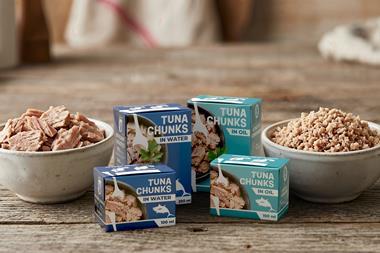
Awareness campaigns such as “Check Your Cans”, developed by Langley and MSC and recently launched in Australia to urge consumers to take a closer look at the canned tuna they are buying to ensure they are living up to any environmental claims that they make, and also the so-called “Dolphingate” campaign of five years ago, led by followfood, which saw a fake baby dolphin eaten by an influencer have been successful in raising awareness and promoting sustainable seafood, heard the forum. It was also highlighted that younger consumers look to get their information about brands and products in a completely different way, with platforms such as Tiktok proving especially popular.
To capitalise on these, Langley has created an advisory youth board of people aged 25 and under.
“They’re excited about sustainability. They’re talking about messaging. They’re guiding my decisions based on what they see and feel and how they want to interact with the medium of material. It’s actually very helpful,” she said.
Followfood has taken a similar approach, and the way these campaigns are executed is very different from traditional marketing methods, Palm said.
“It’s fast. It’s cheap. Trends on Tiktok start today and they end the day after tomorrow, so you have to be quick in your actions. Our content looks totally different on Tiktok than it looks on Instagram, and that’s a challenge. But we are successful. For the last two years, we were the most successful food brand on Tiktok, and we’re not the biggest food brand in Germany.
“Others try to copy the things they did on other platforms, and it doesn’t work at all, and they don’t reach younger generations,” he added.
NESI’s work with of influencers and chefs is hugely important when engaging with an audience of under 27-year-olds, Cowell said.
“They have grown up not knowing a life without smartphones, Tiktok, Snapchat, etc. They interact and look for information in different ways from older generations and they are more likely to believe content that they see online versus an older generation.
“[For them], we’re developing recipes which are easy to recreate at home, and ultimately, we’re providing that inspiration,” she said.
Convenience on-trend
From a product perspective, to have the best chance of retaining younger consumers, seafood producers should embrace the convenient cuisine trend, with quick, easy-to-make, delicious choices, suggested Langley.
Convenience is key, Palm agreed. “It’s one of the mega trends. Every year, it’s the new trend, and it stays for the year, so the convenience level rises and rises and rises.”
Health also offers significant scope for growing the seafood category, he said.
“Especially after Covid, we’ve seen a change of perception, where saving the world as a consumer is too complex and too overwhelming for a lot of people and so the motives have changed in the direction of ‘what’s in it for me,’ – more egoistic motives than altruistic world community motives. And so, sustainability issues are reaching more towards health, personal health and individual health content. In Germany, we see it a lot that health issues are get much more reach than classic ecological sustainability issues.”