



Op-Ed: Electronic monitoring revival shows we can still do hard things
This time last year, we were stuck. It seemed our once-energetic, innovative, tuna-centric community was still trying to shake off the gumption-deadening malaise of the 2020–2023 Covid-19 pandemic. After witnessing many years of progress toward global sustainability goals, I was so struck by this apparent loss of drive that I wrote a warning essay about what I saw: A widespread and alarming loss of urgency.
To drive my point home, I focused on one issue I consider the “poster child” of sustainability-enhancing technologies, onboard electronic monitoring systems (EMS). Quite bluntly, I called out a persistent failure to position electronic monitoring (EM) as the norm for ensuring independent observer coverage in the world’s tuna fisheries, despite technical advances in comparable fields and a drumbeat of science-based advocacy. Today, I’m happy to eat my words.
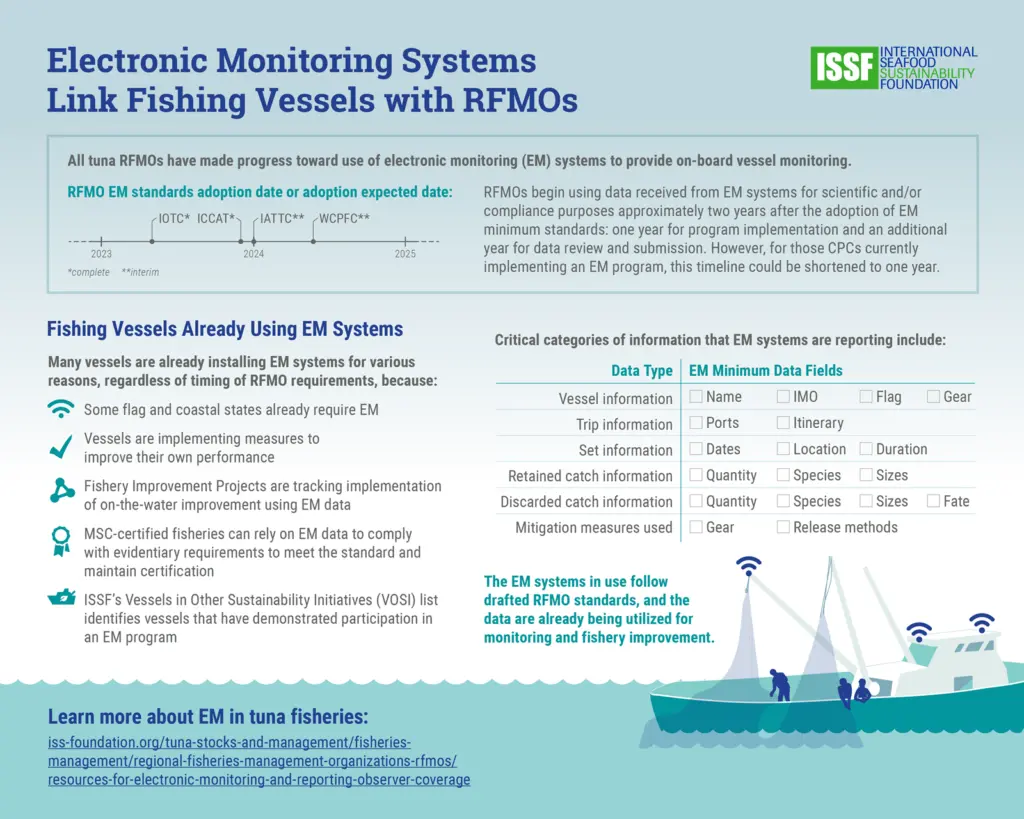
What changed my mind? Much of the credit goes to recent sparks of initiative on two fronts. One came from a pair of regional fishing management organisations (RFMOs), the Inter-American Tropical Tuna Commission (IATTC) and the Western and Central Pacific Fisheries Commission (WCPFC). The other signalled a new level of EMS-oriented collaboration among four out of five of the world’s tuna RFMOs. Their combined impact means that the majority of the world’s tuna-related RFMOs have installed minimum EM standards.
I can’t overstate the seismic shift these actions represent. Think back. Even before the pandemic, every monitoring proposal was facing the same deep-rooted objections: Human observers are hard to recruit. Small vessels have no space for observers. The cost is insupportable. Change is hard.
Then Covid threw a wet blanket over the world. Under it, like countless other industry-regulatory partnerships, we hunkered down. Monitoring efforts, already moribund, lost the will to live or just went on hold. RFMOs shifted into neutral.
Forward thinking
As the pandemic lifted, of course, pro-monitoring activity did slowly regain traction. Long-established working groups revived – although, for some, comprehensive standards lingered in draft form. Meanwhile, without waiting for RFMO requirements, small numbers of forward-thinking vessels in several regions continued to install EMS. And the low-hanging fruit was harvested when the Indian Ocean Tuna Commission (IOTC) and the International Commission for the Conservation of Atlantic Tunas (ICCAT) adopted EMS standards.
In the background, ISSF and other NGOs continued to create EMS resources for fishers, policymakers and authorities. From ISSF alone came best-practices reports, minimum standards recommendations, data submission guides, and snapshot assessments of RFMO performance toward EM requirements. Taken overall, however, sweeping adoption of EMS looked far from certain right up to the midpoint of 2024.
What happened next was dramatic. In the weeks preceding their annual meetings, RFMO delegates rolled up their sleeves and focused on EMS issues. IATTC and WCPFC joined its RFMO peers in promoting more complete data and better tracking of vessels that work across RFMO boundaries. Four RFMOs ended the year with at least minimum standards in place for longline vessels. Now all tuna RFMOS are poised to remedy the longstanding problem of subpar observer coverage on longline vessels. And, closing out the year, in December, participants of all tuna RFMOs met under the auspices of the Common Oceans Tuna Project, which is funded by the Global Environment Facility (GEF) and led by the Food and Agriculture Organization of the United Nations (FAO), to discuss globally standardising EM use.
I should mention a few parallel developments that highlight and validate new levels of EM acceptance. At ISSF, we’ve expanded our public VOSI (Vessels in Other Sustainability issues) list to include tuna fishing vessels that have deployed EM. A growing number of vessels have joined VOSI, agreeing to have their initiatives verified by a third-party auditor. And the Nature Conservancy has recognized VOSI’s impact with its recently published Tuna Transparency Pledge.
The year 2025 opened with a striking turnaround for the EMS cause. It signalled a spirit of collaboration and optimism that gives me new hope for progress in tuna sustainability across the board. So, I want to thank every individual within every RFMO, every member of a sustainability NGO, and every vessel owner and marine scientist who rallied around the EMS flag in 2024 and helped the tuna fishing community regain its impetus toward healthier tuna stocks around the world. Happy new year to you all!