

Keeping tabs on HABs
Scotland and the United States are taking steps to address one of aquaculture’s greatest challenges.
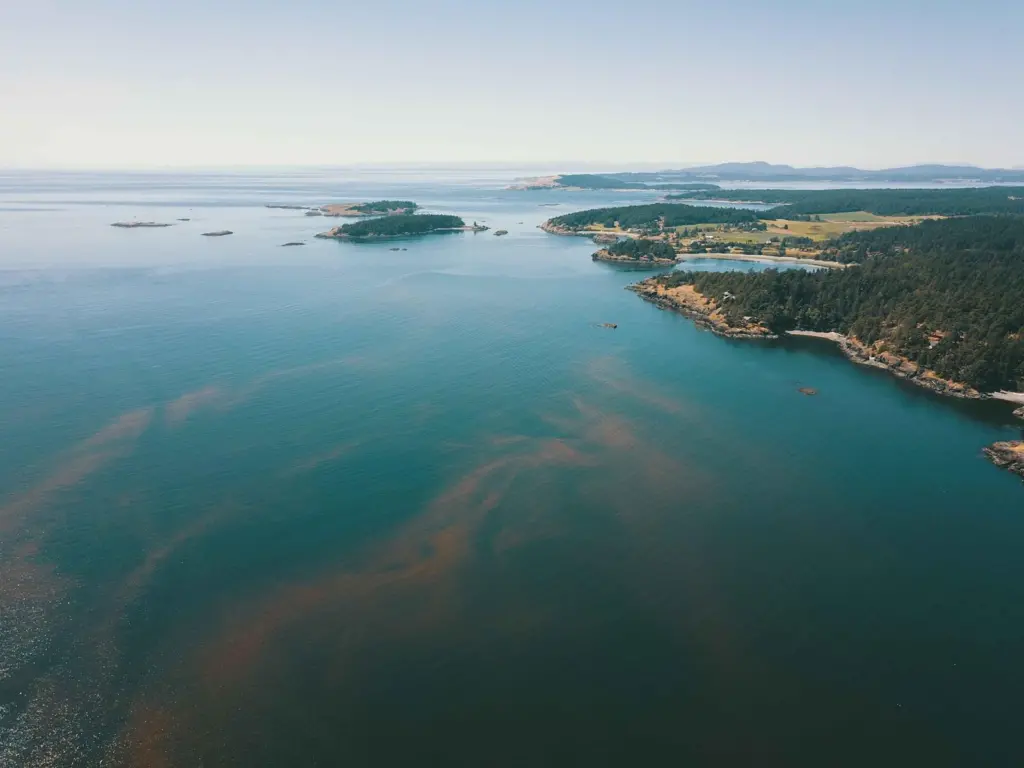
Harmful algal blooms (HABs) are an overgrowth of certain species of algae in water. Ranging from microscopic organisms to large seaweeds, these algae flourish when environmental conditions support rapid growth.
While some are non-toxic, others produce toxins and can have adverse health effects on fish, mammals, birds and even humans. It’s also possible that changes in the environment are influencing the location, timing and intensity of HABs but in ways that are not yet fully understood.
The impacts of HABs can be devastating for aquaculture. Some algae can damage the gills of fish, making it impossible for them to take in enough oxygen. Others produce toxins that render shellfish unfit for human consumption. It goes without saying that the economic impact is detrimental.
With the number and frequency of HABs likely to rise, aquaculture in Scotland is turning to technology to keep track of HABs. Experts believe that a greater focus on real-time data collection and early warnings of the timing, location and magnitude of HABs and their associated biotoxins will bring significant benefits to fish and shellfish farmers.
“In Scotland, it’s hard to predict whether the same HAB-related problems will occur year on year,” Debra Brennan, fish health laboratory manager at Mowi told WF. “Environmental factors such as currents and tides also affect whether HABs will occur and how long they will remain, while some HABs are toxic and others aren’t. But with sea temperatures becoming warmer, we are likely to see more of them in future, so it’s even more important for farmers to have up-to-date information.”
Early detection
“We have two areas of interest in Scotland – HAB organisms that produce biotoxins that kill farmed fish, and those that affect humans through shellfish,” said Professor Keith Davidson, associate director at the Scottish Association for Marine Science (SAMS).
“We monitor phytoplankton as part of a regulatory programme that is operated by Food Standards Scotland. Sampling officers go out once a week and collect water samples that are analysed by microscopy. Based on phytoplankton and shellfish toxicity data, regulators will close down a particular farming area if necessary until the toxins depurate. That has worked very well in terms of human health – we believe that the last time anyone got sick from farmed shellfish in Scotland was in 2013.”
A lot of SAMS work is to understand HABs and their causes, and to develop early-warning systems that allow aquaculture to respond, Davidson explained.
It has a website – habreports.org, which provides a map of current and historic HAB conditions, and has also developed a downloadable PDF bulletin, a weekly HAB assessment which summarises environmental conditions and what the organisation thinks will happen and when.
“The website contains information such as risk indexes and an oceanographic model that helps us see or predict where a HAB could be in the next few days. We are now using it increasingly with fish farms,” he said.
A number of companies in Scotland, including marine technology developer OTAQ, are also looking at digitising the identification and prediction of HABs.
OTAQ’s early warning system is expected to reach the commercial market later this year and uses a combination of artificial intelligence (AI), sensor technology and digital microscopy to identify potential issues accurately and quickly. Davidson and his team are also trying to embed some newer technologies.
It is currently working with two Imaging FlowCytobots (IFCBs) that generate images of phytoplankton. Data is collected through flow cytometric and video technology to capture high-resolution images of suspended particles. Using AI approaches, these can be automatically classified to genus or species level.
Growing risk
HABs are also a significant problem in the US, affecting commercial and recreational fisheries, aquaculture and coastal tourism.
The species that cause HABs, the habitats in which they occur and their impacts vary significantly. To address this, the National Ocean Atmospheric Agency (NOAA)’s HAB programme, led by the National Centers for Coastal Ocean Science (NCCOS), is working to understand and respond to HABs using sensors and analytical methods that detect and accurately measure cells and toxins and enhance HAB response capacity.
“We have a good sense that HAB impacts are rising globally and in the US,” said Marc Suddleson, a HAB Research Programme Manager at NCCOS. “In some regions, blooms and elevated toxin levels are lasting longer, which can lead to prolonged fishery closures, delayed harvests, or harm to wild or farmed fish and shellfish. There is a greater need to better understand and monitor ocean conditions that cause blooms, track problematic algal species and toxins and improve tools to lessen HAB impacts on US aquaculture.”
Observation networks, modelling and forecasting capabilities are some of the best approaches we currently have to lessen HAB impacts, said Suddleson. One example is the Pacific Northwest HAB Bulletin, a successful pilot system that assembles data on ocean conditions, wind currents, algal species abundances and toxin levels in coastal waters and in the shellfish themselves along the Washington and Oregon coast. An advanced ocean sensor, the Environmental Sensor Processor, adds real-time toxin data.
The bulletin is shared with state and tribal managers to provide an early warning of potential HAB impacts and help inform razor clam fishery decisions. A new effort to monitor shellfish-killing algal species by Soundtoxins promises help for shellfish growers in the region.
NOAA and partners are discussing how to sustain these successful pilots through NOAA’s HAB forecasting service and a planned National HAB Observing Network (NHABON).
“We offer a suite of strong tools including advanced monitoring, HAB early warnings and forecasts that can lessen or mitigate the impacts of HABs,” said Suddleson. “NCCOS also seeks new HAB control strategies that may one day eliminate HAB impacts and supports research to accelerate the development and future applications of scientifically feasible, environmentally acceptable, and cost- effective HAB control strategies.”
Knowledge sharing
While obtaining early warnings of HABs is of great value to aquaculture worldwide, Brennan maintains that it is far from straightforward to compare HABs in Scotland with those of other countries due to different ocean conditions, HAB frequency, water temperatures, HAB species and type of farming area.
Davidson added that specific types of phytoplankton in the US, for example, may not necessarily occur off Scotland, such as Kareniabrevis, which causes the Florida red tide. But Pseudo-nitzschia, that occurs frequently along the US Gulf and Pacific coasts, is also a genus of concern in Scotland.
Suddleson noted that while, “these differences prevent the development of one-size-fits-all solutions to HAB mitigation and control, technological advances are actively exchanged between a global network of HAB scientists”.
He said, “Opportunities to expand engagement with aquaculture industry representatives through national and international HAB workshops and conferences, offering phytoplankton identification training, and considering ways to use farms as testbeds to develop new sensors and detection technologies are good approaches to ensure that mitigation and control solutions reflect grower’s needs.”
Such partnerships are also seen as critical to help the aquaculture industry keep pace with various HAB impacts that are expected as our oceans warm under a changing climate.
Related Articles
 PROCESSING & REFRIGERATION
 PROCESSING & REFRIGERATION
 PROCESSING & REFRIGERATION