



Developing a digital profile for green conversion
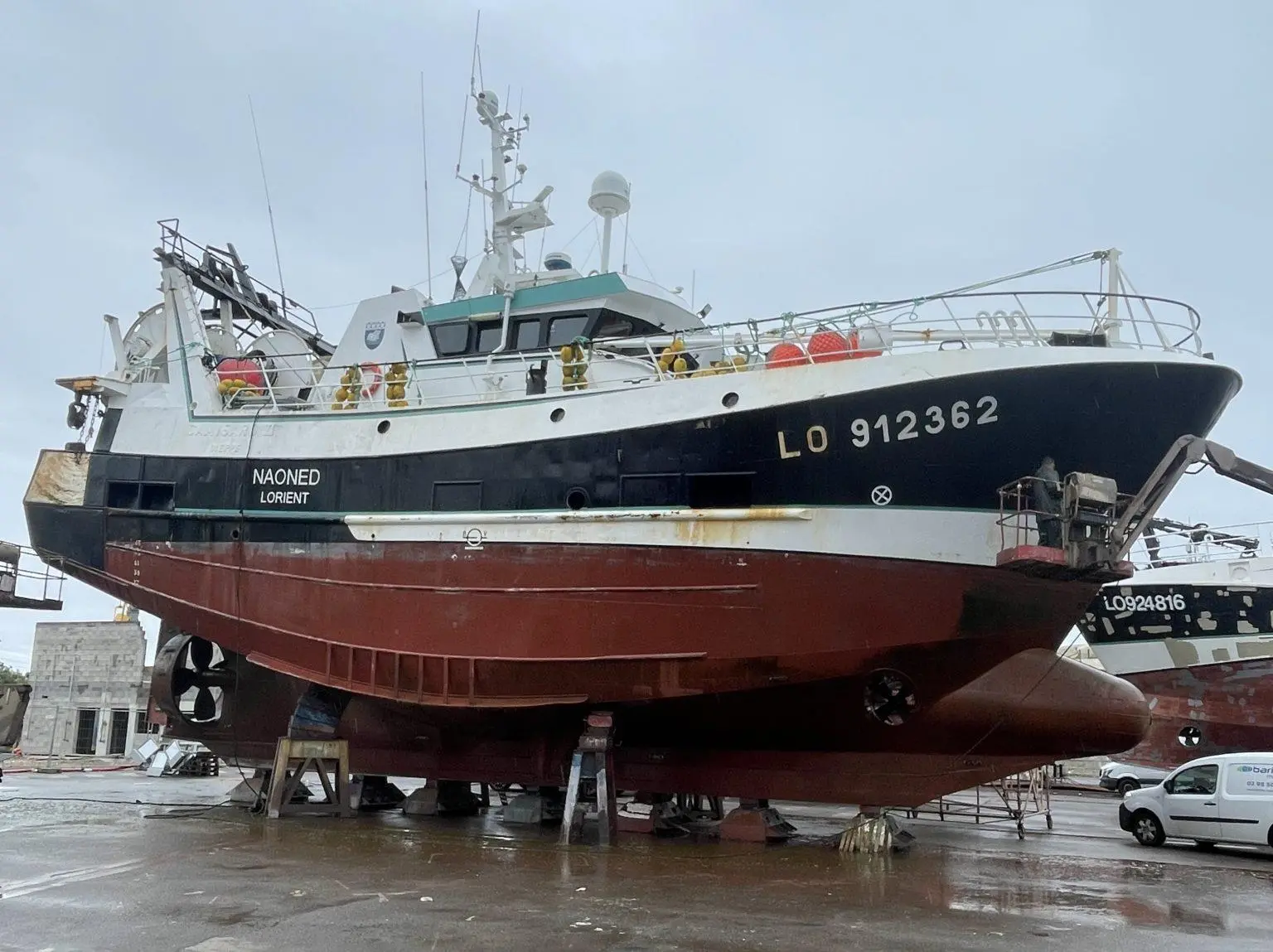
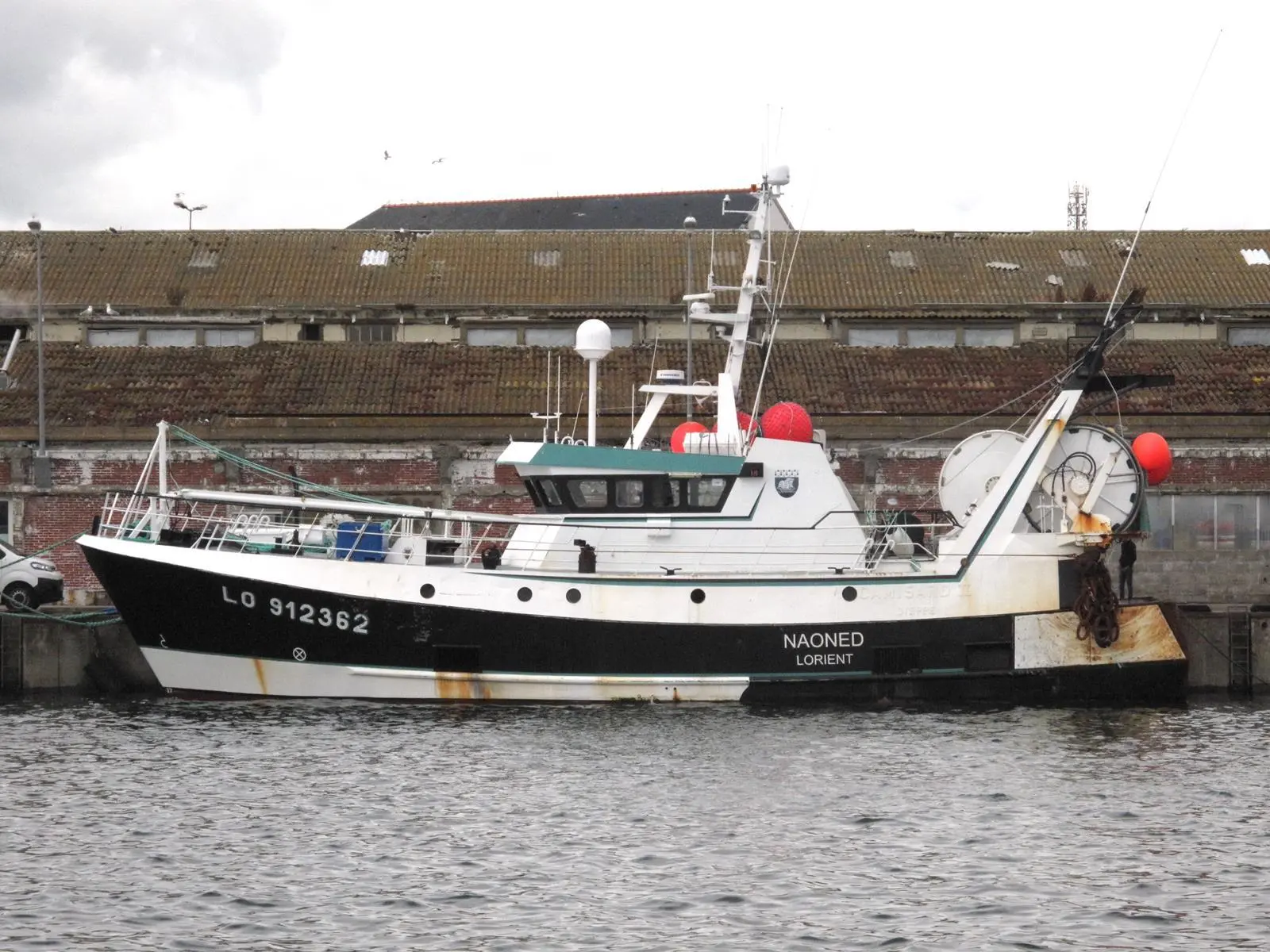
Lorient fishing company APAK operates a modern fleet of vessels that alternate between demersal trawling and pelagic pair trawling, as well as seine netting. They land a variety of species across the seasons ranging from albacore tuna to langoustine, hake and other groundfish. A couple of the company’s vessels are relatively new, built a few years at the Padmos yard as combination seine netter/trawlers, but the company’s first venture into seine netting was with Naoned, which was refitted for this technique.
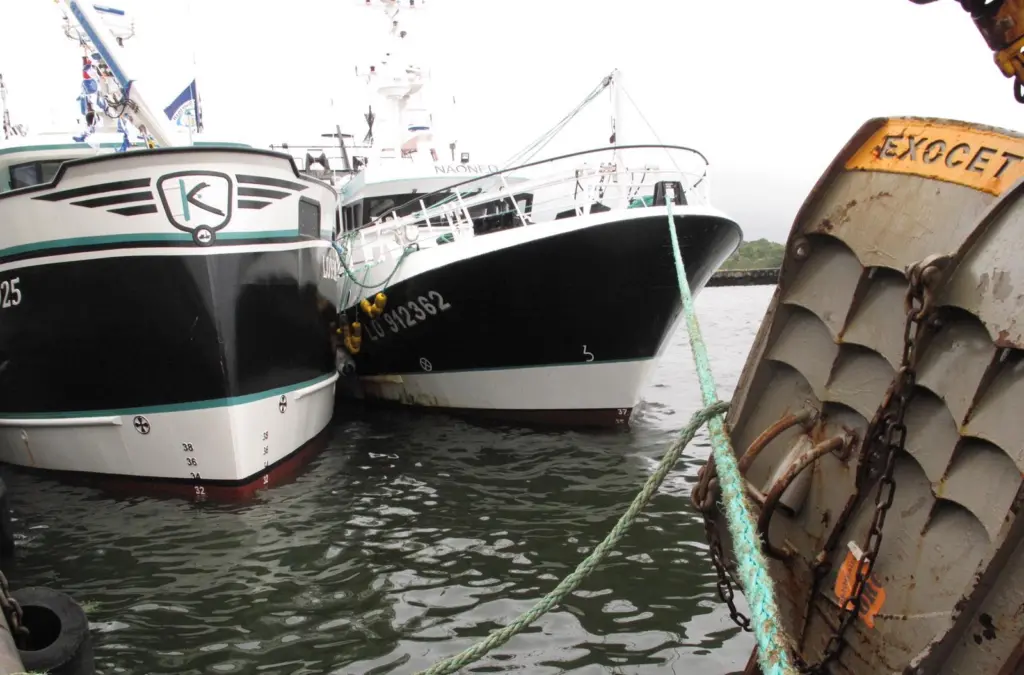
Now Naoned is now at the centre of the HYBA project, led by the Brittany Fisheries Committee and managed by Vectura Systems with the involvement of naval architect Coprexma and a group of other companies in the region. This extensive initiative is to refit Naoned with a new propulsion system, plus a battery pack and associated technologies.
The choice was a straightforward one, according to APAK’s managing director Eric Guygniec. Although it’s the oldest in the APAK fleet, it’s also the one with the most available space onboard into which the battery pack and the other new systems and technology can be installed. It’s also a fitting choice, as the 23-metre Naoned is representative of much of this sector of the French fleet. Built by Piriou in 1999 for owners in Boulogne-sur-Mer as Gloire à Marie III, it was acquired in 2017 by APAK and outfitted as the company’s first venture into seine netting, which turned out to be successful.
The HYBA project is outlined by Pôle Mer Bretagne Atlantique and financed by France Filière Pêche, and brings together partners the Brittany Regional Fisheries Committee (CRPMEM), Vectura System, Piriou, Masson Marine, Marinelec, Le Drezen, IMT Atlantique, the Maritime College, Coprexma – and fishing company APAK which is supplying its vessel Naoned and crew as its contribution.
Fuel savings
Before heading back to the shipyard for its propulsion systems to be stripped out and replaced with the latest tech, Naoned is in the process of a having a digital twin developed as the first phase of the initiative. The trawler has recently made a visit to the slipway in Lorient to be fitted with analytical econometer technology developed by Marinelec Technologies.
This entails installing sensors onboard to record and every aspect of the vessel’s operational performance under working conditions and across several fisheries, and this consumption data can be combined with other environmental, sea state, operational and operating conditions factors to develop a comprehensive digital model.
This is intended to provide a reliable comparison against which the second phase of the project can be measured, generating a precise picture of exactly how effective the coming refit is in reducing fuel consumption and consequently emissions. These 70 sensors capture data from the main engine and the alternators, including NOx and CO2 emissions, a range of performance parameters including sped and position, propeller pitch, rudder angle, wind strength and forces acting on the vessel.
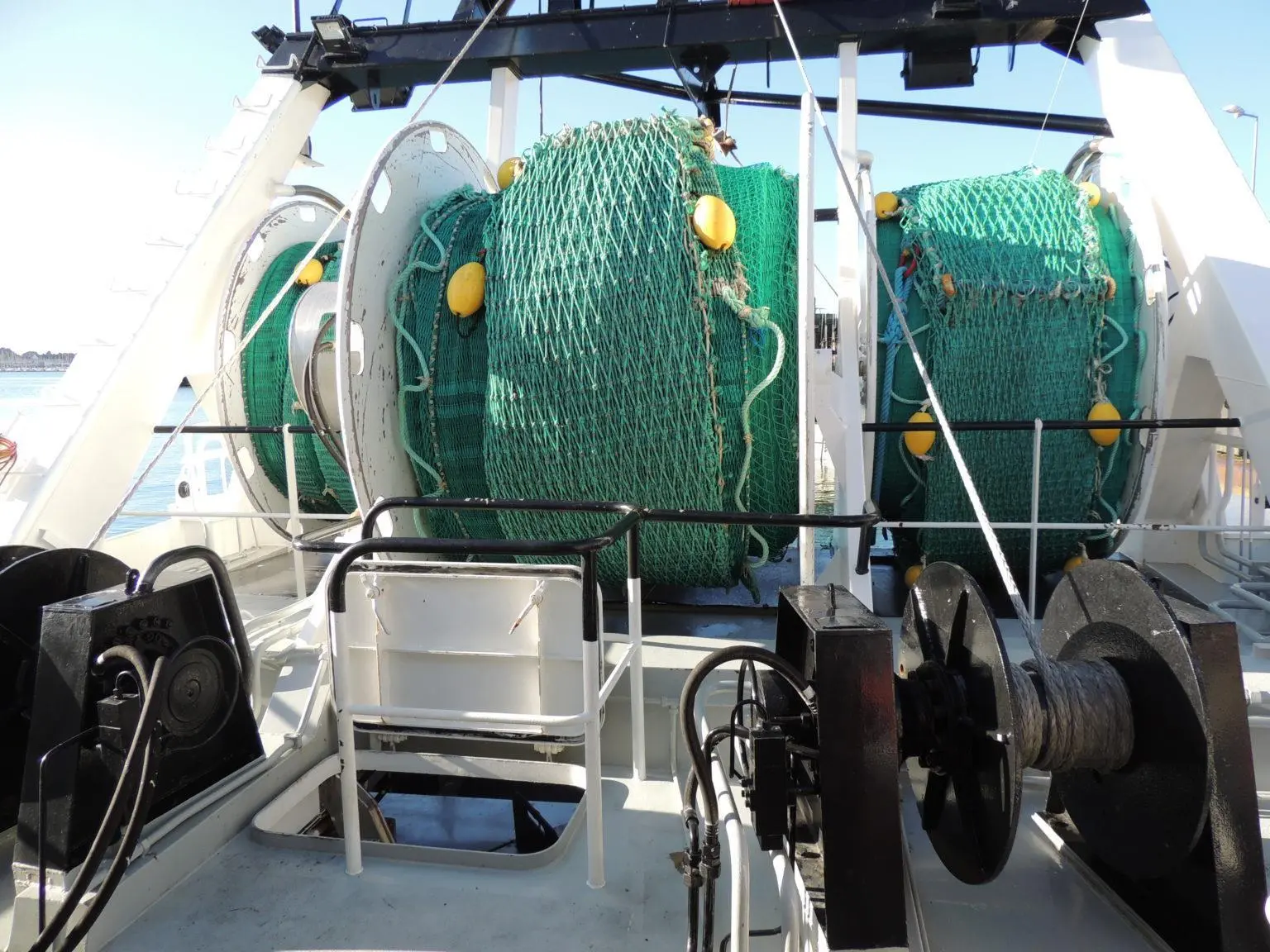
Deck equipment is also outfitted with sensors recording hydraulic pressure, warp and seine rope tensions, and hauling/shooting speeds, as well as the 3D gear sensors being part of the picture as their data is also recorded.
Owner Guygniec is hoping for positive results, and the issue of decarbonisation has become a leading issue for the fishing sector in France.
“This transition is a major challenge. Whatever the advantage in fuel consumption, this will enable us to reduce our carbon footprint and make substantial savings. With an annual fuel consumption of 450,000 litres, a 10% reduction in consumption represents a saving of €45,000,” he said.
Even a 10% reduction makes a significant difference in operating costs, and he’s hoping to see an outcome of somewhere between 10 and 20% in the project’s second stage as the battery pack and associated technology make it possible to even out the peaks in energy usage.
“We focus on trawling, although the versatility of this vessel allows us to measure a large number of parameters and collect a great deal of very precise information,” he said.
“We have already worked a lot on our newer vessels by optimising the hulls, fishing gear, and more. This has allowed us to save up to 320 litres of diesel per day. But the cost has increased so much that we are back where we started. With a trawler that’s 30 years old or more, we won’t perform any miracles. This is a transitional project,” he said.
According to Guygniec, the information from the ongoing 10-month data gathering phase has implications for the whole of the French fleet – and there have already been other regions, including from the Mediterranean coast, to find out how the work being done in Brittany could be applied to other regions and fisheries in future.
He added that the coming refit is going to cost an estimated €1.3 million as the existing ABC main engine and the rest of the propulsion system will be replaced with an IMO Tier III main engine, plus the rest of the new systems due to be fitted.
Applying automotive expertise
Vectura Systems is managing the project and is no stranger to the challenges of offering decarbonisation options, having worked extensively with workboats and road haulage operations. CEO Sébastien Berthebaud is an engineer specialising in hybrid systems and his aim with the HYBA project is to apply the company’s expertise in other fields to fisheries.
“Assuming we are able to generate a real digital twin of the vessel in partnership with the research team at IMT Atlantique in Nantes, calibrated by machine-learning algorithms, we will be able to truly optimise the energy consumption of commercial vessels,” he said.
“In this case we’re talking about 25-metre fishing vessels, but also about passenger vessels, tugs and others.”
Behind the HYBA project is a great deal of groundwork done in advance in collaboration with engine producers, equipment designers and fishermen, and he spent a 15-day trip on board Naoned to familiarise himself with the issues and challenges, and to understand how the whole setup on board works.
This also entailed working closely with naval architect Coprexma as they look into the options for the refit that’s yet to come, as well as providing input to the digital twin.
“From the start, we needed a naval architect who can provide guidance. Their vision is essential in complying with regulations, understanding practical limitations and the safety and stability implications, and in providing the essential plans for the integration of the different items of equipment to suit the chosen configuration. The hull shape in modelling the vessel is produced from 3D plans provided by Coprexma,” Berthebaud said.
There have been delays to the project – including the controversial month-long closure of the Bay of Biscay fisheries last winter – plus new questions have arisen, particularly relating to the fishing gear.
“The trawl is a major factor in fuel consumption, hence the involvement of fishing gear manufacturers like Le Drezen,” Berthebaud said, adding that Naoned’s gear is being re-simulated.
“The skipper will be able to monitor the exact data onboard and no longer just rely on averages. So, if in the future we modify the fishing gear, we will also be able to ask ourselves the question of what the consumption is per kilo of fish.”
Interest in the HYBA project has come from the French Mediterranean ports of Sète and Grau du Roi with regional development agency CEPRALMAR to find out what aspects could be applied to their fisheries, which differ from those of the fleet in Brittany as the Mediterranean trawlers operate as day boats. According to Berthebaud, this offers real opportunities for plug-in hybrid technology.
“This is the beginning of a dynamic of progress driven by the group and the projects that will follow! Why not expand this into a European project?” he asked. “What matters here is finding a way to ensure that fishing as a profession can be able to continue.”
Related Articles
 PROCESSING & REFRIGERATION
 PROCESSING & REFRIGERATION
 PROCESSING & REFRIGERATION