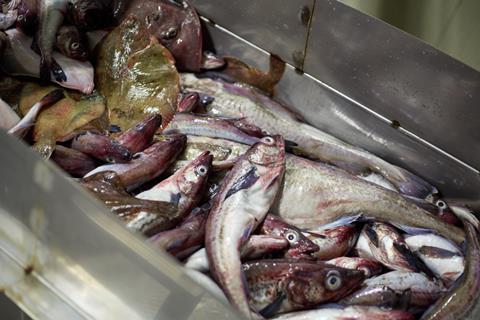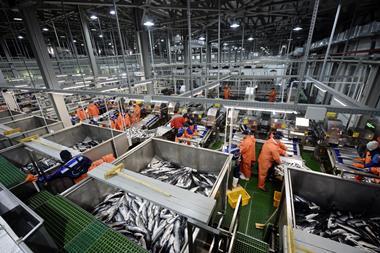





Russia sees great potential in expanding trade relations with the 10 BRICS countries of Brazil, Russia, India, China, South Africa, Egypt, Ethiopia, Indonesia, Iran and the United Arab Emirates, outlined Herman Zverev, President of the All-Russian Association of Fishing Industry (Varpe) during an industry conference in September 2024. He also indicated there’s interest in boosting fish exports to emerging countries of the Middle East, North Africa and Latin America.
Reasons behind this strategy are obvious. In 2023, Russia became the world’s most sanctioned country, including multiple, severe restrictions placed on selling fish to foreign customers. At the same time, some segments of the country’s seafood industry have been hit with direct sanctions. The US crab import ban alone cost the country around US$1.2 billion in annual sales, although a part of the supply was redirected to China. Meanwhile, Varpe estimates the Russian pollock industry loses up to $210 million per year due to restrictions imposed by various countries.
Western sanctions are one of a few key factors to have caused the profitability of the seafood industry to nosedive. Varpe estimates its net profit dropped by 13% to a five-year minimum in 2023 and plunged further – by nearly a third – in the first half of 2024. Today, half of Russian fishing companies are loss-making, and it’s believed the industry’s financial health has never been so poor.
The remaining Russian fish exports to Europe are also in jeopardy. In 2024, the Baltic States called on the European Commission to consider a ban on Alaska pollock. The European Union had previously restricted imports of crustaceans, caviar and caviar substitutes under the fifth sanctions package adopted in early 2022. These aside, the EU has so far remained reluctant to put the brakes fully on Russian seafood imports.
Potential pollock problems
Alexey Buglak, President of the Russian Pollock Association, is forecasting a grim future for the European pollock market if the ban on Russian imports is enforced.
“It is hard to imagine how these quantities [delivered by Russian fishermen] can be replaced,” Buglak said. “The key consequences of the move would be a sharp rise in pollock prices in the European market and possibly a halt of operation of some pollock processing plants,” he said.
In contrast, Buglak is downplaying the impact of possible European restrictions on the Russian side, expressing confidence that the pollock industry could switch from production fillet to frozen cuts and surimi to redirect exports, including to BRICS countries.
However, according to sources, in private conversations, Russian fishermen are not confident that possible sanctions will come without cost.
“As a rule, a forced switch to new markets means you need to find new customers overnight, and the practice showed that Chinese request huge discounts to take Russian seafood banned on Western markets,” one source explained.
For example, the source claimed that the US ban on Russian crab triggered a 33% slump in the price for all Russian crab on Asian markets, not just quantities redirected from the West.
Russia is not the only BRICS country with trade tensions with Western countries. China’s potential trade war with the US and several trade disputes with the EU are also seen as a growing problem.
Returning US President Donald Trump is expected to unleash nearly 40% tariffs on China in early 2025, severely hurting the seafood trade between the two superpowers, especially if Chinese authorities decide to enforce countermeasures.
The country already has experience of switching to trade with emerging countries to fill the gap. In 2023, China banned seafood imports from Japan in response to the release of treated wastewater from the Fukushima nuclear power plant. It filled the gap with purchases from South America, Russia and Asia. In September 2024, though, China advised that it would gradually resume importing seafood from Japan.

Opening new doors
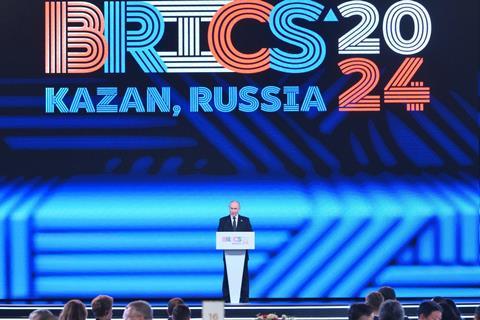
During the BRICS 2024 summit, parties discussed several projects aimed at strategical rapprochement. Russian President Vladimir Putin pushed for the establishment of an inter-organisation grain exchange, which he pointed out, in the future, could be transformed into a full-fledged commodity exchange. The project is nascent, but its authors believe it could become an alternative to the OPEC cartel for the global grain market. Also in the future, it’s felt it could be extended to other food products, including fish.
BRICS countries jointly account for over half of global fish production, which implies the initiative could have long-lasting consequences. In addition, the parties discussed the establishment of the BRICS Bridge, an international payment system called to serve as an analogue of the Western SWIFT interbank financial communication system.
Russian fishermen see great potential in forging stronger ties with other emerging economies.
“We will not abandon our markets but will gain new ones,” Zverev said.
He further estimates that by intensifying fish exports with friendly countries, Russian fishermen could ramp up sales to foreign customers by $2.5 billion per year by 2030. He also noted that 45% of current Russian fish and seafood exports still land in markets deemed “unfriendly” by Russia, and at least a part of that volume is to be redirected to new markets.
Getting easier access to the Chinese market is the key rationale for fishermen from other BRICS states to support the rapprochement initiatives. According to Rabobank, China is poised to drive 40% of the global growth in seafood consumption by 2030, an increase of over 5.5 million tonnes.
However, BRICS countries should level the playing field first, Zverev said. He explained this would enable the countries to compete on more equal terms with other world’s major suppliers. For example, under several trade agreements, fish exported from Norway and Iceland are exempt from duties in India, while Russian fish are subjected to duties.
As a result, Russian fish exports to India are virtually non-existent, with a value limited to only a few hundreds of thousands of dollars per year, Zverev suggested.
In addition, Russia sees prospects in boosting fish exports to Brazil, another huge market within BRICS, but only a handful of Russian fisheries are authorised by Brazilian regulators.
Smoother trade links
While the rapprochement ideas look ambitious, the big question among industry observers is how fast they could be executed.
“The steps announced by BRICS, particularly Russia’s push to boost seafood sales to emerging markets within the bloc, could significantly influence global fish trade flows, but the extent and timing depend on practical execution,” said Wasseem Emam, Founder & Head of Research at Ethical Seafood Research, a think tank.
Emam assumes initiatives like cross-border payment systems, such as the BRICS Bridge, could reduce transaction costs and dependency on Western financial systems, facilitating smoother trade among member states.
“Tangible effects might start emerging within the next three to five years if political will translates into concrete agreements and infrastructure,” he said.
However, one seafood trader told WF that while it’s clear why Russia needs this fast, it’s not so apparent why other BRICS members would be so willing. He also pointed out that some BRICS members, particularly China and India, are political rivals, which limits trade cooperation opportunities.
Moreover, the world is increasingly leaning towards protectionism, so opening borders and facilitating trade may not be in everyone’s interest within BRICS, he added.
Still, the fish industries of the BRICS countries indeed could have a certain synergy effect, deepening economic cooperation.
“China’s vast aquaculture industry, Brazil’s rich fisheries resources, and India’s growing seafood export ambitions align well with the potential benefits of BRICS rapprochement,” Emam said. “These industries could capitalise on streamlined trade mechanisms, shared market intelligence, and joint projects to reduce operational costs and access new markets within the bloc. However, hesitation among some BRICS members due to geopolitical balancing with Europe and the US may temper these opportunities.”