


How can RAS farms avoid the worst-case scenario?
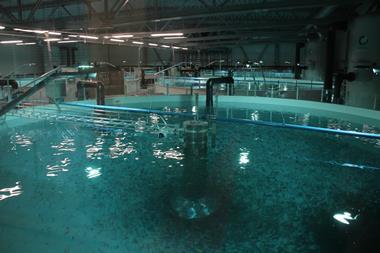
In July 2021, land-based salmon producer Atlantic Sapphire reported the death of 400 tonnes of salmon at its recirculating aquaculture system (RAS) in Denmark. The incident affected one of the saltwater grow-out systems and 17% of the facility’s fish were lost. This followed a loss in March, when around 500,000 salmon, averaging 1kg each, died at the company’s RAS in Florida.
Aquaculture may be continuously growing but assessing and benchmarking fish welfare is still challenging. Fish and other species are held in an environment that can be difficult to inspect, while their behavioural patterns are not as intuitive to understand as those of terrestrial animals. Large populations in tanks can further impair such assessments and benchmarking, but for every report of mortalities, there are increasing concerns among consumers and farmers for the health and welfare of farmed species.
Based in Singapore, Erika Chong is a technical manager at Blue Aqua, a shrimp aquaculture firm that is developing Singapore’s first RAS farm for the production of rainbow trout (Oncorhynchus mykiss). She says that biosecurity breaches and a system breakdown are among the main causes of mortality in closed containment systems.
“Biosecurity is a set of measures to maintain an animal’s health at the optimal level,” she said. “Disease can be introduced into a farm through infected sources of animal, contaminated water or human carriers. Meanwhile, a system breakdown can result in deteriorating water quality, which can kill cultured animals. Another cause of mortality is excess nitrogenous input due to poor feeding management, which creates stressful rearing conditions and compromises immune systems.”
“Some fish do perish because they’re poor performers,” said Robert Walker, President of Gold River Aquafarms Ltd on Vancouver Island. “They don’t compete for food well, or perhaps have anatomical issues that prevent them from surviving but that’s nature.”
There are also equipment-related causes.
“A consistent, high level of water quality is essential to the well-being of fish stocks, and a lot of technology is deployed to ensure this. Water purification systems involve solids removal, dissolved gas control, nitrogenous waste control and pathogen control. However, if any of them fail, mortality can follow quickly.”
Upholding water quality
RAS farms are among the most environmentally sustainable systems in which to rear fish, but problems in fish health and even mortalities can occur. Carlo C. Lazado, senior scientist at Nofima in Norway, said that every manipulation in a RAS system affects the fish in one way or another. An immature biofilter, for example, will not be able to control ammonia levels produced as a by-product of fish metabolism.
He said, “RAS design and technology must ensure a rearing environment that supports the fundamental biological requirements of fish, and at the same time, safeguard the fish and the system from potential outbreaks through effective biosecurity.”
One of the best ways for a RAS farm to avoid mortalities is to maintain good water quality. The most important parameters to keep on top of are pH, oxidative reduction potential (ORP) and dissolved oxygen (DO), said Chong.
Changes in pH influence the toxicity of ammonia and affect aquatic life indirectly by altering other aspects of water chemistry.
ORP is one of the parameters that affects a system’s carrying capacity and is defined as the measure of cleanliness of the water and its ability to break down contaminants. It plays an important role in the nitrogen cycle and other oxidation processes.
Monitoring DO is particularly important in intensive culture and crucial to ensure enough oxygen in the water. Nitrogen compounds such as nitrate and total ammonia nitrogen (TAN) must also be monitored regularly as they indicate the efficiency of RAS performance. Total suspended solids should also be checked since particles can result in severe gill health issues.
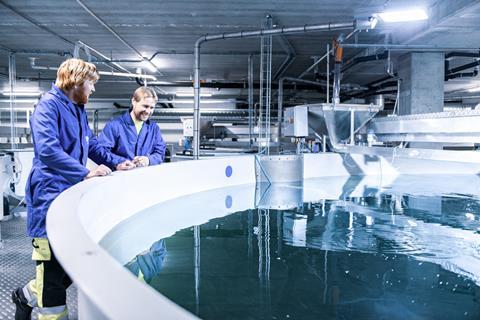
“Testing water quality daily, looking at the colour of the water and observing the animal to check for any physical signs are key to avoiding mortality,” said Chong. “Farmers tend to check for signs of reduced feeding, or a presence of lesions on the body.”
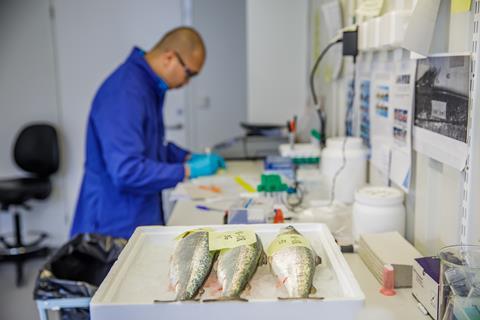
“In addition to water quality, fish health can be monitored by visual inspection, such as checking for wounds or fin damage,” said Lazado. “Advanced technologies like AI-based monitoring cameras have recently become a hot topic, which is a positive development as we can follow the fish even under the water. There are also lab-based health and welfare indicators. Samples are taken from a representative fish and sent to a laboratory for analyses, for example routine histopathology and detection of pathogens. Hopefully, the next step is to develop on-farm health monitoring kits based on our better understanding of fish physiology and immunology.”
Site controls
Proactive management and a set of biosecurity measures that prevent the entry, proliferation and release of pathogens are also key. Staff and visitors must be trained to be thoughtful about the impact of lax biosecurity, said Walker.
Clothing that is brought in from outside may carry all kinds of pathogens, so proper dress protocols must be followed.
Anyone who has visited other farms within a week must not enter a RAS farm. Proper use of foot baths and hand washing stations is essential. Entry points must be monitored for the potential of external pathogen entry. Insect and rodent control are also important, both of which are usually accomplished by well-designed entry systems, while the RAS farm must be completely sealed.
“RAS farms are built with very high levels of control over pathogens,” said Walker. “This starts with the introduction of disease-free ova. All entry points are monitored and staff or visitors must move through pathogen control systems prior to entering. Air quality is maintained with HVAC systems that filter out airborne pathogens. If a pathogen does find its way into the system, the impact can be devastating.
“Generally, after a serious mortality event involving a pathogen, the facility must be completely sanitised which involves removal of all stock – obviously a serious incident worth avoiding through preventive measures.”
Knowledge sharing
“The technology on RAS farms today, such as sensors, automatic feeders and harvest equipment make operations easier, there is minimal manpower required and everything can be automated,” said Chong. “But we mustn’t disregard the knowledge and experience that farmers have gained over the years by observing and handling their fish or shrimp every day.
“One important management practice is to strike a balance between both technology and the hands-on approach of farmers. Sharing data, tips and advice on successful ways to manage RAS farms is also a good way for farmers to develop their understanding.”
With many small farms experiencing very little mortality and others having serious incidents, it is difficult to say for certain just how serious mortality on RAS farms is.
Farming aquatic animals always has some level of mortality associated with it, said Walker, and typically between five and 10% of the inventory is lost each generation. For the RAS sector, proper biosecurity measures are essential, as is sharing information.
“Obviously there are proprietary technologies, but farmers will talk and share their experiences with equipment so the sector will continue to grow. There have been a number of workshops over the years where experiences have been shared, and I’m sure that this will continue.” he said.
“Surveillance and monitoring should be performed routinely,” said Lazado. “Water quality, system performance and fish health and welfare are all interconnected. Technological and biological early warning systems must be in place. But with the technological advancements we have now, we can promote an artificial environment in which fish can thrive optimally. There are still challenges, but we have advanced significantly compared to 10 or 15 years ago.”