While as a consumer product, Atlantic salmon has transcended the seafood category, producers now need to adopt new harvest technologies to maintain growth.
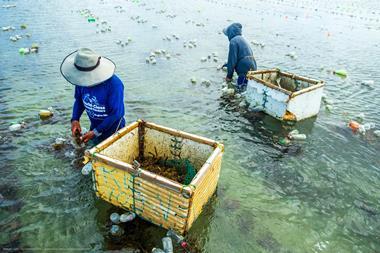
As a source of food for human consumption, fish farming has been around for centuries. However, the practice of rearing juvenile Atlantic salmon in open water cages until they reach suitable market sizes is a much more recent development – not really coming to the fore until the 1970s. This initial emergence owed much to the scarcity of wild salmon and its subsequent positioning as a luxury product.
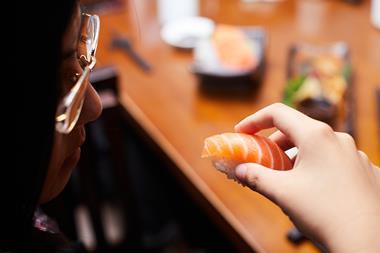
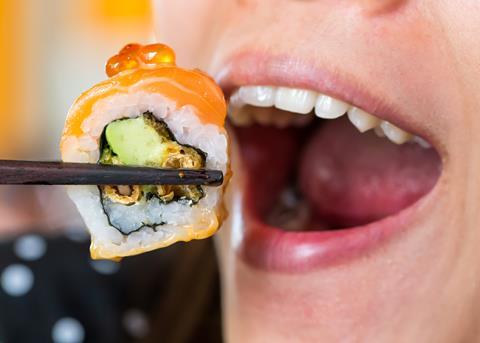
Today, Atlantic salmon has an enviable consumer profile. It is universally regarded as a healthy and nutritious protein that can be applied to a broad variety of convenient meal options and cuisines. It is, for example, responsible for a lot of the success seen in sushi, and vice-versa, while salmon poke bowls have become very popular in more recent times.
By increasing product availability at reasonable prices, salmon farming has boomed as an industry, with the fish also successfully competing against other animal proteins. Consequently, demand for salmon has grown faster than for any other seafood. In both the EU and the United States, it ranks in the top three of the most-consumed seafood lists, and it’s making similarly strong inroads into emerging markets such as China and Brazil.
Creeping growth
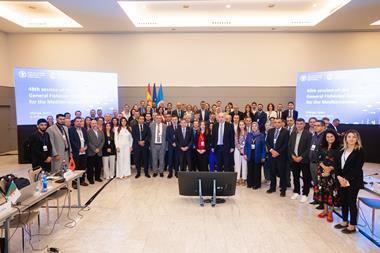
According to salmon industry analysis delivered at the recent North Atlantic Seafood Forum (NASF) 2020 in Bergen, Norway, by Kontali Analyse CEO, Ragnar Nystøyl, close to 2.6 million tonnes of farmed Atlantic salmon was consumed globally last year, contributing to an overall salmon consumption in excess of 4 million tonnes – the first time the category has reached this volume.
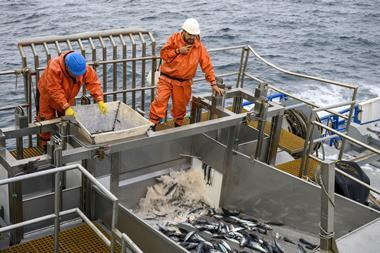
While the market growth for Atlantic salmon averaged 6% last year, the harvest increased by 7%. Norway continued to be the number one producing nation with more than 1.3 million tonnes, followed by Chile and Scotland with 690,000 tonnes and 184,000 tonnes, respectively. With modest growth anticipated in most of these industries, Kontali has forecast that the 2020 output will edge towards 2.7 million tonnes.
Indeed although Nystøyl expects demand to be disrupted in the short-term by the spread of the Covid-19 coronavirus, particularly in Asian markets, he insisted that Atlantic salmon is a “resilient” product that’s capable of widening its reach in other markets while those that are affected “normalise”.
Farming evolution
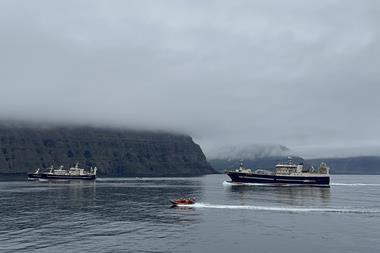
In the medium to longer-term though, salmon farming faces the significant challenge of space. It’s widely recognised that conventional cage farming in coastal zones offers only limited scope for the industry’s further growth. This is mainly due to the licensing constraints put in place by regulatory authorities and also because of very costly biological challenges such as sea lice.
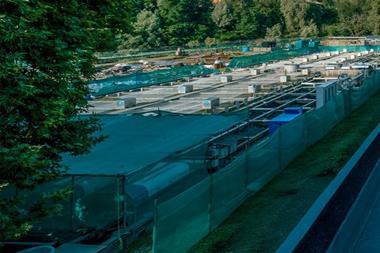
To overcome this significant obstacle, a number of farming ventures have been developing new technologies and techniques that produce the species in closed containment systems, either on land or in remote offshore locations. Emergence on any scale will take take time, however, so even factoring in some of these initial arrivals as well as increased volumes from newer farming regions like eastern Canada, the most optimistic industry observers only forsee a growth of around 6% per annum in the global supply through to 2025.
Carl-Emil K. Johannessen, analyst at Pareto Securities AS, conceded that in a historical context, 6% growth is not very high. Moreover, he explained that it’s also a “fairly optimistic assumption” when compared to his company’s latest survey of salmon farming CEOs. That analysis found an average expectation of 2.6% growth in the coming years. It also learned that only 50% of those sector leaders believe traditional farming will be responsible for this growth over the next five years, compared to 80% just five years ago.
Johannessen and Pareto also reckon that an additional 6% annual volume would be easily absorbed by the market.
“There has been a fantastic demand growth in the last 10 years. This is in all markets, and we think that this will continue and be fuelled by the global trend of eating healthier food,” he said. “We expect the demand to continue to grow at around 5 or 6%, closely aligned with the supply growth. This, we think, will lead to continued high prices at least for the next three years.
“We also think new technologies will come that will be able to supply the market with volumes at a lower price point than they are able to today. But this will take a lot of time and most of these are still at the test stage.”
In just the last few years, there’s been no shortage of new salmon farming concepts touted in the market. While there’s considerable diversity in terms of the way they look and function, they’ve all been designed to reduce exposure to disease and environmental threats by preventing potentially harmful pathogens from entering the farm and to limit water exchange with the external environment.
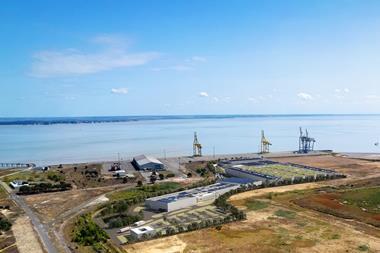
The first harvests from the sector’s frontrunners are starting to arrive at market, highlighted Johannessen. These include SalMar’s offshore facility Ocean Farm 1, which is anchored in the Trøndelag region of central Norway. This year is also expected to bring the first salmon from Atlantic Sapphire’s almost finished NOK 2 billion salmon recirculating aquaculture system (RAS) farm near Miami, Florida.
“There are many other initiatives being invested in to secure future growth,” he added.
Market proximity
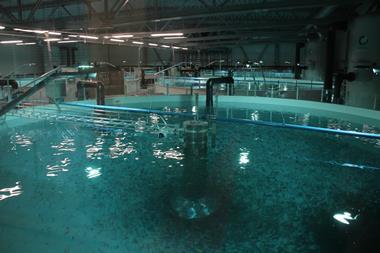
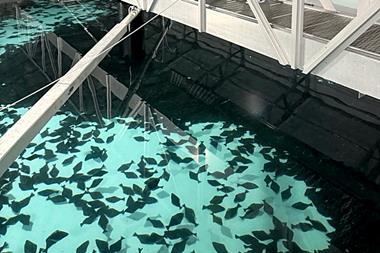
In particular, investors have been getting enthusiastic about land-based salmon farming through RAS systems. Offering additional benefits like stable production, location versatility, and lower dependency on medication, RAS are intensive, usually indoor tank-based systems that achieve high rates of water re-use through filtration and other treatments. While this technology has been around for many years, mostly in hatcheries and applied with broodstock and juveniles, the opportunity to grow-out market-ready fish has caught the industry’s imagination in recent times.
As such a number of new projects have raised considerable investment sums and are in construction or indeed first production stages, while many more are getting closer to funding.
“This is not something that’s in the far off, distant future. It’s happening right now,” commented Johannessen. “We do know that it will be very expensive to increase production on land. A lot of capital needs to be invested before we will really see the volumes. Then it’s a question of how much it costs to produce salmon on land, and how profitable this new industry can be.”
Karl Øystein Øyehaug, finance director at Atlantic Sapphire, has no doubt about land-based farming’s potential, particularly its ability to add local supply to the conventionally farmed products being fed into salmon-hungry consumer markets.
“We see such great potential in the US market. It’s not about one or the other because there’s enough space for everyone. We need a lot of supply growth to meet the demand. And at the moment, it’s hard to see where that supply growth is going to come from.”
Furthermore, in producing at facilities close to markets, land-based systems offer a means to overcome one of the salmon farming industry’s biggest costs and environmental challenges – airfreight, Øyehaug said.
“Our strategy is to produce on land, close to the market. Our biggest footprint is transportation.”
Underlining the scope for land-based and offshore farming, Dr Solveig van Nes, CEO and founder of Marine Prospects, reminded NASF delegates that world authorities such as the United Nations have made it clear that society needs aquaculture.
“We need the oceans for the future food demand, but we also need it for future value creation, for future jobs and the clock is ticking. By 2050, we need to double food production and it’s clear that it needs to come from the ocean,” she said.
“That’s why aquaculture is so important and the industry has certainly responded. Look at the immense development seen in the last decade – investments are being made. And working together with researchers, authorities and other stakeholders, the aquaculture industry has developed some totally new technology. We have submersible, semi-closed and closed systems; we have offshore systems and we have land-based – there’s all these technologies that we didn’t know about 10 years ago which are today enabling us to produce seafood. It’s pioneering.”