


Russia on track to becoming a black caviar superpower
Russia is set to increase black caviar export fivefold by 2024, aiming to compete with Chinese suppliers on the European and the US markets, as well as on home ground.
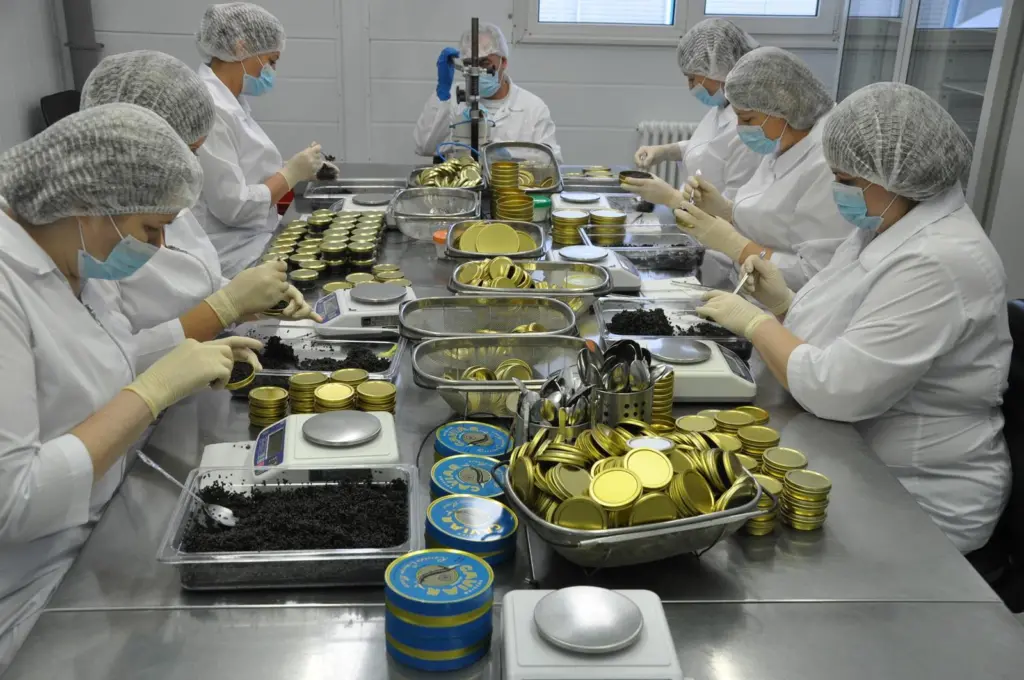
During the past decade, Russia managed to ramp up black caviar production from 13 tonnes to nearly 53 tonnes in 2020, Russian state statistical service Rosstat estimates. By 2024, this figure is expected to at least double, the Russian government set out in its International Cooperation and Export programme.
Under the Russian Empire, the country was the world’s largest producer of black caviar, extracting nearly 1000 tonnes from 40,000 tonnes of wild sturgeon every year, a significant portion of which was exported to Germany, Austria, Turkey, Greece, and North America. In the Soviet era, black caviar exports peaked in the 1930s with 800 tonnes worth $15 million – which would be close to $1 billion today.
However, excessive catches of wild sturgeon severely reduced the population – a fact that was already recognised by Soviet scientists, whose reports still failed to prevent the situation from worsening further.
In the 1990s, when the fishing industry lacked government control, there was large-scale poaching in addition to commercial catches. Sturgeon have become practically extinct in most parts of Russia, pushing the government to introduce a complete ban on sturgeon fishing in 2009. Since that time, all legally-produced black caviar in Russia is either imported or comes from farmed stock.
Black caviar against Covid-19
Russia has one of the highest per capita levels of back caviar consumption, due in part to it being considered not only just a national dish but also one of the main symbols of the country. Despite the economic crisis, the demand for this product continues to grow, as having black caviar on the table traditionally serves to indicate the host’s higher social status.
“If we compare it with last year’s situation, then everything [the demand] has remained at the same level,” said Alexander Novikov, President of the Russian Union of Sturgeon Breeders, adding that the price for black caviar in Russia remained the same, while all aquafeed is imported. “This means that producers generate less revenue [than in the previous year].”
The average price of black caviar on the Russian market stands at 50,000 rubles ($700) per kg. This is close to being a monthly wage of an average Russian citizen living outside Moscow. Despite this, the demand for black caviar jumped in Russia during the pandemic, supposedly owing to a popular myth that black caviar offers incredible health benefits.
“People buy black caviar not only as a delicacy, but also as a medicine – it’s no secret that black caviar is very useful, and it is recommended for people with poor health. Now, when everyone is recovering from the coronavirus, this is relevant,” Alexander Novikov said.
Growing production or fraud
Growth in black caviar production in Russia is associated with the massive construction of new sturgeon farms during the past few years, said German Zverev, President of the Russian fishing industry union Varpe. He estimated that sturgeon is being produced at least at 80 farms, located mainly in the Volga-Caspian and Azov-Black Sea basins, with more farms being launched every year. Production is expected to keep growing in the coming years, he said.
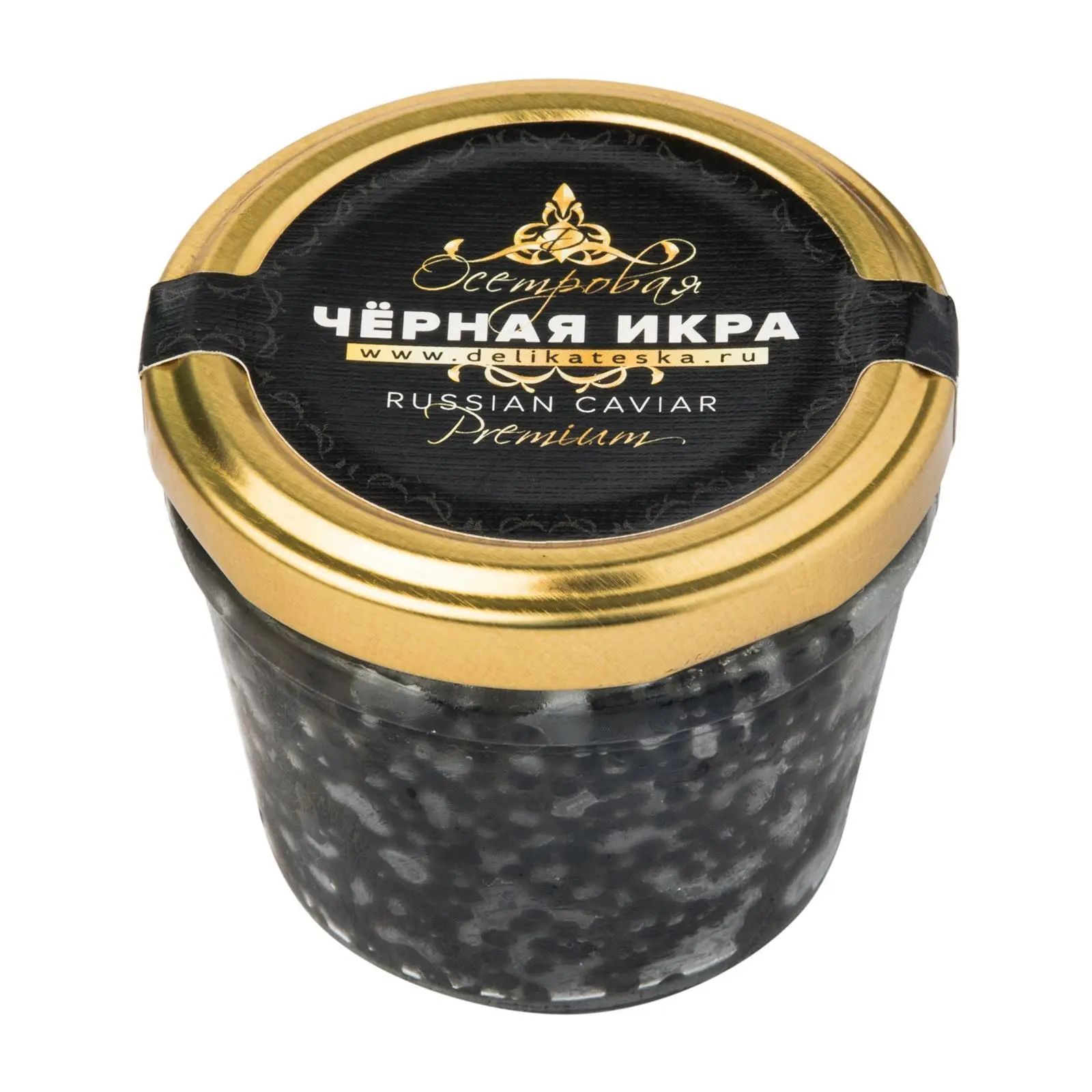
Alexander Novikov suggested that to some extent, recent production growth could be associated with repackaging. He explained that some unscrupulous manufacturers import black caviar from abroad, mainly from China and Uruguay, in large containers of around 1.8 kg and then repack it into smaller jars for further resale.
This repackaged caviar technically becomes a product of Russian origin. Under electronic veterinary certificates, which became mandatory for selling finished fish products on the Russian market from 1st July 2019, it is described as Russian-made caviar, he explained. This issue has repeatedly attracted the attention of top government officials. Russian deputy Prime Minister Victoria Abramchenko, during a government meeting in 2020, called on the Federal Agency for Fisheries to address this issue and design tools to prevent Chinese caviar from being sold as a Russian product. However, this problem is yet to be solved.
Russian black caviar production is also growing because the number of sturgeon farms in Russia is rising, even though not all of them are interested in producing caviar, said Alexander Novikov.
“These are primarily small farms specialising in breeding sturgeon with a production performance of between 3 and 5 tonnes of fish, which do not have facilities for processing caviar. To increase black caviar production in Russia, large projects are needed in the first place, but investors are not very interested because of the long payback periods. It takes on average six years from starting production before the first black caviar is obtained.”
Domestic market first
According to a spokesperson for the Russian Caviar House – the largest black caviar producer in Russia – before looking beyond their borders, Russian regulators should put the domestic market in order, explaining that the vast presence of Chinese caviar in Russia causes colossal damage to the public image of this national product.
Russian Caviar House estimates that three of every four cans sold under the well-known brand Astrakhan caviar in 2019 actually contained products imported from China.
“Even taking into account the logistics, Chinese caviar is cheaper than that grown in Russian farms,” said Ilya Bereznyuk, a partner at the Russian think tank Agro & Food Communications, estimating the wholesale price of the Chinese black caviar might be as low as $200 per kg.
“Russian black caviar is an important brand, similar to Russian vodka, which we must take advantage of,” commented a source in the Russian fish industry. “Exporting poor-quality Chinese caviar to the European Union is the worst thing that could be possibly done. In a few years from now, this will ruin the image of Russian caviar abroad, and I doubt we would be able to restore this competitive advantage in the future.”
The Russian government remains optimistic about the growth in black caviar exports. The International Cooperation and Export programme envisages introducing supplies to a broad range of markets, including Brazil, India, the United Arab Emirates, the EU countries, as well as the US and even China in coming years.
Over the past few decades, the Russian government has launched a dozen hatcheries focused on breeding sturgeon in different parts of the country in order to save this fish from complete extinction. Most of these have already reached planned production levels, and there are predictions that sturgeon could be withdrawn from the Russian Red Book of endangered species as early as 2030 in Siberia and the Far East, and later in European Russia.
According to Russian government agency Glavrybvod, which manages state-owned hatcheries in Russia, by that time, in order to maintain stable operation, they are likely to switch to breeding broodstock for commercial fish farms, as well as to manufacture finished products.
When it comes to commercial production, black caviar is the first and most obvious choice for sturgeon hatcheries, according to Glavrybvod’s spokesperson.