

Oyster farming innovations on the rise
Oyster farming has long been touted for its benefits, such as improving water quality and not requiring any feed, freshwater or fertiliser. However, outdated technology and tools that prevent high volume production are significant bottlenecks, while planting and harvesting methods can be random or lack precision, resulting in low survival rates and production.
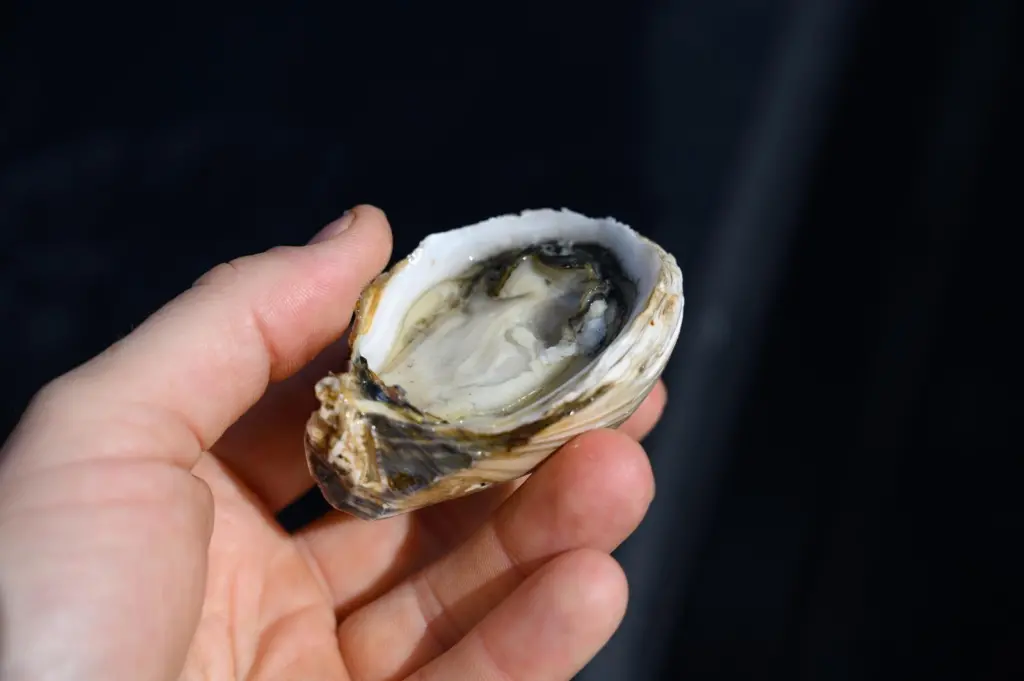
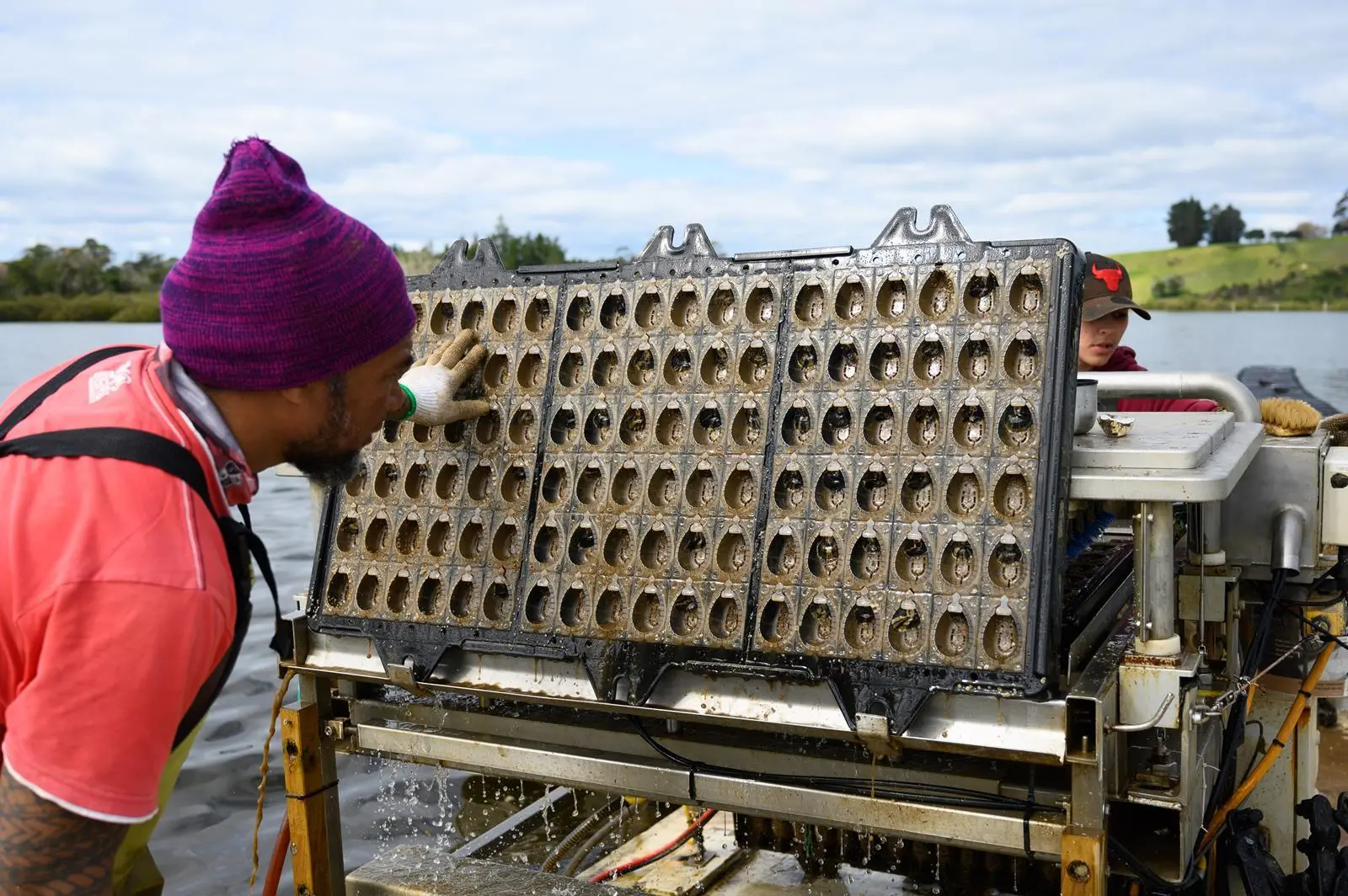
In light of this, oyster farming is witnessing a shift with new advances to improve farming practices. One example is a production method created and patented by Shaun Gregory, founder of Aqua Mould Systems NZ Limited (AMS) in New Zealand. His system involves seeding oysters in moulds. The oysters reach full size in around 9 months, and most importantly, they are all uniform.
“I began to investigate new ways of producing oysters following concerns over the conventional rack and stick method,” Gregory told WF. “It’s very labour-intensive and not environmentally friendly because it requires timber, and the oysters can be knocked off by floating debris during storms. There is also no guarantee of a nicely shaped oyster. Meanwhile, a local company was trying to automate the opening of oysters at their factory. However, the oysters’ shapes and sizes, as well as the location of the adductor muscle, which you need to cut to remove the lid, vary. These were catalysts for my innovation.”
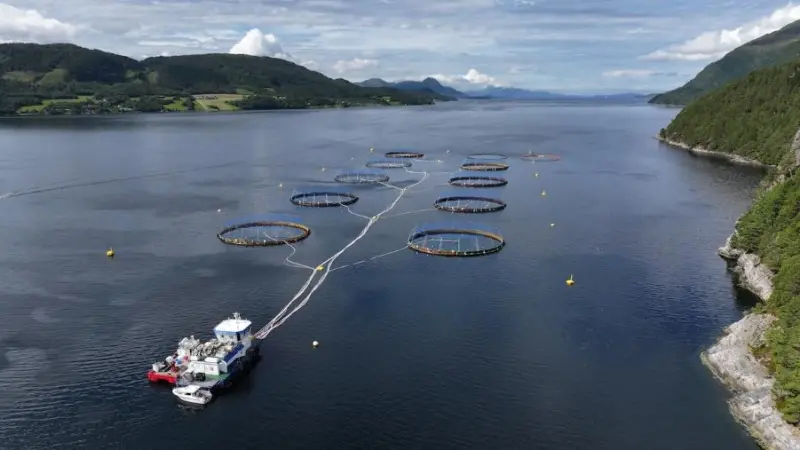
The AMS system consists of a barge and pontoon rafted together, while the oysters are grown in sheltered water in units called drops, which include a float and five trays. Each drop is made out of recyclable plastic and stacked and floated just beneath the surface. To prevent biofouling, they are washed roughly every two weeks by a wash plant on the barge. Because there is a lot less structure on the seabed, there is less environmental impact, while the drops can be accessed at any time as they are not exposed to continuous wind speeds above 25 knots.
Branding potential
During his research, Gregory also happened on a phenomenon that is now key to his work.
“I was out on a farm where they were growing oysters in trays,” he said. “On their exterior was a patent number, and wild spat had landed on a tray and grown over the number. As I was cleaning the tray and pulled the oyster off, I noticed that the mirror image of that number was on the shell and realised that it was possible to develop moulds that produced unique designs on oyster shells.”
This resulted in the Qyster (pronounced quoy-ster) – smooth-shelled oysters with a Q clearly visible on their sides. AMS sold its first Qysters in December 2022 and is now targeting top-end restaurants by streamlining the opening process through a unique oyster that can be opened in seconds.
“Diners want their oysters to open immediately before they eat them,” said Bruce Young, Business Advisor to AMS. “Our oysters are uniform and identical. Restaurants can put the opening knife in exactly the same place every time, which removes a handling safety issue. Diners are also fascinated by the in-shell branding, while the uniformity of every shell makes for outstanding plate presentations.”
“We are now looking for additional investors to assist in our technology’s ongoing development, and for licencees to use our system internationally to grow their local oyster species, having their own, or their customers’ brands, on the shell of every oyster they grow,” added Young.
Gregory believes that his system will take the oyster sector by storm. Submerged in warm waters with a high food volume, the Qysters grow quickly and feed evenly, 24/7, because they are evenly distributed over the trays, and reach full market size in around half the time taken in traditional systems. The mounds offer protection and keep the oysters in a fixed position so they don’t have to be turned – a process that breaks the end frills and stunts the oyster. Instead, they can put all their energy into producing meat rather than shells. Uniform oysters also bring advantages in terms of packing.
“We are improving the whole process from environment to farming to restaurants to consumer experience,” said Gregory.
Harvest help
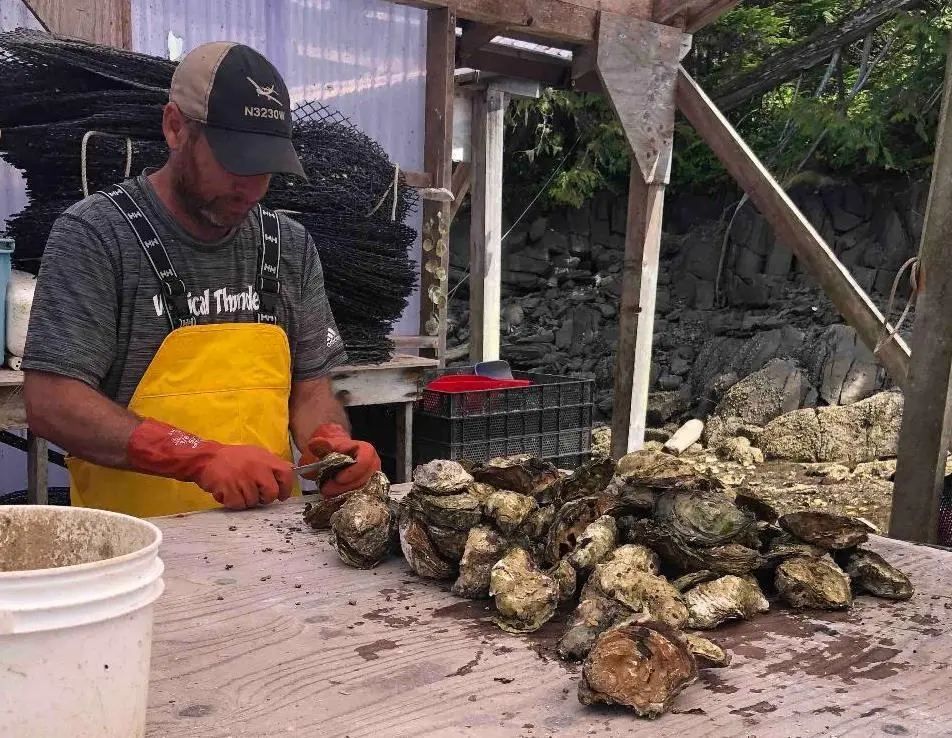
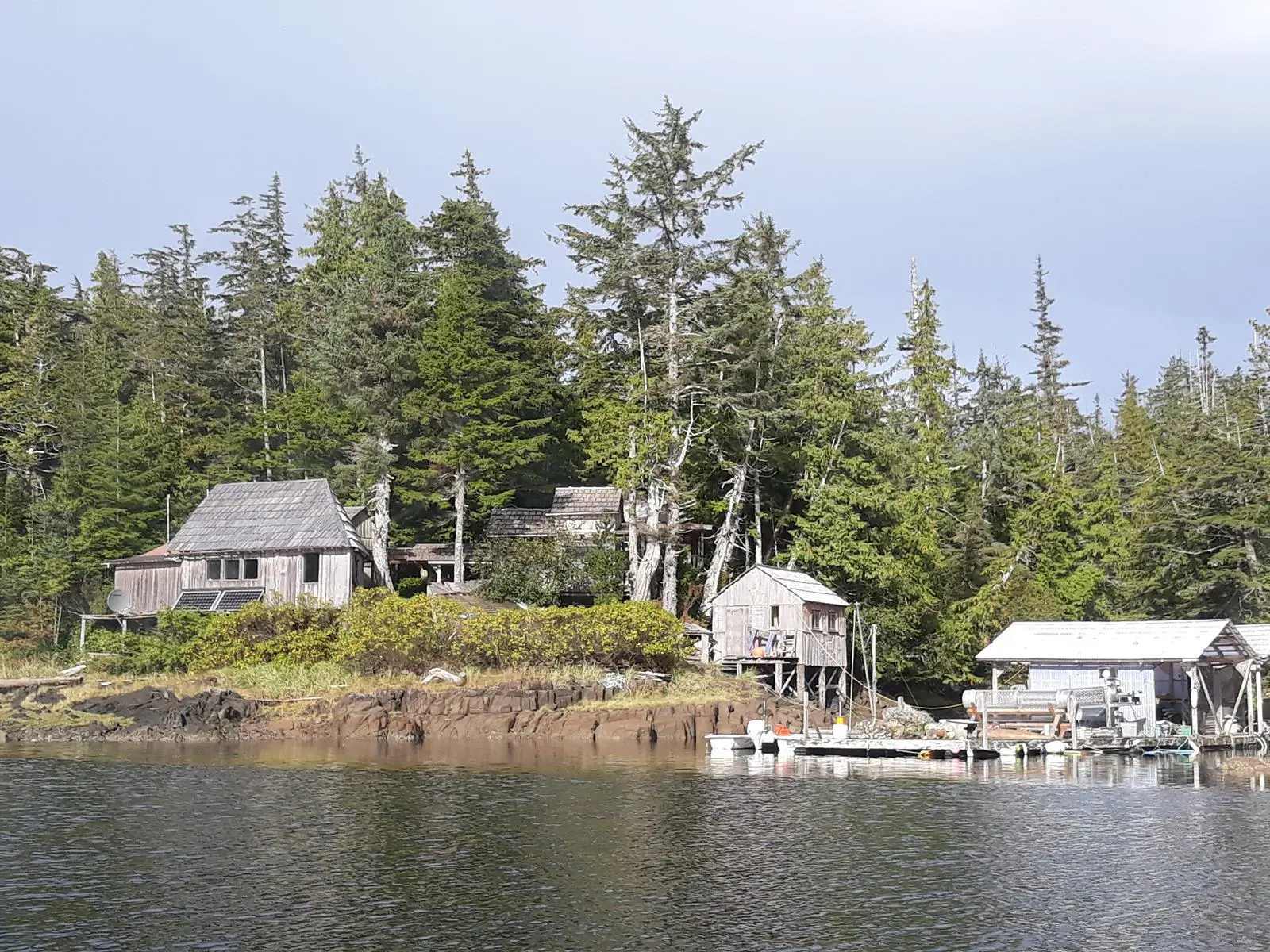
Over in the US, oyster farming is also undergoing change. On the Blashke Islands in Alaska, one farm is tapping into a web-based service called Umitron PULSE to monitor changing conditions at sea and make decisions on when to harvest or act against high water temperatures or harmful algal blooms. Available on web and mobile applications, PULSE provides access to a host of real-time and historical data parameters.
“We get a lot of choppy waves from strong winds, so knowing this type of information is vital to determine if it’s safe to access the farm,” said Brian Herman, CEO of Canoe Lagoon Oysters. “I have found immense value in PULSE, especially when tracking events such as Paralytic Shellfish Poisoning (PSP) outbreaks, while for detailed data comparisons, parameters like water temperature, salinity and dissolved oxygen are instrumental in farming and decision-making.”
Herman is on a journey to improve profitability by creating labour efficiencies with modern rearing techniques and new technology. He says that PULSE could revolutionise oyster farming with its comprehensive data analysis and early warning capabilities.
“It offers all the information you need in one place, while its custom alerts provide the best opportunity to predict adverse events and take timely action,” said Herman.
“Umitron PULSE was developed to empower farmers with advanced data insights by leveraging our expertise in satellite remote sensing and our AI-driven predictive models,” said Joyce Leo, Business Operations Manager at Umitron. “We’re thrilled that this has become a valuable monitoring tool to help track trends and identify potential threats to production. We see Umitron PULSE growing as a vital tool for farmers to adapt to changing conditions, reduce risks and achieve more efficient, profitable yields.”
AI insights
Martynas Velička of ART21 in Lithuania also believes in the potential of technology on oyster farms. He and his colleagues are developing an artificial intelligence-based system for the European oyster market that will ensure a comprehensive, accurate and efficient assessment of quality. The aim is to allow the oyster supply chain to determine their oysters’ nutritional properties and prevent them from serving any that contain heavy metals, bacteria or viruses. ART21 has been testing the system on a Croatian farm that is trying to reintroduce European oysters into the market.
“ART21 was founded over 15 years ago to bring innovation to agriculture,” said Velička. “In Lithuania, the sector is one of the biggest economic drivers but there is little digitalisation. One of the biggest challenges for oyster farms is growing good quality oysters, so we want to make it easier for farmers to keep an eye on quality.”
Under the system, spectroscopy hardware scans the oysters and gathers data, while AI and advanced data analysis techniques observe any minute variations. The data are then submitted for analysis via a server before being processed by AI to determine quality, freshness and four main parameters – protein, water, lipid and carbohydrate content. The system is also an efficient preventative screening tool that can identify questionable oysters that may need further testing.
“Our system analyses complex data on farmers’ behalf to give them a clear insight into what they are producing,” said Velička. “Farmers obtain the data on site without having to go to a laboratory. They can grasp exactly what is happening underwater at a particular point in time and don’t need to provide many samples for analysis. Now, identifying contaminated oysters before they are eaten has finally become a reality.”
Velička believes that if the necessary data can be obtained to train the system, it could be applied to other varieties of farmed species in addition to shellfish. Going forward, he says, more farms are likely to take up digital innovations to be better prepared for other scenarios such as climate change, environmental pollution or predatory species. Any information that makes farmers better aware of the situation on their farms is a significant contribution, he says.
Gregory agrees. “I like to think that we’re making oyster farming much easier,” he said. “Our patents cover all shellfish, and we have proven that our system works on a commercial scale. Also, the margins are very small in oyster farming. Most farmers have the same product, and the only way they’re competing is by price point. We believe that we can change that, with a differentiated, in shell branded, provenance traceable oyster.”