


Ahead of an Indian Ocean Tuna Commission (IOTC) Special Session, taking place 3-5 February 2023, the International Seafood Sustainability Foundation (ISSF) has published a position statement calling on the region’s fisheries managers to adopt a conservation and management measure on fish aggregating devices (FADs).
In its position statement, ISSF is calling for a concerted effort in the Indian Ocean to better monitor FAD usage and to support the adoption of science-based, FAD-related management measures.
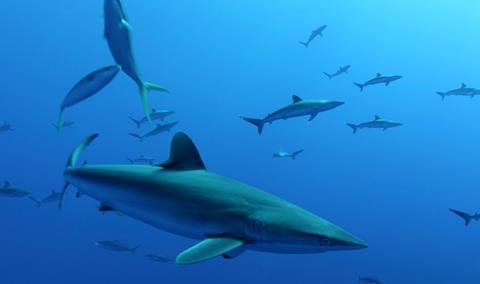
It also wants shark and non-target species by-catch and other ecosystem impacts, such as marine debris and FAD beaching, to be reduced, and stresses that using non-entangling and biodegradable FAD designs is a critical step to achieving that.
Consistent with appeals that ISSF and its stakeholders issued throughout 2022, the statement specifies enhanced FAD management provisions, including:
- Developing and implementing science-based limits on FAD deployments and/or FAD sets, consistent with management objectives for tropical tunas
- Allowing the IOTC Scientific Committee to use submitted FAD tracking data for scientific purposes – data that is currently used only for FAD limit compliance purposes
- Requiring the use of biodegradable materials in the construction of FADs to minimise the use of synthetic/plastic materials in FAD construction. Establish a timeline for transitioning to 100% biodegradable
- Developing and adopting FAD marking guidelines, including requiring the marking of the buoy and the FAD structure
- Developing and adopting FAD tracking and recovery policies that consider utilising supply vessels in FAD recovery efforts
- Adopting clearer rules for FAD ownership and activation, as well as for deactivation of FAD buoys
The IOTC Special Session was called last year due to inaction on the topic of FADs.
ISSF is a global coalition of seafood companies, fisheries experts, scientific and environmental organisations, and the vessel communitythat promotes science-based initiatives for long-term tuna conservation, FAD management, by-catch mitigation, marine ecosystem health, capacity management and illegal fishing prevention.
Its ultimate objective is to help global tuna fisheries meet the sustainability criteria to achieve the Marine Stewardship Council (MSC) certification standard without conditions.