





Greenpeace: Shocking failures in global fisheries management
There have been shocking failures in global fisheries management over the last 70 years, according to a new report from Greenpeace International.
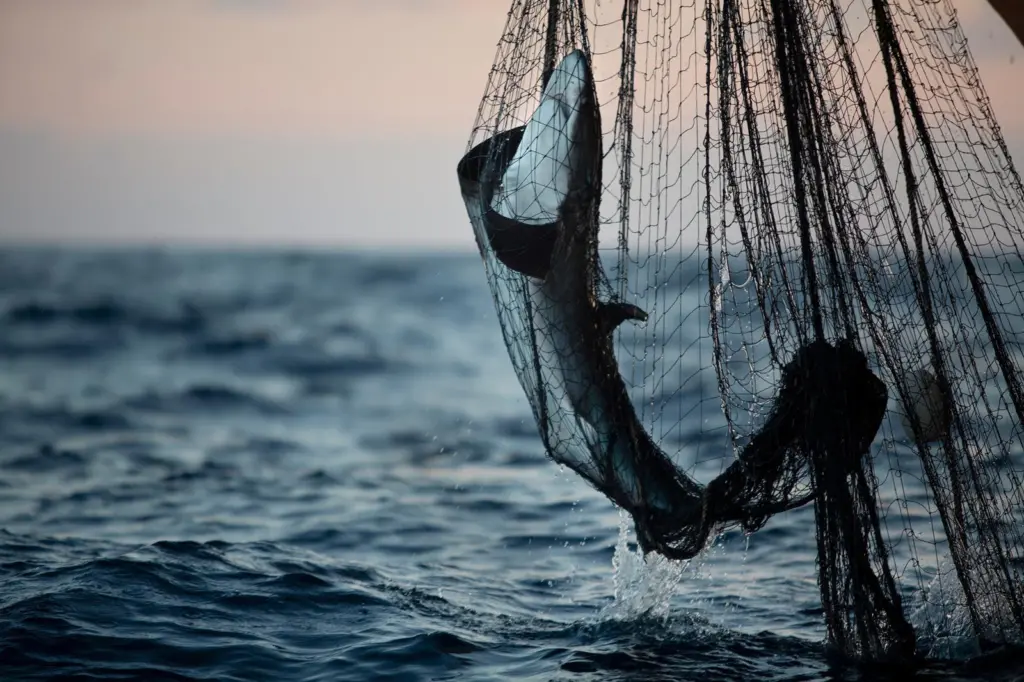
The report, “Un-tangled: How the Global Ocean Treaty can help repair high seas mismanagement”, states that regional fisheries management organisations (RFMOs) have failed to manage global overfishing since their emergence, resulting in 35.4% of all assessed fish stocks now being severely overfished. It also sets out how the Global Ocean Treaty, adopted in June 2023, can address the current ocean crisis with tools that go beyond the narrow sectoral approach, and work with RFMOs to remedy this broken status quo.
“We are optimistic that protecting our blue planet is possible with the help of the Global Ocean Treaty. This historic agreement was years in the making, years in which our global fisheries have been decimated, jeopardising ocean health and food security for millions,” Greenpeace UK Political Campaigner Reshima Sharma said. “Before the end of this year, the incoming government needs to sign the treaty into UK law to kickstart ocean protection on a global scale and fix the broken system. The new government could immediately cement the UK’s position as a global leader on ocean protection and help protect at least 30% of the world’s ocean before the end of this decade.”
Laura Meller of Greenpeace’s global Protect the Oceans campaign added that science and the safeguarding of thriving fish populations for all future generations should be the compass guiding governments’ choices.
Instead, RFMOs have overseen industrial plundering of the oceans at a scale beyond anything seen before in human history, she said.
“This broken system has prioritised extraction for a few wealthy countries over protection for us all. Governments must prize biodiversity protection over extraction and ratify the Global Ocean Treaty so, in future, protection and justice are at the heart of ocean governance.”
The report, which comes ahead of the international oceans conference “Immersed In Change” (7-8 June 2024), at which solutions to ocean governance will be discussed, explains why RFMOs have not delivered on their mandate to preserve marine biodiversity.
According to Greenpeace, at the core of this is abuse of consensus decision making that allows single countries to block vital measures, corporate influence which creates substantial conflicts of interests, and RFMOs’ continued failure to follow scientific advice.
It says that since RFMOs emerged 70 years ago, ocean health has relentlessly declined, as they have failed to prevent overfishing, the decimation of sensitive species and the destruction of vulnerable marine ecosystems. The report also offers cases of weaponising doubt in the scientific process, with decisions taken that allow continued overexploitation and measures protecting the environment to be hindered.
“Behind closed doors, corporate capture of RFMOs has left them powerless and counterproductive. On their watch the oceans have been plunged deep into crisis and the broken status quo must change before it’s too late. The Global Ocean Treaty provides hope. If it’s ratified in 2025, it will enable us to protect 30% of the oceans by 2030, giving marine life a chance to recover from decades of mismanagement by RFMOs,” Meller said.
Greenpeace is calling on the UK government to ratify the Global Ocean Treaty by the end of the year, and to support other states across the world to do the same. It is also calling for UK government to work with other countries to develop a proposal for a high seas ocean sanctuary within the Sargasso Sea, the uniquely biodiverse part of the Atlantic Ocean that surrounds the British Overseas Territory of Bermuda.
Major figures analysed in the report include:
- Global overfishing has risen, almost uninterrupted, since the 1970s. It hit a historic high in 2019 of 35.4% of all assessed fish stocks
- Since the emergence of the first RFMOs, global annual wild capture fisheries landings increased from approximately 20 million tonnes in 1950 to a high of around 90 million tonnes in the mid-1990s and have since stabilised at this number
- While RFMOs have a mandate to manage and monitor species and ecosystems associated with their target species, their scope is narrow and far from representing global ocean biodiversity: scientists estimate that RFMO assessments cover only 5% of high seas biodiversity
- While the high seas are common heritage of all humankind, their exploitation benefits few: 97% of all high seas fishing is undertaken by vessels flagged to higher-income countries
International oceans governance watchdog Accountability.Fish has welcomed the launch of Greenpeace’s report.
“Well documented and comprehensive, this report is an important addition to the growing global conversation about oceans governance,” said Accountability.Fish Global Director Ryan Orgera. “At the same time, even though it focuses on using the Global Ocean (BBNJ) Treaty as the vehicle for a solution, it actually amplifies our calls for immediate reform. Because the oceans cannot wait.”
Orgera notes the report calls out the world’s RFMOs for their “lack of transparency and accountability” and “consensus-based decision making – which allows a minority of actors to block progress towards additional conservation and management measures for the high seas”.
“What we have is a system that can be easily sabotaged by a small number of bad actors – either a country beholden to its industrial fishers or by an RFMO that purposely closes key proceedings to observers and the media,” said Orgera. “This isn’t simply an issue for environmentalists – it’s a system that also puts consumers, retailers, marketers and labour at a huge disadvantage. And it needs to be reformed now.”
Related Articles
 FISHERIES
 FISHERIES
 FISHERIES