



Norwegian cod farming company Statt Torsk ASA has reduced this year’s harvest and sales plans to ensure its product maintains a premium – achieved through fixed, year-round deliveries to its European customers.
In a filing with Euronext Growth (Oslo), the company stated that its management has decided not to increase the harvest rate beyond the deliveries to its pilot customer in Spain.
It has been supplying that customer with week deliveries of fish since September 2022.
“We now see that this model is scalable and a good foundation to build on. The main challenge now is to develop the market within this strategy. This requires an efficient value chain and close coordination between harvest and sales, which has been our main focus,” it advised.
“Our strategy is not to harvest before we have sold the fish, in order to avoid selling products in the spot market. However, we harvested a good number of samples for various potential customers as well as for various smaller customers in Asia, and not least in Norway.
“The harvesting rate was therefore scaled down compared to original plan, with the consequence that we now have more fish than planned in our facilities. This should have no negative consequences on issues like fish health, product quality or other conditions.”
This strategy has resulted in a delay in Statt Torsk’s development by about six months according to the original plan, it said.
“But we believe this was the right choice, to secure the strategic establishment of the brand and the product.”
In order to continue this strategy, the producer will now operate with a harvest and sales plan of approximately 3,500 tonnes in 2023.
According to the filing, the focus will be to develop the market and new customers and increase the sales further in line with the product strategy.
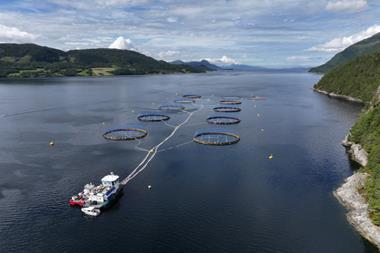
In 2022, Statt Torsk had the approval of seven additional licenses, each with a maximum allowed biomass (MAB) of approximately 780 tonnes.
This includes the expansion of three MABs in the existing facility in Rekvika, plus a new facility with four MABs at Apalset.
This will increase its maximum permitted production capacity by 144% – from 3,900 tonnes to 9,360 tonnes of biomass.
The long-term production target is 12,000 tonnes per year.