



Optimism still remains in UK
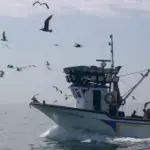
There were 220 white-fish trawlers registered in Scotland three years ago. There are now 120.
The white fish fleet has strongly been affected by the long-term recovery plans for endangered stocks, specially cod, in the North Sea.
Although North Sea haddock stocks are healthy and the total allowable catch (TAC) is up 53 per cent, fishing allowance has been reduced to 15 days per month in order to reduce cod bycatch.
Diverse
However, Ben Bradshaw, UK minister for nature conservation and fisheries, does think that the industry is alive and seems optimistic when he describes the situation of the sector. He explains that there is a very diverse picture around the industry at the moment.
“There are parts (of the industry) that are going through very difficult times, particularly those parts that concentrate on the white fish sector because of the state of the stocks.
“There are other parts of the industry, some of the inshore fisheries, the shellfish sector, the pelagic sector, which are actually doing very well.
“And incomes in many of the ports are actually being increased over the last few years but clearly the whole atmosphere is being affected by the problem with white fish, and cod in particular, and the difficult decisions we had to take in the Council to restrict the level of cod catches that we can allow.”
Today’s concerns about the future of the cod stocks worldwide is more than justified. When you go back to 1954 a small country like Iceland was at the heart of a disagreement in a year when they had a record catch of 500,000t of cod. In 2004, we witness a small fishing fleet from Northern Ireland only going to be able to catch a total of 2,150t of cod.
On the other side, the UK has almost half of the total EU mackerel quota and almost a quarter of the herring’s. North Sea Nephrops, with TACs up to 30 per cent, and prawns are consolidating a growing domestic and European markets. Diversification seems to be the way forward for the industry, not just for the British but also in Europe. “Diversification, however, does not necessarily means to leave the fishing industry”, Mr Bradshaw explains. “You see movements from sectors which are under more pressure into the shellfish sector, for example, which is more profitable.
More than catching
“It is wrong to see the UK fishing industry simply as a catching industry. There is an important processing industry. Places like Hull or Grimsby which used to be major cod landing and catching centres, they still remain important landing ports.”
Like most leading industry figures, Mr Bradshaw cannot stop making references to the industry ‘buzz’ word, sustainability, when talking about the future of the industry and the key of its success. He says that there cannot be a long-term profitable industry unless there is a sustainable fishery. The white fish fleet catching cod in the North Sea as well as the cod fishery in the Grand Banks have already suffered the depletation of their fish stocks.
“If you don’t adjust your level of catch to the state of the stocks you end up in a downwards spiral … in a situation where you don’t have an industry because you don’t have any fish.” But he warns that getting the level of catch at a sustainable level may bring further reduction to the already diminished fleet.
“That’s something that needs to be done in order to ensure that fishermen who remain in business can operate comfortably… then that’s the price that we may have to pay”.
He says that UK had been supporting for some time some of the ‘unpopular’ measures adopted in the new Common Fisheries Policy (CFP) as fleet decommission and stop subsidies for increasing fleet capacity.
Many people in the UK are not willing to make more sacrifices and many industry members are urging the Government to withdraw from the CFP, claiming that the only way to recover the industry is to abandon the CFP and reclaim control of UK waters.
Last month, Scottish National Party MP Alex Salmond presented a Fisheries Jurisdiction Bill in the House of the Commons. The new bill would transfer powers over fishing to the Scottish Parliament, Westminster Parliament, the Welsh Assembly and the Northern Ireland Assembly.
CFP
Mr Salmond said recently: “The Common Fisheries Policy has been disastrous for Scotland and our communities. We need to return control of the fisheries back to Scotland rather than endure more ill-thought out deals from Brussels that are bad for the industry from every point of view.”
Mr Bradshaw is confident on the CFP and does not believe that abandoning the European rule is the solution. “We cannot get isolated from Europe.” To the voices that claim that the Government is not doing enough in Brussels and at home to protect the fishing industry, he replies with the UK Fisheries Project*.
It is a major report elaborated by the Prime Minister’s Strategic Unit to study the medium to long-tem issues facing the UK industry. The project aims to develop a long-term strategy for the sustainable future of the sector taking into account the need for the sustainable management of marine resources, the diverse and changing circumstances of the fishing industry and the social and economic development of communities that depend on fishing.
It is the first major strategic analysis of the state of the British fishing industry for 30 years. For elaborating the study, the Strategic Unit is working closely with the fisheries department: the Department for Environment, Food and Rural Affairs, the Scottish Executive, the Welsh Assembly Government and the Northern Ireland Office.
Aquaculture is a growing sector within the industry and the UK is becoming increasingly important in farmed salmon production. Researches are focusing in the cultivation of new species, like cod in Norway and the UK is following very closely these developments.
But much have to be done in the aquaculture development. Fish farming has great ecological implications and fish diseases still need more research. “I cannot see fish farming, if ever will, replacing the catching sector as the main fish provider in the medium future.”
Deep sea fishing
Advances in new technology allow us to think that deep sea fishing can play an important role in the future on the industry. Mr Bradshaw emphasises on the lack of a legal framework and the necessity to do more research, underlying that there are already some deep sea species overfished. Consumers attitudes are also changing. More people are demanding to know where their fish is caught, how it is caught and whether the fish is from a sustainable fishery. Mr Bradshaw highlights the existence of internationals organisations he mentions the Marine Stewardship Council (MSC) certification that offers to consumers to choose from a sustainable source.
Recently, Ben Bradshaw, also announced details of the benefits to UK fishing communities that have arisen from vessels landing catches in UK ports and employing UK crew. Economic links measures are intended to ensure that vessels fishing against UK quotas bring an economic benefit to coastal communities dependent on fishing and related industries. In a statement to Parliament, Mr Bradshaw, said: “In 2002, 1,362 vessels caught more than 2 tonnes of quota stocks and in each case achieved a satisfactory economic link, primarily throughlandings into the UK.
“These arrangements have resulted in UK-registered but foreign-owned vessels continuing to land and incur expenditure at UK ports. Additionally more than 500 tonnes of quota, primarily nephrops, North Sea sole and North Sea cod, was made available for re-distribution to the inshore fleet.” Mr Bradshaw continued:
“Benefits compared with 1998, have included:
* a 40% increase in the volume of quota stocks landed into the UK by foreign owned UK registered vessels. This figure is proportionally higher when viewed against cuts in TACs since 1998;
* a significant increase in the number of landings into the UK by Anglo-Spanish vessels, resulting in additional expenditure at UK ports of some £3 million;
* the provision of almost 500 tonnes of quota for redistribution to UK inshore fleet, notably nephrops, North Sea sole and North Sea cod.
“I am extremely pleased to see that our fishing related communities are continuing to receiving this injection of funding through achievement of these economic links.”
Control measures
A series of measures are being taken by the Fisheries Departments in the UK to strengthen fisheries monitoring, control and enforcement.
In a written statement to Parliament, Mr Bradshaw, said:
“Effective monitoring, control and surveillance are critical to the operation of the Common Fisheries Policy and measures to conserve fish stocks.
“The Government is fully committed to effective enforcement and will not condone any form of activity that undermines the continuing efforts to conserve fish stock and to provide a sustainable future for the industry. With increasing emphasis on the sustainable use of naturally occurring resources, a culture of high compliance becomes ever more important.”
The new measures include:
* consideration of moving away from the current system of criminal sanctions towards a potentially more responsive system of administrative penalties for breaches of fisheries regulations;
* improved accountability and traceability of fish landings through the designation of fish markets and the registration of all sellers and buyers of first sale fish;
* improvements in the weighing of fish before it is sold or before it leaves the port of landing for sale elsewhere;
* extending the existing arrangements for designated landing ports and for the prior notification of catch to vessels below 20 metres;
* the wider use of single area or single species licensing;
* the fitting of tamper proof satellite position reporting terminals to all vessels over 15 metres; and
* the better utilisation of resources with a greater focus on land-based inspection.
*The UK Fisheries Project was due to be published on 25th of March. On that date World Fishing was already going to press.
Related Articles
 PROCESSING & REFRIGERATION
 PROCESSING & REFRIGERATION
 PROCESSING & REFRIGERATION