



Opinion: Realising the benefits of water-based 5G networks
Around the world, technological advances are promising to revolutionise every industry, from energy and healthcare services to transport and food production. Industry 4.0 promises everything from greater data processing, informed decision making and remote operations to artificial intelligence and machine-learning led innovations.

At the centre of the advances in connectivity is the development of 5G networks that offer technological change through higher speeds, lower latency and greater capacity than existing networks. Achieving reliable, secure connectivity at sea is hugely important to the blue economy’s ability to take advantage of IoT but securing reliable telecommunication networks at sea is more difficult than on land.
Real-time decision making
Establishing a network of interconnected devices in aquaculture locations could open up a wealth of data driven analysis and management for the sea farming industry. For example, being able to protect livestock and equipment from the worst effects of Mother Nature is a key component of running a successful aquaculture company. This means monitoring an extensive array of metrics in order to make smart decisions. However, the remote location of many installations means this is typically a time and resource intensive exercise.
Creating networks of connected sensors allows companies to acquire large volumes of continuous, real-time data across multiple sites and locations remotely; supporting them to make real-time decisions based on the latest environmental and operational data such as oxygen levels, sea temperature, salinity, pH balance, barometric pressure, wave height and strength, currents, the tension on mooring lines, and so on.
This not only reduces the operational costs involved in monitoring sites but also enables increased responsiveness and efficiency.
The benefits of such a network extend not only to protecting animal welfare but also making improvements to preventative maintenance models. For example, rather than sending an engineer to physically inspect equipment once a month, sensors monitoring equipment conditions can provide real-time data to management teams, allowing them to save maintenance visits for when they are truly required, saving time and money.
Remote connectivity
Just as remote, water-based locations make accessing aquaculture settings a challenge in the physical world, it also poses real challenges for the telecoms industry. Sea state and environmental conditions can have a significant impact on connectivity, with some conditions boosting signal and others hindering it, while ensuring kit is effectively waterproofed and that platforms are tall enough to allow signals to travel a good distance are also crucial to providing reliable connectivity.
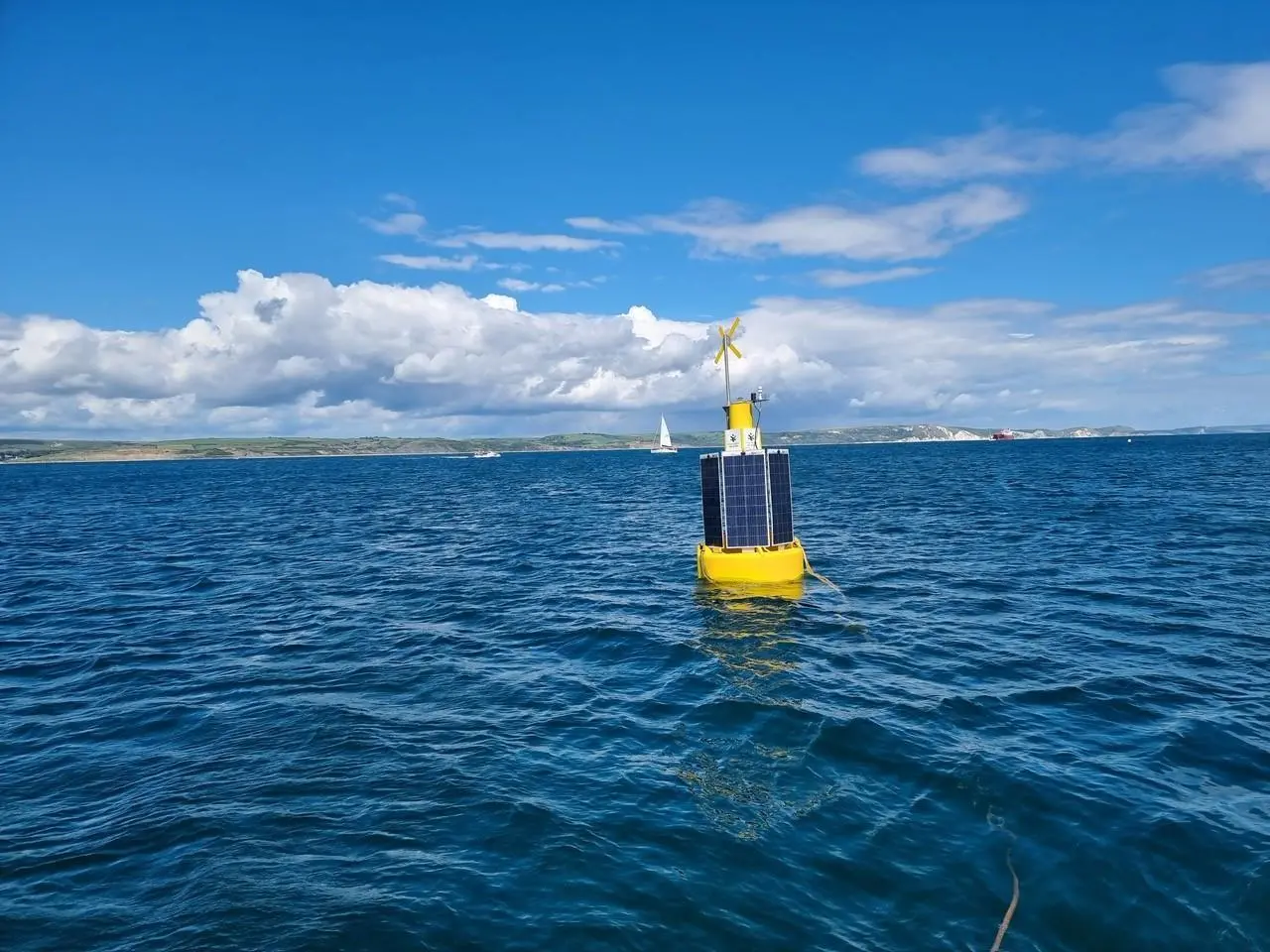
This is where new buoy-based networks that are being successfully trialled off the UK coast could be the solution. Our own floating network extends 5G capabilities out to sea by hosting technology on a series of 5G-enabled, self-powered buoys that can be deployed exactly where they are required.
This network can extend for miles offshore, delivering a high bandwidth, secure, high-speed connection across significant distances and unlocking a host of possibilities to make everyday work easier, reduce costs and improve efficiencies.
Practical application
The technology has already been used to create an aquaculture monitoring system in Portland Harbour, Dorset, harnessing 5G network connectivity to analyse sea and environmental conditions, visually tracking seaweed growth and monitoring shellfish biofouling indicators using two sub-surface cameras.
Livestreaming from low-profile buoys measures sea state 24/7, providing data on temperature, wave height, oxygen and algae levels. The data is then processed using AI/machine learning to better inform farming practices, reduce labour/operating costs and increase productivity.
The ocean remains one of the least explored and most challenging frontiers on Earth, but a range of sea-based industries will soon be able to benefit from secure, high bandwidth, real-time data transmission in even the most challenging of environments. Have you thought about how improved connectivity could boost your aquaculture operation?
About JET Engineering System Solutions
Spun out from JET Engineering Services in 2020, JET Engineering System Solutions provides 5G connectivity products and services for challenging environments, especially at sea.