


A three-year collaboration involving aquariums and research institutions across the US has advanced the breeding and rearing of more than 20 marine finfish species under human care, including species successfully bred for the first time.
Funded through NOAA Sea Grant, the initiative, ‘Catalyzing Marine Finfish Aquaculture Through Public Aquariums’, has brought together aquarists and researchers to develop practical methods for raising marine fish from eggs and fragile larvae through to juveniles and adults.
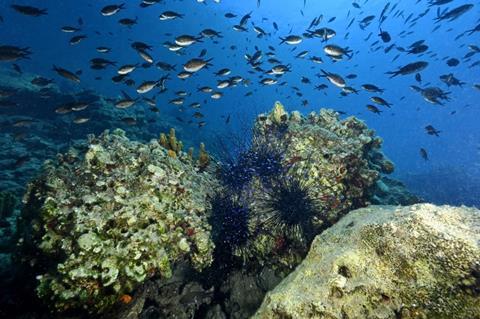
The work has already contributed to thousands of individual fish being bred and shared among Association of Zoos and Aquariums-accredited facilities, supporting more sustainable aquatic collections while creating techniques that could have wider conservation and aquaculture applications.
“It is our hope that the advancement made in breeding these animals can have applications to further conservation in the future,” said Alex Bohardt, assistant curator of aquatic sustainability at the Aquarium of the Pacific.
Breeding marine finfish can be technically challenging. Eggs may be no larger than a pinhead, while newly hatched larvae require carefully managed conditions and microscopic live prey.
Researchers used Modular Larval Rearing Systems, or MoLaRS, to address some of these challenges. The systems are inexpensive and adaptable aquaculture units developed by Dr. Andrew Rhyne of Roger Williams University.
The project also examined species with potential commercial and ornamental aquaculture applications, including neon gobies, Atlantic lookdowns and golden sweepers.
“By developing successful breeding and rearing protocols for new species, these aquariums serve as research and development hubs, reducing dependence on wild-caught animals and creating methods that commercial producers may be able to adapt for additional species,” Rhyne said.
The conservation potential is another focus of the work. Dr Michael Tlusty of the University of Massachusetts Boston said working with diverse species could become valuable if intervention is needed to conserve populations.
NOAA Sea Grant aquaculture manager Chuck Weirich said the collaboration demonstrates how partnerships can develop solutions supporting public aquariums while potentially strengthening commercial ornamental finfish production.