


A pioneering coalition led by Fisheries Innovation & Sustainability (FIS) has secured nearly GBP 172,000 in new funding to advance development of a world-first prawn stunning and tailing machine. The technology, designed to replace traditional manual live tailing at sea, promises to transform crew welfare, improve animal welfare standards and boost efficiency across the UK’s nephrops (prawn) fishery – one of the nation’s most valuable seafood sectors.
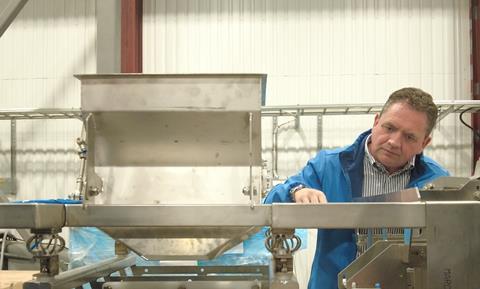
The grant from Northern Ireland’s Department of Agriculture, Environment and Rural Affairs (DAERA), awarded under the Marine Environment & Fisheries Fund, will allow the prototype to evolve into a full-capacity, automated system, designed to operate under the demanding conditions of commercial nephrops fishing. Following rigorous testing by seafood technology leaders Optimar, the machine will undergo sea trials in Spring 2026, with onshore demonstrations planned in Kilkeel and at the Scottish Skipper Expo in Aberdeen.
The project brings together a wide spectrum of seafood supply chain partners, from fish producers and processors to retailers and research institutions. Partners include ANIFPO, NIFPO, SWFPA, Associated Seafoods, Kilkeel Seafoods, Whitby Seafoods, Young’s Seafood, Macduff Shellfish, M&S, Sainsbury’s, Seafish, University of Stirling and The Fishmongers’ Company.
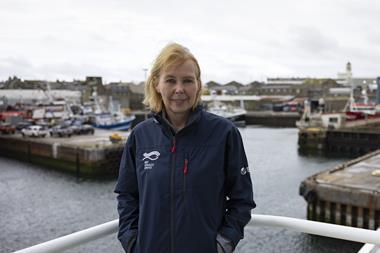
FIS Executive Director Kara Brydson said the initiative demonstrates how precompetitive collaboration with industry can drive forward sustainable innovation in UK fishing. “This vital grant will bring us another step closer to creating a unique piece of kit that is truly fit-for-purpose for UK vessels, and help seafood businesses meet future requirements and sustainability goals,” she said.
With regards to the potential competitive advantage the technology could give UK prawns, Brydson told WF the project is about giving skippers a choice.
“Animal welfare legislation in the UK and elsewhere is developing rapidly, and the catching and processing businesses that approached FIS to help develop this machine wanted to be prepared for new government and retailer requirements. Much better to work together to create a solution that works for us as an industry, rather than have so-called solutions pushed upon us at the last minute. That is the ethos of FIS – who knows better about what’s safe and practical than the catchers and processors themselves?” she said.
Elevating crew welfare
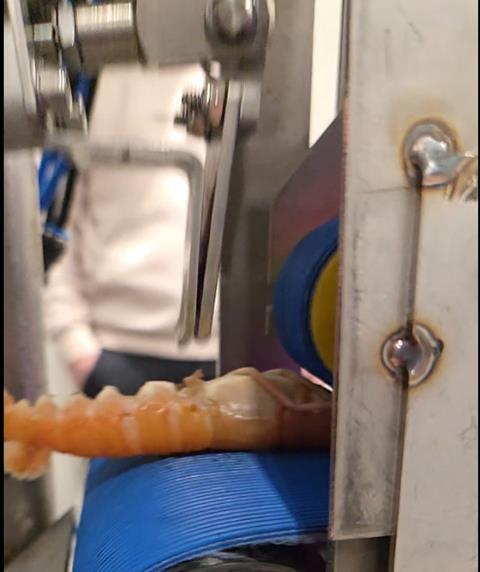
Nephrops fisheries are a cornerstone of Northern Ireland’s seafood industry, supporting coastal communities and providing high-value exports. Traditionally, crews manually tail prawns onboard, a labour-intensive process with significant welfare and handling challenges. The prototype machine automates stunning and tailing, offering a more humane, efficient, and consistent method.
“Live tailing nephrops is a task that can be stressful and repetitive.” Brydson said. “This machine aims to create a better working environment for the crew, especially in the months when catches are high. Machine processing can be done at pace and with precision, meaning the catch is processed safely, efficiently, maintaining ever-important quality, and everyone gets back to fishing faster.”
Welcoming the innovation, Andrew Muir, Northern Ireland’s Minister for Agriculture, Environment and Rural Affairs, remarked: “The machine will not only deliver more humane tailing of nephrops at sea but will enhance crew welfare through a significant reduction in the very long hours spent manually sorting and tailing prawns in often challenging conditions.”
Skippers have been involved in this project right from the very start, Brydson explained. “They came to FIS looking for a solution, so the project will only be a success if the machine delivers their vision.”
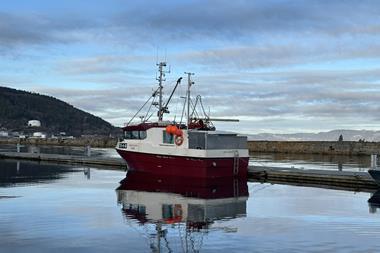
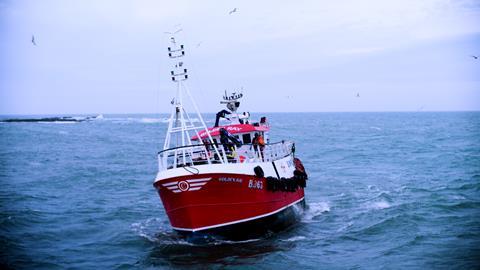
The current prototype was successfully trialled in May 2025 aboard the commercial prawn trawler Golden Ray, skippered by third-generation fisherman Darren McClements. “At sea testing is a crucial part of this – to work, solutions have to be practically designed for the conditions onboard a fishing vessel,” McClements said. “We are proud to support these trials. This is about fishing better, improving welfare and providing the highest quality product for market.”
McClements has also flown over to the Optimar factory in Norway to give feedback on improvements to the prototype.
“This feedback from Darren and those who process his catch has resulted in the machine being designed not to chop the tails of each animal, but to squeeze out the tail in a way that maximises meat yield, whilst maintaining quality,” Brydson said.
A practical, sea-ready innovation
Optimar’s R&D team has been integral to the project from its inception. “Aligned with our mission to future-ready seafood processing, we embarked on this project to design and test the first onboard Nephrops stunning and tailing machine,” said Lars Giske, Optimar Head of R&D. “With the next phase of development and testing now in reach, we are moving closer to broader adoption across the UK fleet.”
The new funding will help the coalition refine the prototype into a robust, full-capacity machine suitable for widespread use. Onshore demonstrations will allow processors, vessel owners and retailers to witness the technology in action, while sea trials will validate performance in operational conditions.
“Even once the machine is finalised for sale, we’re still at the start of the story,” Brydson stressed.
FIS is commissioning an economics review to help make the business case for investing in the machine. It also believes that early adopters of novel technology should be supported, either financially or though positive regulations,” she said.
“We’ll work with those early adopters to understand what additional support is needed to ensure that all fishing communities can be ready to meet new rules on crew employment and animal welfare. The final price of the machine has yet to be determined, but it’s our aim to ensure it’s an affordable, practical solution, as well as safe and secure for the vessel and crew.”
Crucially, the project reflects a proactive effort by the UK seafood sector to address labour challenges, improve animal welfare, and future-proof operations against evolving market and regulatory requirements. By automating one of the most demanding onboard processes, the stunning and tailing machine offers tangible benefits for crews, processors and the broader industry.
“This project is proof that precompetitive collaboration – by the seafood industry for the seafood industry – truly works,” Brydson said. “People have been thinking about onboard automation for smaller vessels for years, but working in individual silos with much cost and no success. It can feel counter intuitive to share good ideas, but in fact it’s the only way to not to run out of money and run out of steam. If WF readers have potential solutions to improve the prosperity of our fishing communities, let me know!”
Topics
- Andrew Muir
- ANIFPRO
- Associated Seafoods
- Business & Finance
- DAERA
- FIS
- Fisheries
- Greener fishing
- Kilkeel Seafoods
- M&S
- Macduff Shellfish
- Nephrops
- NIFPRO
- Onboard Processing
- Optimar
- prawn stunning
- Processing & Refrigeration
- Sainsbury's
- Scottish Skipper Expo
- Seafish
- Sustainability
- SWFPA
- The Fishmongers’ Company
- United Kingdom
- University of Stirling’s Institute of Aquaculture
- Whitby Seafoods
- Young's Seafood