


Nestled near the Port of Hirtshals in Denmark, Flume Tank North Sea is quietly making waves – literally and figuratively – in Europe’s blue economy. As the continent’s largest wave and flow tank, the facility has strengthened its commercial focus, expanded partnerships and positioned itself as a hub for marine technology testing – attracting a lot of positive attention along the way.
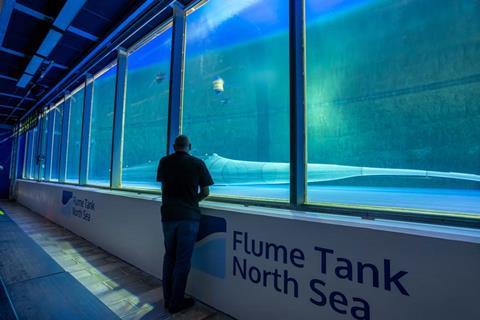
Though the tank has existed for 40 years, its profile remained relatively low – until the North Sea Science Park took over operations in October 2023. Now, with renewed strategy, investment in commercial outreach, and a focus on collaboration, the facility is emerging as a global player.
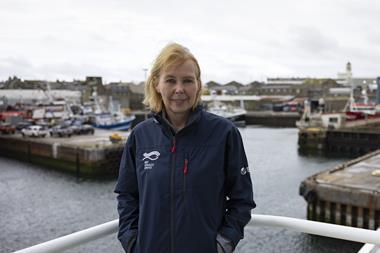
North Sea Science Park’s takeover has changed things up for the facility, confirmed Mette H Roussis, Business Development Manager at North Sea Science Park and Flume Tank North Sea. This year, especially, has brought a lot more distinction, with regular visits from Danish ministers, EU policymakers, and international businesses alike, she said.
The facility’s efforts were recently recognised when it received the ‘Best Marine Technology Testing Facility 2025’ award from EU Business News – a testament to its growing influence in both research and industrial circles.
Testing capabilities
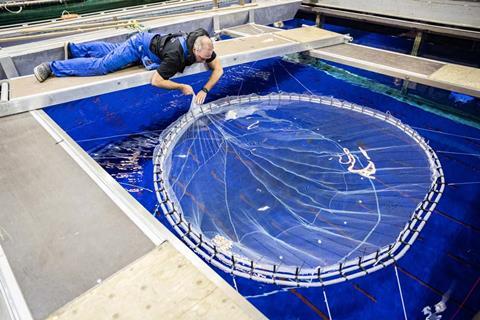
Flume Tank North Sea is designed to test a wide range of maritime, fisheries and aquaculture equipment. Engineers and researchers can simulate real-world conditions for nets, trawls, fish farm cages, ROVs and underwater instrumentation, all within Europe’s largest wave and flow tank. The facility’s advanced tools include underwater cameras, a net-making workshop, a 60-seat auditorium for demonstrations and specialised software for calculations, simulations and underwater modelling.
“Our company has strong roots in the port environment, and that is reflected in our expertise. We are among the few in the world who can manufacture specialised models in trawl, nets and seines,” said Roussis.
This combination of traditional craft and modern engineering sets Flume Tank North Sea apart. “The old craftsmanship – net-making – is just as important to us as engineering knowledge, and we want to ensure that this craft continues to thrive moving forward.”
At the same time, there’s no doubt that digital tools and AI are gaining ground. As such, the North Sea Science Park is looking at upgrading its services at the flume tank, Roussis confirmed.
“However, the craftsmanship of netmaking is a precondition for scaling down. The level of precision and adjustments to customer specifications requires knowledge of fisheries technology and construction of a wide range of nets and trawls,” she said.
“The models built at the flume tank need to be handcrafted in order to be of high-quality and constructed with the highest precision. Simulation tools are great, but if you don’t have the right input data, then the subsequent measurements and simulations go wrong. In short, in the flume tank, the experienced craftsmanship goes hand-in-hand with engineering and science.”
Strategic location
The tank’s location provides a unique advantage for businesses operating in and around Hirtshals. “Not many ports can offer these kinds of facilities, so it is a huge strength to have the flume tank here. It allows businesses in Hirtshals to enhance their expertise, while attracting potential customers and partners from around the world,” said Linn Indrestrand, Head of Fishery & Maritime Services at Port of Hirtshals.
By providing access to high-end testing and research, Flume Tank North Sea strengthens the local blue economy ecosystem. The facility is helping Hirtshals position itself as a destination for international marine technology collaboration while boosting the competitiveness of regional businesses.
Since January 2025, the North Sea Science Park has guided operations with a clear dual focus: maintaining cutting-edge capabilities and expanding commercial engagement. Partnerships with DTU Aqua, Aalborg University, and other research institutions have flourished, providing both technical validation and opportunities for joint projects.
The facility is also increasingly attracting international players interested in testing aquaculture equipment, offshore energy infrastructure and maritime technology solutions under controlled, replicable conditions.
Roussis also told WF that the flume tank and North Sea Science Park have helped play an active role in building a “blue symbiosis” in Hirtshals.
“Together with Port of Hirtshals, Danish Ocean Cluster, DTU Aqua, North Sea Oceanarium and industry players, we jointly promote Hirtshals and we have a very good cooperation in terms of hosting international guests,” she said. “North Sea Science Park is home to approximately 25 companies and organisations within the marine sector. When we have customers in the flume tank we may offer a complete package of hotels, catering, research, company visits, a tour of the port of Hirtshals and information about the many recent and innovative activities, such as the Danish Ocean Cluster, which is also located in Hirtshals.”
Driving Innovation
Flume Tank North Sea is also playing a key role in fostering innovation. Companies and research institutions can model how nets, trawls, or aquaculture cages perform under varying wave and flow conditions before deploying them in the open sea, reducing risk and increasing operational efficiency. Its software solutions allow detailed hydrodynamic modelling, flow analysis and simulation of environmental conditions, providing actionable insights for engineering and design improvements.
“We contribute not only to testing but also to the innovation process itself. By combining engineering expertise with traditional craft knowledge, we enable companies to refine and optimise equipment before it reaches the market,” Roussis said.
She continued: “We have seen our commercial approach bear fruit, and we look forward to welcoming even more Danish and international players and contributing to strengthening Hirtshals’ position as a key destination for the blue economy.”