



COVID and Brexit created a perfect storm, but options are emerging for the sector.
To say that UK shellfish producers have had a torrid time of late, would be something of an understatement. The loss of foodservice channels both at home and in overseas markets amid the coronavirus lockdown measures was already having a devastating effect on many companies before the significant and somewhat costly border issues that followed the finalisation of the country’s departure from the European Union on 31 December.
Unfortunately, that wasn’t the end of the sector’s troubles. The new EU-UK Trade and Cooperation Agreement (TCA) brought an unforeseen EU-wide ban on the import of of live bivalve molluscs (LBMs) from Britain’s Class-B waters. Consequently, for the past five-plus months, several businesses have been unable to send their products to the key European markets that they had been supplying before Brexit.
Delivering her keynote address at the recent 51st annual conference of the Shellfish Association of Great Britain (SAGB), UK Fisheries Minister, Victoria Prentis, acknowledged the difficulties that the shellfish sector has been facing. She also said the EU’s decision to implement the LBM ban was both “unfair” and “unjustified”.
While the minister promised that the UK government would work hard to address the problems, and that many issues relating to the new trading arrangements were being rectified, she also conceded that the European Commission continues to be unwilling to engage in constructive discussion on the bivalves.
Instead, DEFRA is speaking to individual EU member states that “want this trade to continue, and indeed need it to continue,” she explained.
“I’m not going to pretend that there’s a silver bullet. There isn’t. But we are taking a range of steps that will, I hope, make a real difference. The Trade and Cooperation Agreement has finally been ratified by the EU. We will now see the new specialised committees being set up which will be an important step forward.”
Slow road to recovery
While the TCA ensures that trade with the EU continues without tariffs, it has become apparent that the real problems lie with the non-tariff barriers – essentially, the new rules that exporters must adhere to in order to move products, suggested Andrew Kuyk of the UK Seafood Industry Alliance.
Pointing to a “supply paradox”, whereby approximately 80% of the seafood caught in UK waters is exported (and mostly to the EU), while around two-thirds of what the country consumes is imported (largely from outside the EU), the loss of the frictionless borders with the EU poses a “unique” problem for UK seafood, particularly shellfish, Kuyk said.
“Access to the EU market is crucial. You have a very time-limited product. Also, it’s a feature of this sector that a lot of those products are normally shipped in combined loads where you have fish and shellfish from a number of different suppliers sent in a single consignment using the groupage system.”
Consequently, the end of the EU-UK transition period saw export figures “literally fall off a cliff” – down 95%, and in some cases, 100%, he said.
Acknowledging the minister’s assessment that certain teething and certification issues have been addressed and that improvements are being made, Kuyk also pointed to recoveries that are now being seen in certain markets as COVID restrictions ease.
“Very importantly, some businesses have taken their fates into their own hands to do some very real, practical diversification, with direct sales to UK consumers, and exploring other, non-EU destinations.
“But there’s still a long and difficult road ahead, and I think that many of the pre-Brexit business models (built on fast and frictionless supply chains) are probably not going to return to normal.
“On top of that, transport rates have gone up significantly and things do take longer. You only need to get one thing wrong with one consignment and that could wipe out your profitability for months or even a year,” he said.
Driving up domestic sales traffic
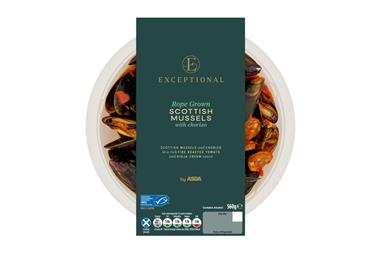
With the export side of things still looking bleak for many, there’s opportunity for shellfish in UK stores that’s worth exploring further, particularly as grocery channels have flourished throughout the lockdown period, offered Seafish CEO Marcus Coleman.
UK retail sales of shellfish leapt by an additional GBP 100 million in 2020, representing a 14% uplift on the previous year, he told the conference. In volume terms, the category accounts for a 16% share of the total seafood volume sold through retail, and for about 21% of the overall value.
“This sudden explosion bucks the longer-term trend for shellfish. Over the last 10 years, only warmwater prawns have been driving the category growth, along with langoustines, lobster and clams. All other species have been declining in volume. And that’s stark contrast to last year, where almost across the board, all shellfish species showed significant retail growth,” Coleman said.
While the increased sales value doesn’t offset the losses experienced in exports or through foodservice, it has certainly been a help to some in the shellfish sector, he added.
Looking ahead, Coleman believes that if shellfish is going to “keep on the front foot” and capitalise on the wave of new customers that have come to the category, then the industry “needs to do its bit”.
Because shoppers are now buying their groceries less often but in bigger quantities, it must come up with products that appeal to that dynamic; items that fill up cupboards and freezers, he said.
“Value for money will also be key. We have got 5.5% unemployment, 4.5 million people on furlough, and we’re going into a pretty big recession. There will be some bounce-back, but many people will not have disposable income…we need to make sure we have products that they’ll want to purchase.
“The brilliant thing about seafood is it does have the diversity to meet all demands. We’re in a good place.”
The Chinese way
Another option is to look at opportunities in the huge Chinese market, which for the world’s largest producer, imports a “surprisingly large” amount of seafood, said Ray Smith, Agriculture, Food & Drink Counsellor at the UK Embassy in Beijing.
“With the UK exiting the EU, there’s a lot of opportunity to look elsewhere to export. And China is our third-largest trading bloc, after the US and the EU,” she said. “China consumes a huge amount of seafood. In 2020, it consumed 4.5 million tonnes of crustaceans, 26 million tonnes of fish, and 10.5 million tonnes of molluscs and cephalopods.
“To put that into perspective, Scotland only landed half a million tonnes of seafood last year, so we are relatively small in terms of what we can export, compared to what China is demanding.”
“They export a lot too, but they are still interested in our products…and there’s a rising demand.”
In 2018, China’s seafood imports increased by 44%, and by 39% in 2019. While the import restrictions brought by the COVID pandemic meant that the country’s imports didn’t increase last year, Smith’s team anticipate that a steady growth pattern will continue through 2025.
“There’s plenty of opportunity for UK products here. And while the UK is relatively small, there are certain products that China really values.”
She told WF&A that having only got market access for langoustines two years ago, these shellfish are doing very well. Similarly, UK oysters and clams are in good demand.
Meanwhile, because he team wants a clearer picture on the competition between domestic and non-domestic species, it has commissioned research to look at what the market is doing and to ascertain what gaps are available for the UK to get a good foothold. It will also evaluate the UK’s capabilities in those areas.
However, “it’s not all sunshine and roses”, Smith warned the conference, explaining that new regulations introduced during the pandemic have made it more difficult to export to the market.
“It’s tricky, but we are here to advise and help wherever possible,” she said.