




Inspired UAE oyster farm
The oyster has been a key part of United Arab Emirates’ history and culture for centuries. Diving for pearl oysters, the native species in the region, played a crucial role in the country’s economy before the discovery of oil in the late 1950s and early 1960s, while pearl diving accounted for as much as 95% of the region’s income.
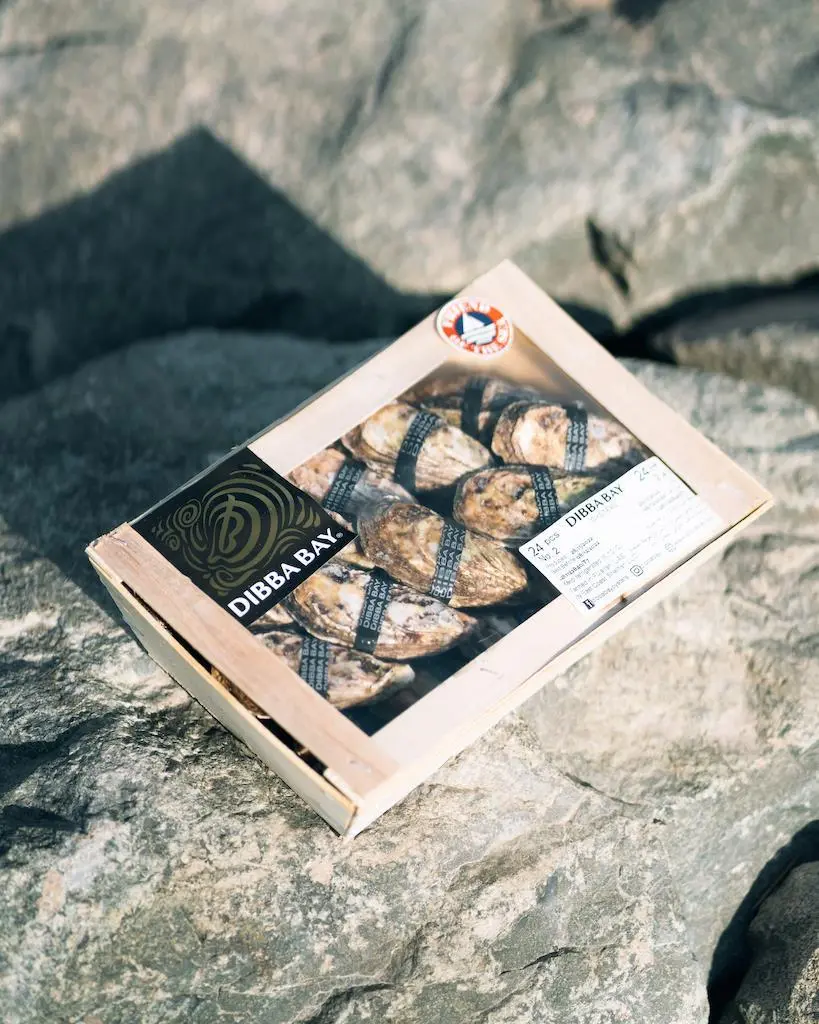
Today, pearl diving may have declined significantly, but oyster farming is thriving. Inspired by the traditional pearl oyster industry, Dibba Bay Oysters was founded in 2016 on the east coast of the UAE by Ramie Murray, who pioneered the pivot from pearl diving to oyster farming. Today, the farm is the first in the Middle East to grow gourmet oysters (Crassostrea Gigas), producing over 300,000 a month in northern Fujairah.
“It wasn’t a deliberate reinvention of the existing oyster industry,” Murray told WF. “Rather, it was only on reflection that we realised that the whole reason why we were able to grow high quality, edible oysters was for the same reasons pearl oysters had been flourishing in this environment for so many years. Because of the unique conditions of the ocean, which have made Arabia world-renowned for its lustrous white pearls, the Dibba Bay oyster is thriving and continues to showcase the heritage of the region through its distinctive and vibrant white and gold shell.”
Conducive conditions
Thanks to ideal water temperatures and the rich density of food (phytoplankton) that’s available for most of the year, the oysters farmed by Dibba Bay Oysters have an incredibly fast growth rate, reaching adult size in only seven to nine months (European oysters, in comparison, can take up to two or three years to reach market size).
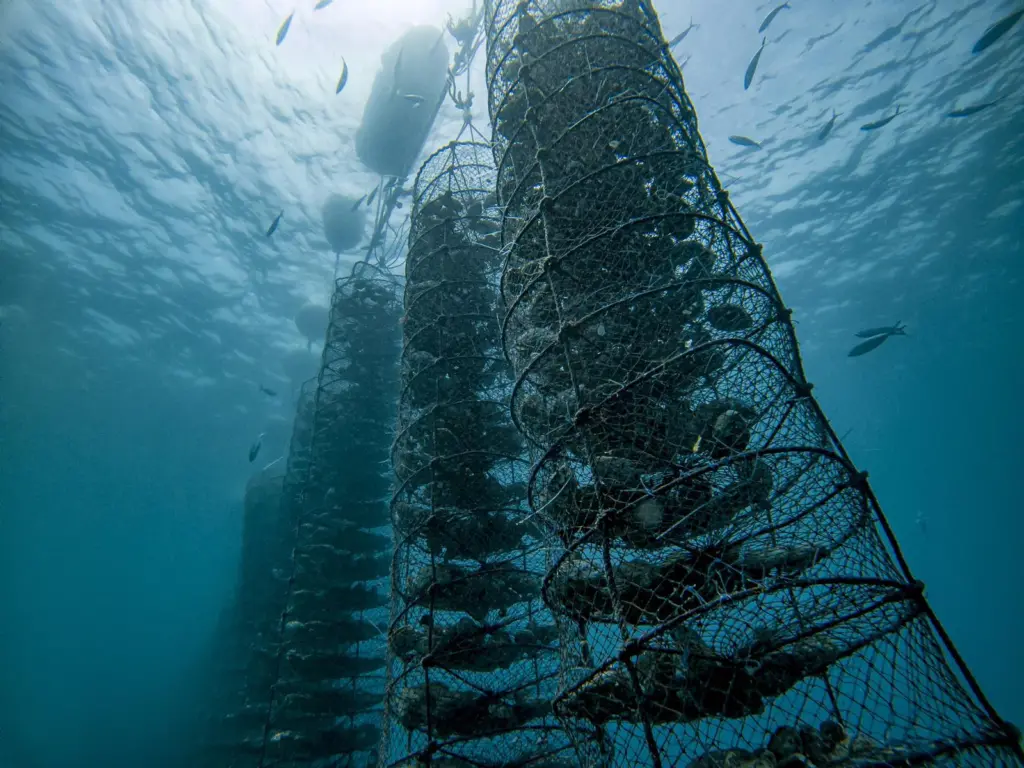
Spat is brought in from hatcheries around the world and seeded in the onshore nursery. When it reaches the required size, it’s transferred to the open ocean to grow in lantern nets that hang on subtidal long lines. There, the oysters live for the majority of their growth cycle.
They are continuously cleaned to remove predators and graded until they reach market size and are ready for harvest.
Harvesting takes place three times a week, every week of the year, to ensure a regular, reliable delivery of fresh oysters.
Half of the farm’s production is consumed locally, while the rest is exported to Malaysia, Oman, the Maldives, Hong Kong, Seychelles, Mauritius and other destinations. The farm is also aiming to export to other Asian markets in the near future, and in 2021 completed a new state-of-the-art production facility, which is gearing up to produce half a million oysters a month.
“What is special about our location is that we have the right conditions for farming oysters; they grow in extremely clean sea water along a sparsely populated coastline,” said Murray. “Our site is relatively shallow but only metres away from deep water off the continental shelf, which allows for an abundance of food to arrive on cool deepsea currents. Thanks to the purity of the water, the abundance of plankton and the warmer temperatures, our oysters quickly grow into a world-class product with an exceptional meat-to-shell ratio, beautiful clean white shells and a delicious, fresh taste.”
Local benefits
While farmed oysters are proving to be popular in the UAE, oyster farming is also growing for another reason – the benefits associated with the practice.
It’s a sustainable form of aquaculture with no negative impact on the environment, said Murray. Oysters improve water quality by filtering 200 litres of seawater a day, they don’t require any feed or fertiliser, and they sequester carbon through their consumption of algae.
The farm’s hanging lantern baskets also offer a wonderful environment for surrounding marine life by acting as hanging reefs, while the farm itself is supporting local aquaculture while also contributing to the UAE’s food security mission by providing a sustainable food product for local and international consumption.
Locally, it has around a 30-40% market share and has displaced a significant number of imported oysters entering the market. It also promotes marine habitats and is attracting a plethora of fish, which helps local fishermen with their daily catch.
Sustainably certified
Dibba Bay Oysters’s environmental impact also includes efforts to support a coral nursery project to recreate coral reef ecosystems using oyster shells.
“We launched the Dibba Bay Oyster Reef Creation Programme to support the marine habitat in Dibba,” said Murray. “The programme involves collecting cleaned oyster shells from Dibba Bay outlets in Dubai and Fujairah, curing them and packing them in non-pollutive gabion cylinders that are 80cm high. The shell structures are then returned to the ocean in Dibba where they act as substrates to support the growth of native oyster species, while offering a wealth of other benefits to ocean health such as creating habitats for marine animals and acting as a natural reef structure.”
Tying in with this, in July 2022 Dibba Bay Oysters secured Friend of the Sea Sustainable Aquaculture certification, a leading global standard for products and services that respect and protect the marine environment.
The certification was issued by Friend of the Sea, a World Sustainability Organization project that awards sustainable practices in fisheries, aquaculture, fishmeal and fish oil, while promoting projects related to areas including restaurants, sustainable shipping, aquaria and ornamental fish.
Dibba Bay Oysters was audited on various criteria, including an environmental impact assessment that had to confirm zero impact on critical habitats, no harmful antifouling or use of growth hormones, compliance with water quality parameters and management, social accountability, and continuous improvement of waste and energy management.
Emirates first
The certification covers the farming of oysters, traceability of packing and export operations, and has helped the farm validate what it is already doing, said Murray, in line with its mission to protect the ocean and involve sustainable practices in all aspects of the business to safeguard the integrity of aquatic life.
“We are proud to be acknowledged by Friend of the Sea for our sustainable farming practices,” said Murray. “We are the first farm in the UAE to receive this certification, and it’s important to us that there is an accredited third party certifying our work; sustainability demonstrated with a third-party certification will help consumers choose more consciously. When we announced that we are a certified Friend of the Sea farm, we received immense interest and positive feedback from consumers. Of course, this has also raised awareness of our sustainable farming practices.”
Dibba Bay Oysters has also strengthened its production line and brand strategy with a mission crafted to translate its further growth, notably in becoming a global shellfish company. Achieving this goal will put yet another unique UAE product under the international spotlight and show the ability of the country to continuously innovate.
“In the UAE, we are definitely at the forefront of sustainable aquaculture – we are adopting a low-impact way of producing protein, which is highly nutritious,” said Murray. “As a nation surrounded by ocean with one of the world’s highest per capita seafood consumption, aquaculture that is properly managed can potentially supply almost everything the country needs.”
Related Articles
 PROCESSING & REFRIGERATION
 PROCESSING & REFRIGERATION
 PROCESSING & REFRIGERATION