

Boosting biodiversity
Today, the importance and benefits of marine conservation are more well-known than ever. But although the ocean covers around 70% of the planet, less than 8% is currently protected. Meanwhile, concerns remain over commercial fishing methods, overfishing and the impact of aquaculture on the ocean through the spread of disease between wild and farmed fish or nutrient and chemical effluent discharge from farms and their knock-on effects on biodiversity. With ocean conservation high on global and regional agendas, creating a sustainable marine habitat is a key priority.
Now, one UK firm is working to protect ocean biodiversity by installing a solution that could potentially be used around the world. Founded in 2015, ARC Marine came up with reef cubes, a substrate for marine species that can help support and protect life on the seafloor and along coastlines. They are made from a low carbon alternative to Portland cement called “Marine Crete”.
Reef cubes are the flagship product of ARC Marine, which was formed originally with a plan to create an artificial reef by sinking a ship, ARC Marine’s in-house marine biologist and Business Development Manager Max Morgan-Kay told WF.
“Over time this evolved, as although sinking ships creates habitats, it has associated risks and an environmental toll, including a risk of pollution from fragmentation in rough seas. ARC Marine is now host to a dedicated team of scientific and industry-leading professionals, all committed to improving the state of the oceans. The team developed the patented reef cube design, a modular concrete unit that incorporates nature-inclusive design into standard and bespoke marine infrastructure,” said Morgan-Kay.
The reef cubes have been designed for marine industries to increase biodiversity and habitat value while developing clients’ infrastructure needs, allowing developers to navigate red tape surrounding construction impacts on local habitats.
Co-locating sectors
As part of ARC Marine’s ongoing research, the reef cubes are currently installed near a scallop farm in Devon as part of a project calledthe Reef Enhancement of Fisheries & Aquaculture Sites (REFAS).
The project can be categorised under two different phases – REFAS 1 and REFAS 2 – both of which were funded by the Centre for Environment, Fisheries and Aquaculture Science (Cefas) Seafood Innovation Fund. REFAS 1 focuses on bringing aquaculture managers and static gear fishermen together to co-locate activities and build working relationships.
Manufacturing and deployment methods were also trialled. REFAS 2 focuses on whether biodiversity and the abundance of commercially important crustacean species, namely brown crab and European lobster, increased within an introduced artificial reef system.
“We have seen positive early results on the focus of the study across different seasons,” said Morgan-Kay. “Additionally, eggs have been noted from cephalopod and shark species, showing the rapid integration of reef cubes into critical species lifecycles, forming nurseries, feeding grounds and refuge from predators. From this, we have a much clearer picture of which formations maximise the increase in biodiversity. In practice, this means that we can deliver the greatest positive impact while minimising resources.”
Species integration
The modular shape of the reef cubes makes them stackable and transportable, while they can also form walls or other structures required in coastal settings. In sub-sea sectors such as aquaculture, the reef cubes can act as mooring blocks, in compliment with ARC Marine’s service offerings of mooring stability analysis/modelling and marine surveys as required for clients’ needs.
Deployment methods have been designed to utilise available ships technology so they can be forklifted, lifted, dropped or carefully placed like any other mooring solution.
“The reef cubes have been designed with an internal spherical chamber, which acts as a place of refuge for fish and crustaceans, while the complex surface texture facilitates recruitment of bivalve and other settling marine species,” said Morgan-Kay. “Additionally, the circular entrance point on each face of the reef cubes minimises smothering of the sediment layer, which is important for integrating current inhabiting species. It also means that species such as European lobster can form burrows within and underneath the reef cubes.”
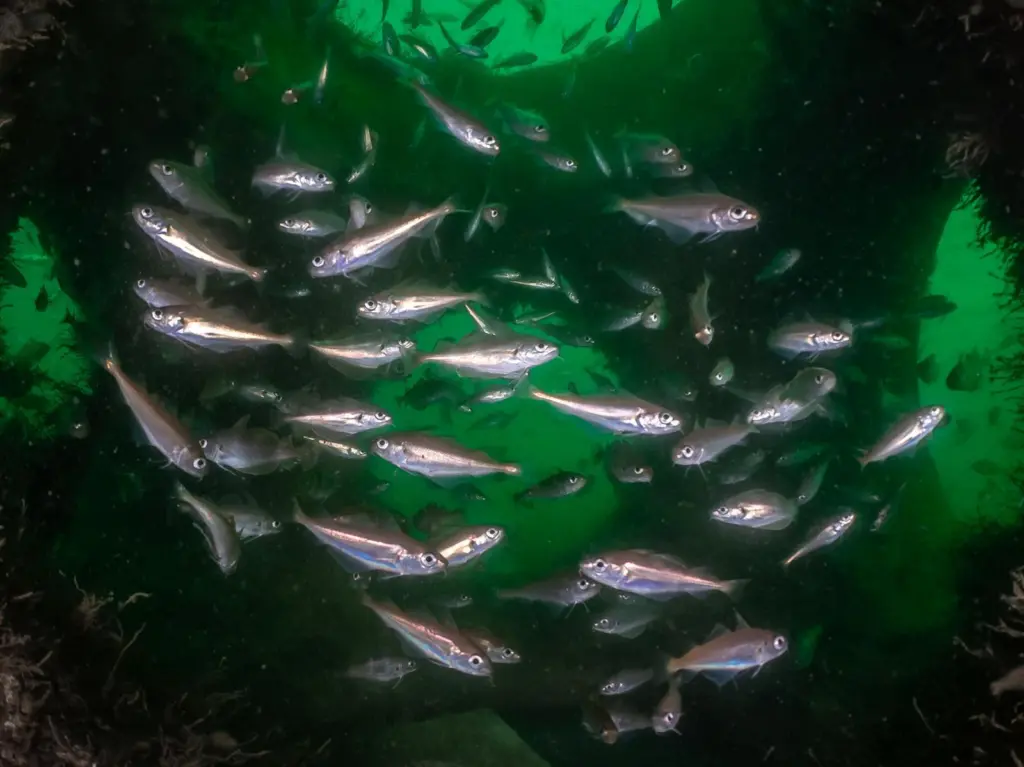
eDNA and observational studies have revealed over 1,100 species at the REFAS 2 site, including poor cod, bib, cuttlefish (adults, juveniles and eggs), small-spotted catshark (adults and eggs), brown crab, European lobster, squat lobsters, common prawns, blue mussels, kelp, ling, multiple species of squid (and their eggs) and seabass. For the farm, this brings a host of benefits.
“Aquaculture worldwide is subject to ever-increasing regulations to minimise the effects of associated negative outputs on the ecosystem,” said Morgan-Kay. “Often, administrative bodies monitor or require reports on ecosystem damage or are choosing not to renew marine licenses due to the damage caused during a farm’s lifespan. These reports are often formed around biodiversity metrics, which act as an indicator for overall ecosystem health.”
“By increasing biodiversity around aquaculture farms, we have developed a tool that can be implemented by farmers as part of their biodiversity strategy,” Morgan-Kay continued. “Additionally, whilst improving biodiversity values, we are attracting keystone species and ecosystem engineering species. These help regulate ecosystems and provide services that regulate biological and physical properties, which may have beneficial effects, not only on the ecosystem but also on the productivity and welfare of a farms’ livestock.”
Rising demand
The reef cubes went through many iterations of design and materials until they were perfected. As it’s not easy to innovate with cement when aiming to be as eco-system-friendly as possible, thorough investigations were required into supply chains, the source and locality of materials and end-of-life recyclability.
Independent third-party testing was also done to demonstrate that no toxic leaching occurs in the marine environment. As a result, the team can now confidently offer reef cubes that leave a positive environmental impact, with a 91% reduction in carbon emissions, 98% recycled materials and zero plastics.
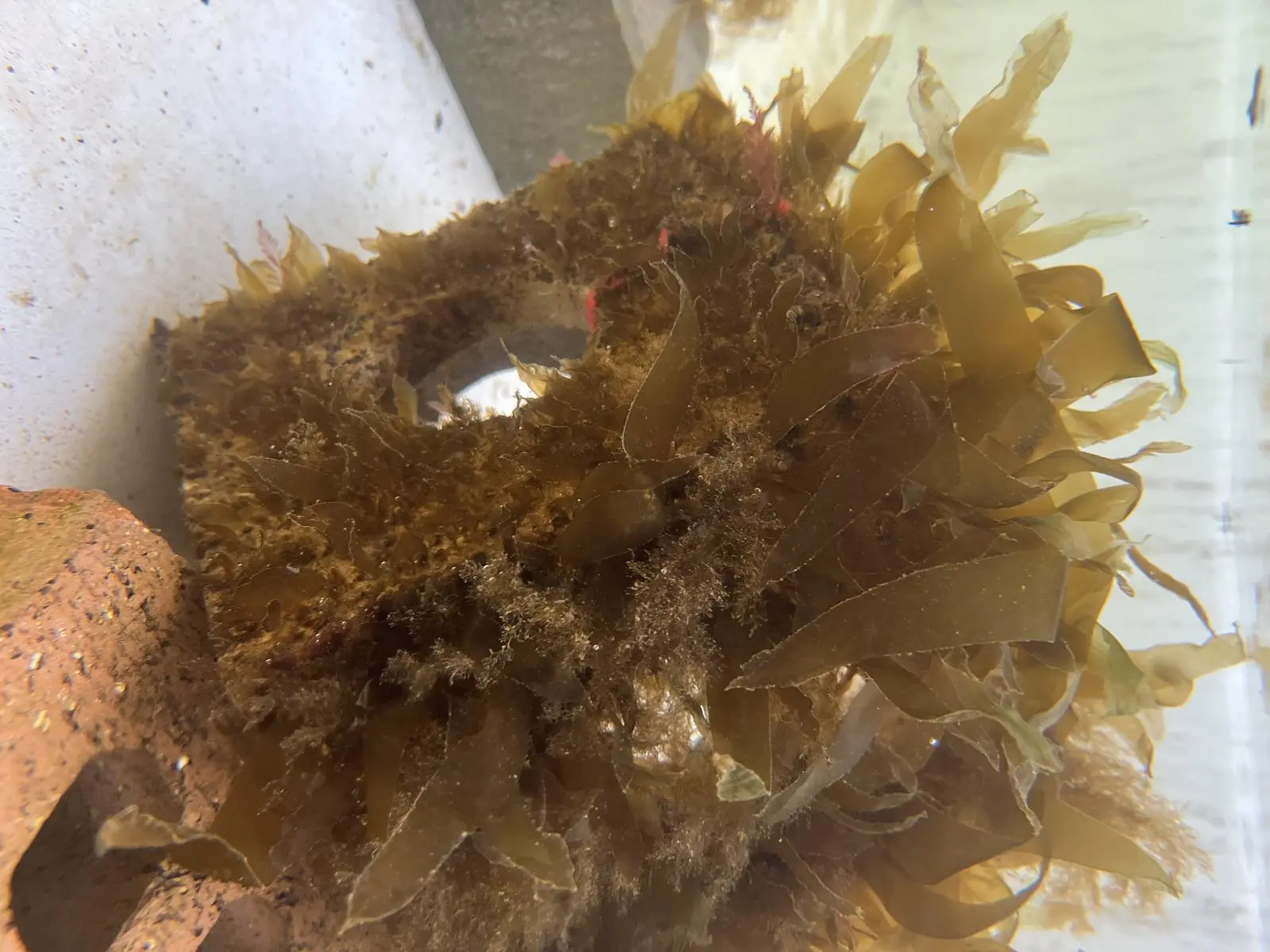
Alongside this, work is underway with the Scottish Association for Marine Science (SAMS) on the application of kelp to the reef cubes to better understand the interaction between the materials and marine plant species.
The short-term trial has shown that kelp grows well, and this was further studied by electron microscopic analysis of the attachment of the holdfast to the reef cubes. There is also some adjacent work with the Marine Biological Association to transplant native oysters onto the reef cubes, and potential for the development of IMTA models by harvesting benthic species through static gear fisheries equipment.
“We’re seeing a dramatic increase in demand for our products, as policy swings to regulate environmental degradation, and as measures to improve biodiversity increase, farm developers will look to get on top and not be left playing catch up,” said Morgan-Kay. “The more we engage with both start-ups and established players in the field, the greater our reach will become. Our research continues based on feedback from farmers, quantifying the most important metrics to them and looking at how we can distribute and demonstrate the positive effects.”
Having already received multiple orders from aquaculture for different sites in 2023, the team is now in touch with fish farms that are keen to make the reef cubes a key part of their sites.
Related Articles
 PROCESSING & REFRIGERATION
 PROCESSING & REFRIGERATION
 PROCESSING & REFRIGERATION