
AI in aquaculture – ‘scary but necessary’
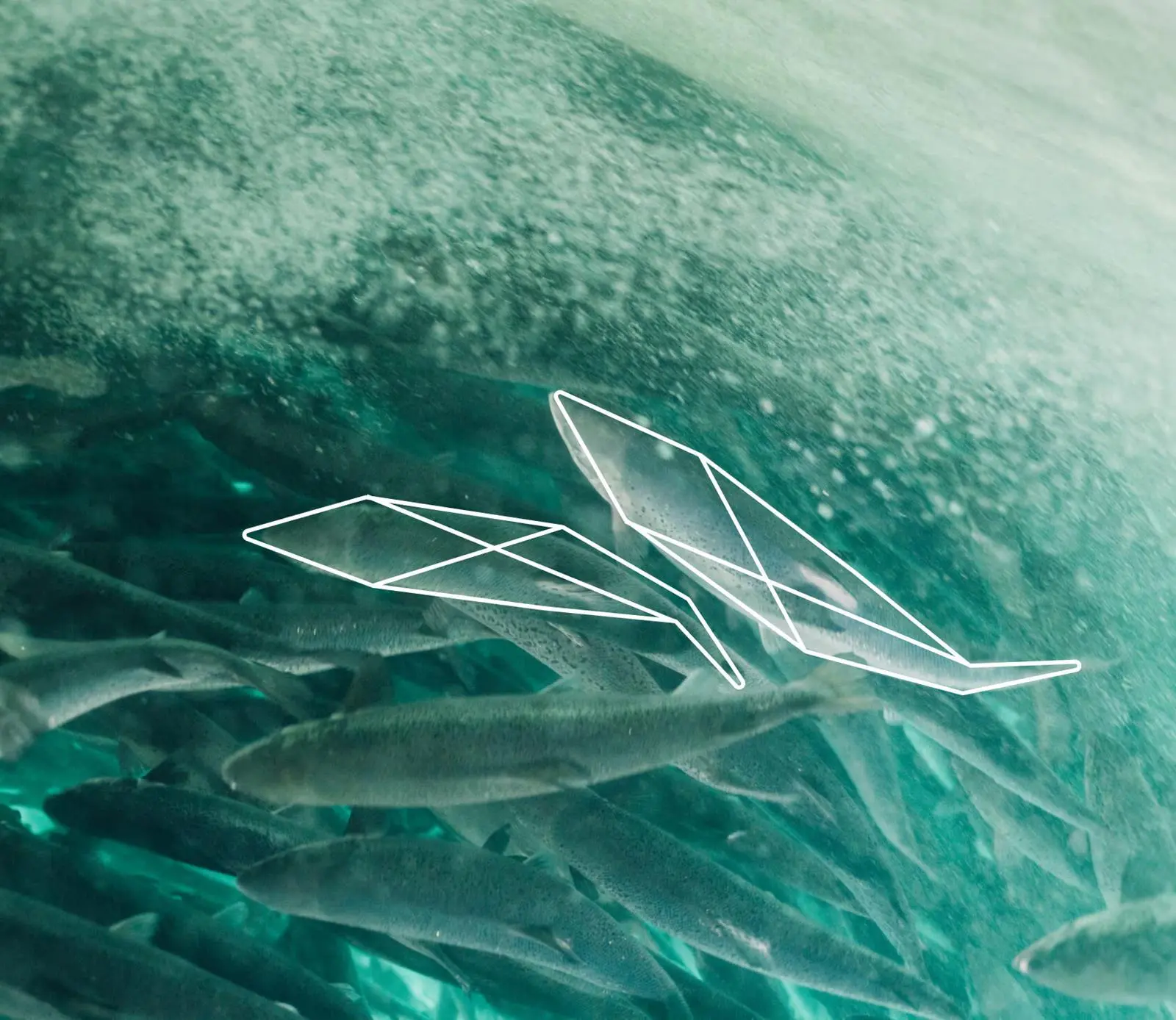
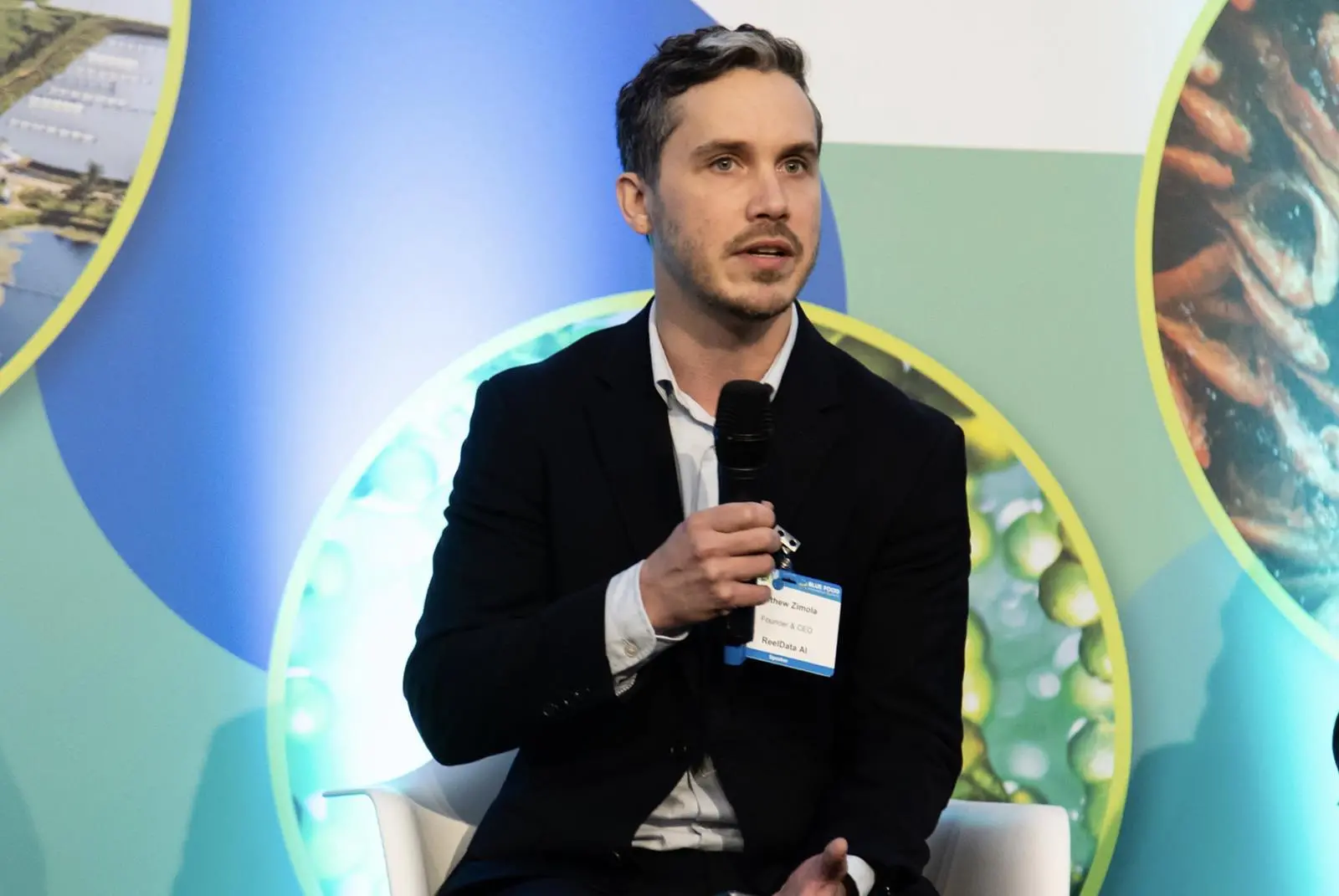
One of the biggest challenges facing the aquaculture industry is information scarcity, insists ReelData AI Founder and CEO Mathew Zimola. Speaking at the recent Blue Food Innovation Summit in London in a session focused on harnessing AI tools for production technology, Zimola explained how difficult it is for producers to understand what’s happening under the water. This issue is emphasised by the widespread practice of “feed checking”, whereby a fish farmer will take scoops of fish feed and toss them across the water to see how the resident fish will react.
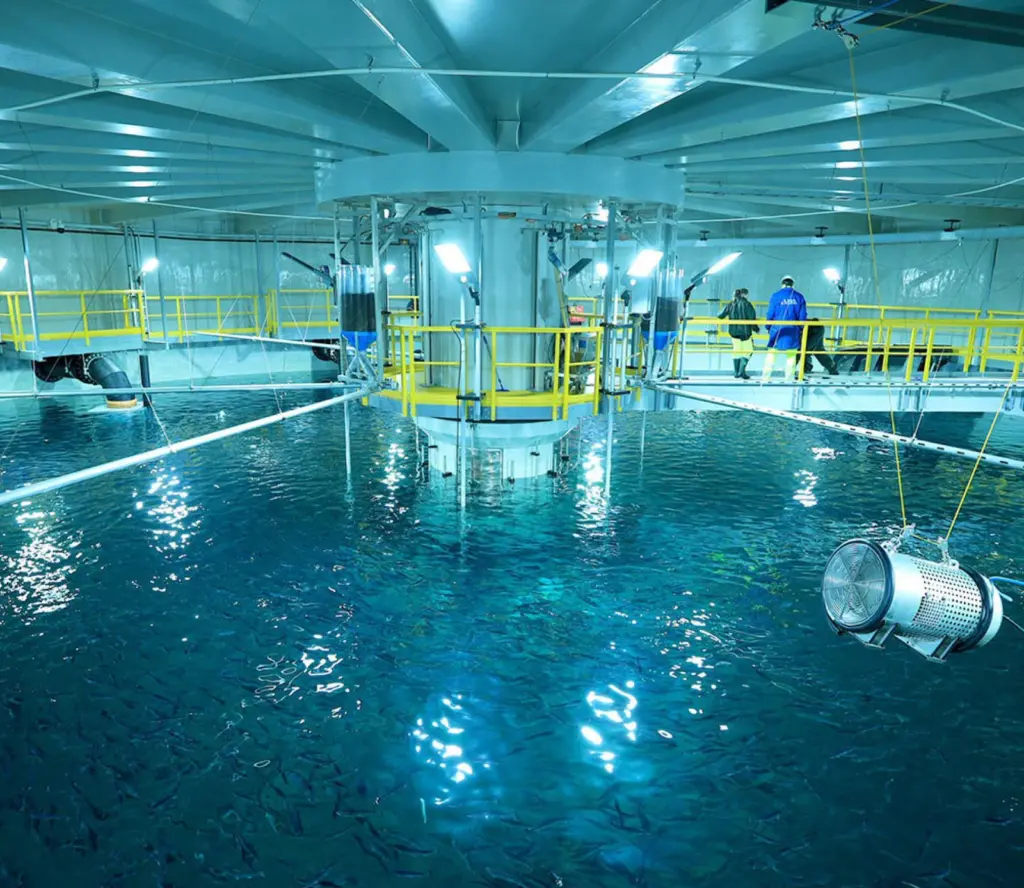
They’ll use this to determine fish behaviours – whether the fish are hungry, or if they’re full, he said. “But what we’ve seen is that you can ask an operator on a fish farm, how hungry the fish are, they’ll do a feed check. And then you can ask another person two minutes later to do the exact same thing, and you will get two different answers.”
ReelData AI’s solution is autonomous fish feeding technology. “It really was the first thing to show us that we can increase the growth of our industry with a single product play by anywhere between 10 and 20%. So, if you’re looking at a farm, that’s 10,000 tonnes, you can onboard an AI system that now makes that farm 11,000 tonnes,” Zimola said.
“You’re reducing the cost per kilo, you’re also reducing the energy costs associated with your farm because you’re now increasing the production level while keeping all the other operational things at steady state. There’s tonnes of value that can come from just onboarding AI solutions from the companies that are innovating in the space right now.”
Operational efficacy
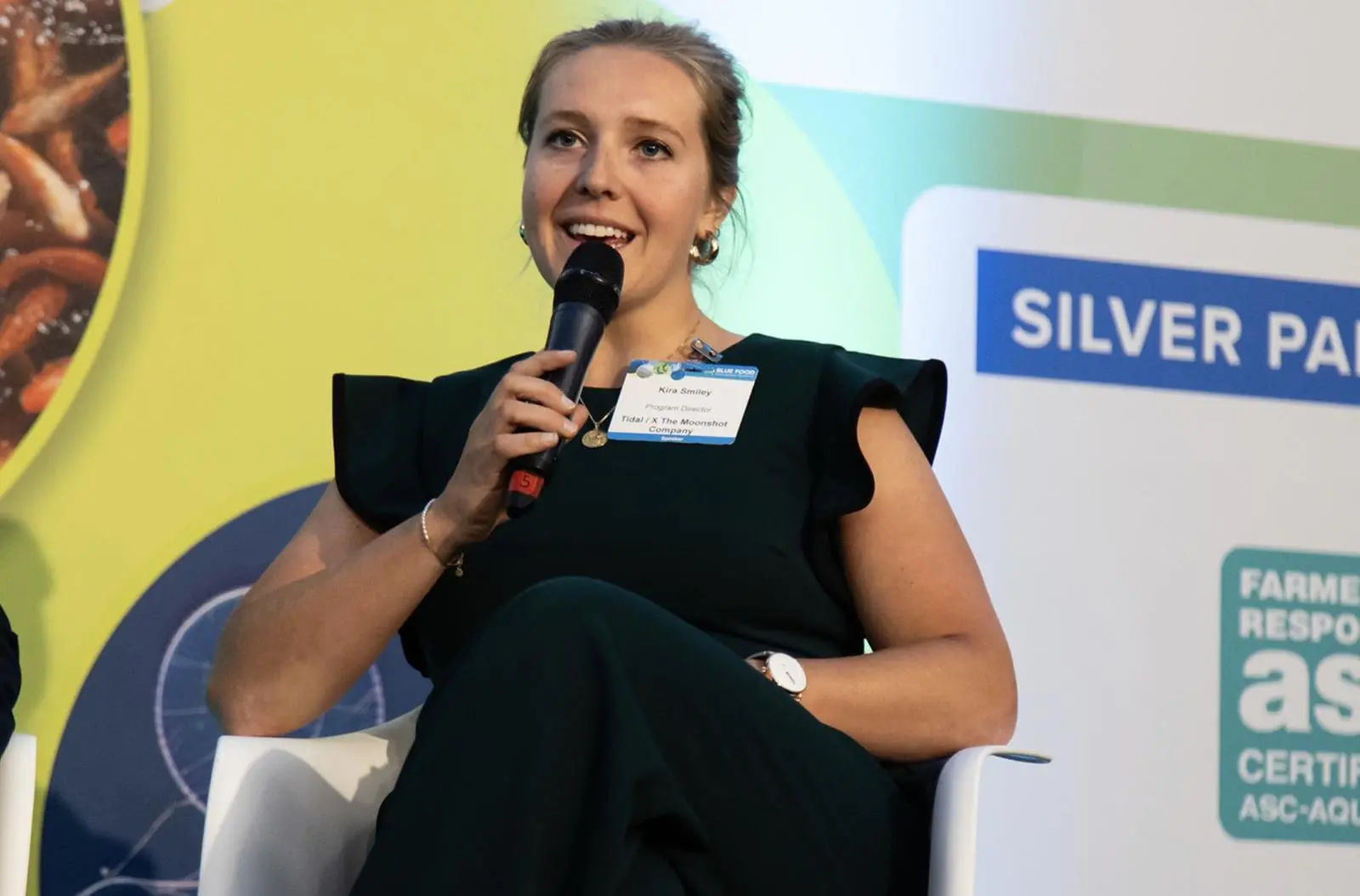
The shift from being insight-lacking to having near real-time information about the growth, health and welfare of fish, and their eating efficiency in farming systems is a huge positive brought by AI and other emerging technologies, agreed Tidal/The Moonshot Company Programme Director Kira Smiley.
She told the Blue Food session: “Within the last five years or so, we’ve started to see a transformation – moving from small samples of maybe 20 fish or pulling out some samples and not knowing answers to different operational questions until harvest, which could be 18 months later.
“All of those have shifted to create value and to allow you to start to do different types of iteration or experimentation to see how, for example, different feed types could impact growth or how different environmental conditions or treatment methods might impact welfare and growth. And through that, you start to be able to be much more precise about the operational management of your aquaculture systems, and then building efficiency in this space.”
Smiley continued: “That efficiency really is sustainability in so many ways, because waste of feed, for example, or mortality really decreases the efficacy of those operations.”
In the picture
Aquaculture’s adoption of AI has been very rapid, acknowledged SWEN Capital Partners: Blue Ocean Investment Director Christian Lim.
“Just five years ago, nobody would imagine that we would know in real-time, the weight of fish in cages or tanks, or how many lice they might have,” Lim told the summit. “This is happening at incredible scale, and some of the companies have been experiencing incredible growth – fivefold in just the past three years. It’s incredible and getting much faster than many of us think. And this will help the industry address a number of fundamental issues from its environmental impact, its productivity, and maybe also its survival issues.”
Lim highlighted that some of the production sites currently used may not be appropriate in the long-term future, amongst other things due to climate change. As such, the industry needs to consider how it goes about producing more food offshore, for example. This, he said, is only possible if through automation.
“And so, that’s what we’re investing in. We’re investing in the solutions that will help build that future.”
What’s key is having sufficient quantities of good quality data, said Smiley. “If you have good information going into these models, you can have good results coming out of it,” she said. “That’s where this concept of big data comes in – the more data you have, and the longer your systems are in these [fish] pens, the more they can learn about the conditions, about new geographies, about new areas, and they can continue to improve. What’s great about it is while it’s an effort to get the data, the rest of it is just this process of continual improvement as you continue to get more data to these models. And so really, for any kind of artificial intelligence tool, it’s only uphill from there.”
Sharing data
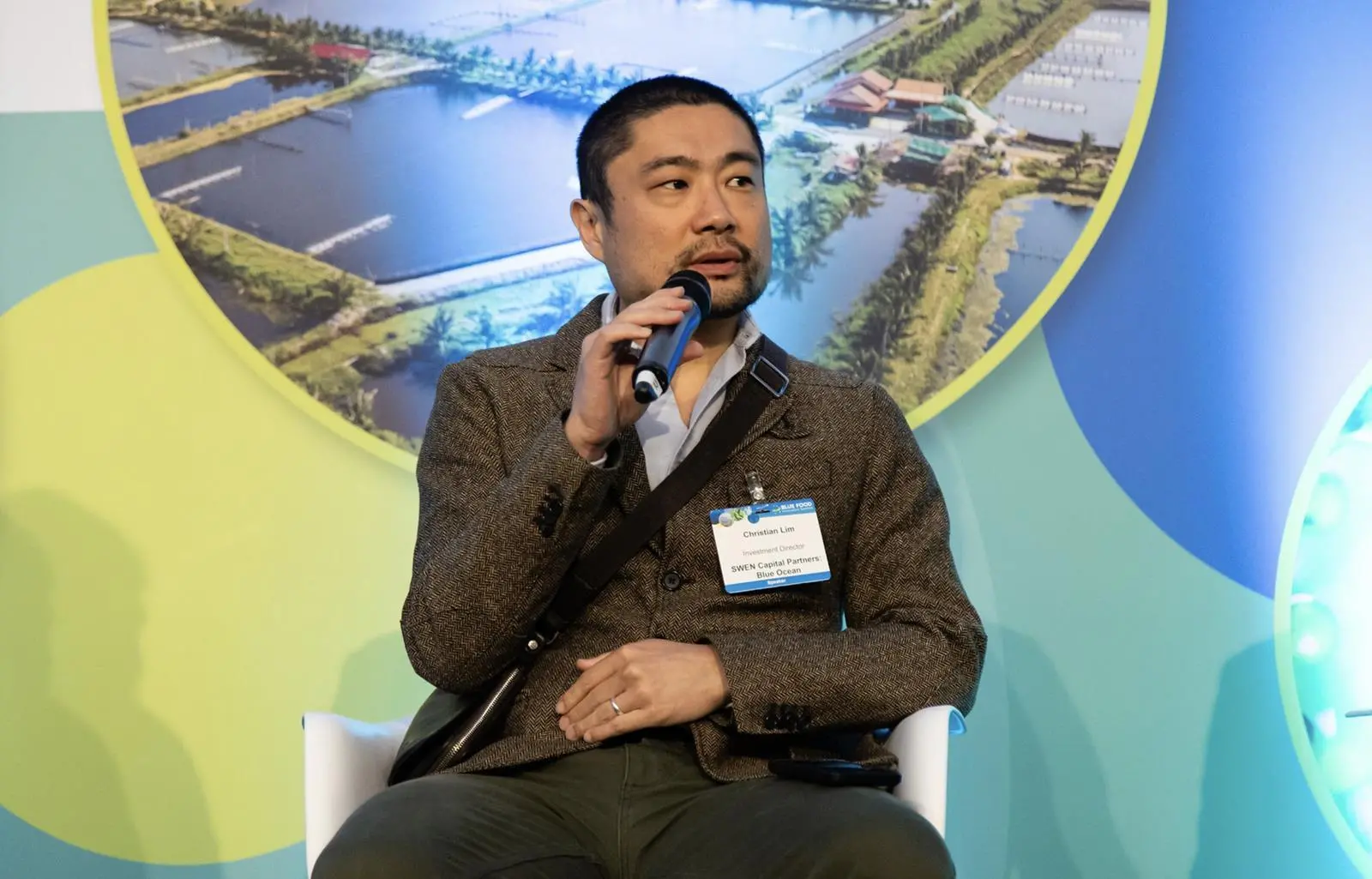
With AI-powered tools increasingly used to measure biomass, life, fish appetite etc data points, the next stage is to integrate various sources of data across farmers and across regions, Lim said, adding that this is where the industry currently faces a big challenge because most of the input and output data required to build effective models – including but not limited to the type and quantity of feed provided, and the genetic traits of the fish put in the pens – is in the hands of the farmers and is not being shared.
“There are very good reasons for that, but if you want to get to the next level and build models that are not only providing data, but which are predictive, we need to have actually broader partnerships across the industry.”
Smiley agreed, insisting that the next level is reached when you have more open-source data that can be integrated across systems.
“Then you get rid of the silos that may exist and are able to get a lot more insights as to how various different factors impact each other. In aquaculture, these fish farms are part of an ecosystem, and if you’re not looking at those different components, it’s hard to have full insight into what’s really happening,” she said.
According to Zimola, what’s important for producers to recognise is that the industry isn’t collecting data until the farmers sit down with an AI provider.
“There’s a really good chance that all of that information that you’ve been collecting, all that historical information is garbage, and you’re gonna have to start at day-one again. The sooner you sit down with an AI solutions provider, the sooner you really that first step into leveraging these new artificial intelligence solutions that are coming to market. You don’t have to buy the solution at that point, but it’s really important to just have a call with these people and show them what you’ve been doing and maybe get some insights into what you can be doing better to prep you to start onboarding these solutions.”
Licence to grow
With regards to areas in which the industry could leverage AI, Lim pointed to Norway’s salmon industry, which faced a lot of controversy last year, including regulators finding widespread mislabelling (deformed and sick fish being sold as high-quality, premium products).
“I’m sure the industry is addressing that, but it created a lot of steer, and it was damaging for the industry. That’s about the health and welfare of the fish, but then of course, there’s also social licence concerns regarding the environmental impacts of fish farming. I think AI can help in from two perspectives: First is to help address those issues fundamentally, because if you’re measuring in real time, you know the health of the fish, the wounds, and you can take measures faster. And if you can improve the welfare of the fish, you can also improve a feed conversion ratio and improve and reduce the amount of feed that you use, and therefore, use less forage fish. You are reducing all those impacts effectively with the with AI-powered tools and you build social licence by doing the right thing and simply addressing the problems at the root.
“The second is to bring transparency…today, we can know in real time what is happening in the pens – we have pictures of how the fish are doing every day and potentially in every pen. With this information, there’s an opportunity to create transparency to inform even the consumer of what’s really happening and to restore trust,” he said.
For aquaculture to progress with AI technologies, more industry collaboration and more transparency is vital, said Lim.
“I know it can be scary because sharing data could mean putting IP at risk, but I think there’s much more to gain and there’s an opportunity to actually shape the way things are going to be done. In this way, you can benefit from the sharing of information, with [the delivery of] much more powerful, predictive models than we have today, but which preserve the vested interests and value that everyone is creating.”
He insisted: “This will happen. There is no doubt. So now is your opportunity to do it in a collaborative, proactive way.”