



AI – a paradigm shift’ for aquaculture
Farmed blue food production is facing some serious challenges, including but not limited to its response to climate change, the increase in oceanic threats, and farms moving further offshore. There’s also a smaller pool of personnel available to monitor these farms. Consequently, in 2024, more decision making is becoming AI-based.
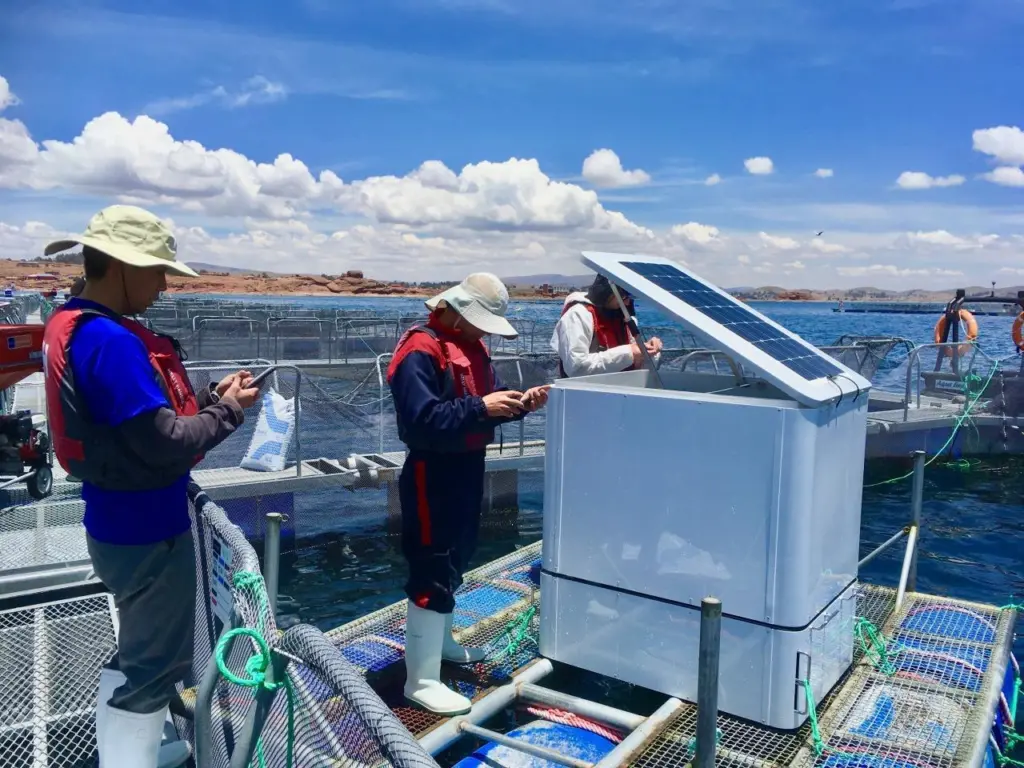
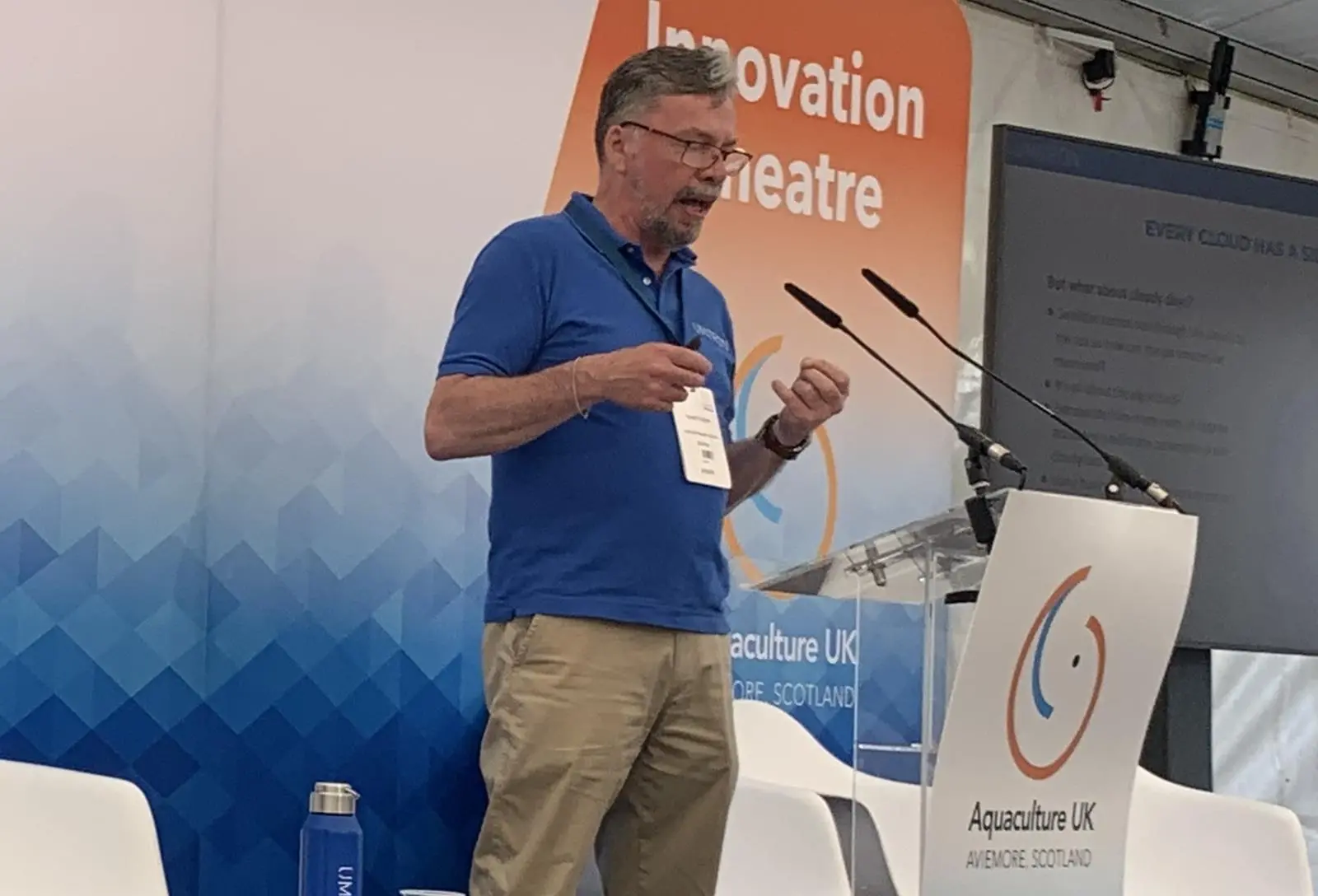
Speaking at the recent Aquaculture UK 2024 exhibition and conference held in Aviemore, Scotland, Umitron Field Sales Manager – Scotland, Russell Ferguson, insisted that addressing the issues affecting the industry requires innovative solutions. Indeed, he said that Umitron, a Singapore/Japan-based aquaculture technology start-up, was established in 2016 with the aim of its three founders to use satellite and AI technologies in the aquaculture space to help feed the world more efficiently while also minimising environmental impacts.
“We are here to support the development of the industry through the application of advanced technologies and AI, and machine learning, and all delivered with a lot of passion,” Ferguson said.
As such, Umitron has explored the challenges that shaped the industry in the past and the initial technological advancements that laid the groundwork for its development, Ferguson said. He explained that early industry iterations in AI started making significant strides in the latter half of the 20th century. While these technological advancements were sometimes called “fuzzy logic”, he said hope was given to aquaculture ventures, with the promise of solutions to complex problems being delivered through data analysis and predictive modelling.
Around the same time, the advent of satellites and remote sensing revolutionised the monitoring of larger-scale aquaculture farming operations.
“Satellites equipped with advanced sensors allowed for real-time data collection, kicking off a big data wave that would further boost AI integration into the sector, making for more affordable technological solutions.”
With this big data wave, it became important to know what data was being collected and how it was being collected, as well as how the data was being used, and what gaps exist, Ferguson said.
“AI definitely brought about a paradigm shift in aquaculture practices. The ability of AI [to analyse] vast amounts of data in real-time opened up new possibilities – from monitoring water quality to optimising feeding schedules and detecting diseases early on, it has become a huge leap forward for our industry. Results include increased efficiency, improved yields, and a more sustainable approach to aquaculture and environmental conservation.”
Supporting farmers
Ferguson acknowledged concerns raised in the media about the growth of AI in multiple walks of life, and like all technologies, he conceded “there will be good and less good applications”. But he insisted AI is the pathway to many benefits in the aquaculture space, including multiple data source points being identified at the same time, and interpretive outcomes determined by gathered data and then linked to various applications to provide one single data platform.
He also highlighted that AI can be mounted in satellites to send informed responses rather than just flat data and imagery, and that this could free-up valuable time for farmers.
“Labour is in short supply and there’s always something else that needs to be done on a farm,” he said, adding that the increased efficiencies can also lead to reductions in the production footprint.
“When we, Umitron, have been installing AI-driven software on farms, we’ve heard the concerns from operators about possible job losses due to this new technology…but for us, AI in aquaculture provides for rapidly calculated options that fully support farmer decision making to maintain high levels of performance as well as risk mitigation. And all of this goes to support a highly skilled workforce,” Ferguson said.
As well as enabling the monitoring of farming systems, including feed performance and fish behaviour, and the ability to predict changes to the environment, other AI applications include biomass estimation and lice counting.
“We accumulate masses of data about our stocks and the environment in which they’re grown. AI can use this data to predict changes, allowing farms to take timely action. And this will be the difference between [farm] success and failure.”
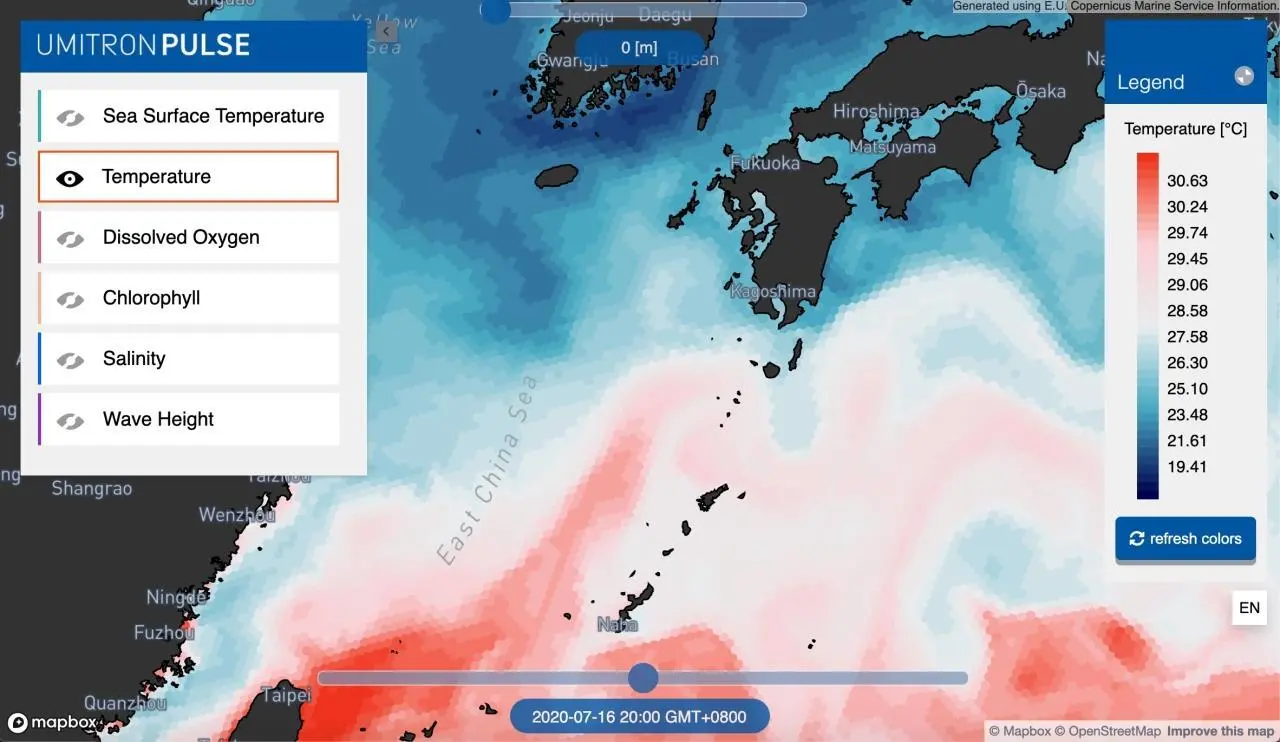
Ferguson explained the Umitron Pulse ocean data monitoring solution offers one way to keep check on changing water conditions. It combines satellite and buoy data and other in-sea sensors to form an ocean water quality map – by recording such parameters as water temperature, dissolved oxygen solidity, chlorophyll, wave height, ocean currents, wind speed and direction.
“This platform allows for 48-hour data protection – you can see what’s coming your way and take mitigation if possible, to lessen the impact on production. It alerts farmers across the world and in all aquaculture industry sectors about changes in conditions that could affect them such as a reduction in feeding, or cause mortality or prevent harvesting.”
The platform also offers two years historical data and helps farmers to track trends to see what environmental conditions have led to improve production performance.
Ferguson told Aquaculture UK that one shellfish farmer in Alaska, who had experienced a massive mortality event, used Pulse to look back at data and see what was happening on the farm at that particular time. He noticed that a number of parameters were acting abnormally. Consequently, he created alerts so he knows in advance when these events are likely to occur and to make sure he’s prepared, either by harvesting early if that’s a possibility, or by implementing protective measures.
Pulse can also be used for scoping new sites, he said. “That’s really important before deploying expensive hardware. You can also start determining the environmental threshold values that may be of concern to production. We’ve used Pulse in Japan to identify the best sites for yellowtail.
“We have access to over 30 years of historical water quality data in all marine areas. We use this to find sites that meet the suitability requirements of the species concerned.”
Mapping fish behaviour
Another AI-system developed by Umitron is an integrated feeding optimisation and mortality estimation solution called Remora. This plug-and-play software brings feed algorithms, pellet detection and mortality estimation to large-scale farm operations without installing additional hardware equipment.
This is a software platform that integrates directly with the farm infrastructure to acquire data about the fish based on their needs. It does this by learning their feeding behaviours, Ferguson said.
The existing cameras and computers are used and images from the camera streams are analysed by Remora to determine whether the fish behaviours show they are hungry, they are eating well, starting to become satiated all the way through until they stopped feeding all together. This behaviour study is called the fish appetite index (or FAI).
Because the feeding behaviour is not binary, not identical within species, site-to-site or within a site, the AI learns and assimilates data from video images about the fish behaviour before, during and after feeding, and its awards the behaviours (FAI) a value. When this value increases or decreases, operators are alerted to the change in behaviour so that they can make an informed choice whether to feed more feed less or stop feeding altogether.
This can also be combined with pellet detection for greater appetite awareness, with Remora alerting operators if the pellet threshold has been reached or exceeded.
“Linking these different algorithms means there’s a more efficient way to feed fish based on their needs, as well as being able to reduce feed wastage. Our streamlined version of Remora focuses on pellet detection with a very easy-to-use interface. In fact, some farmers have called it ‘idiot proof’, as it gives pellet alert video playback so you can see where and when you wasted your pellets.”
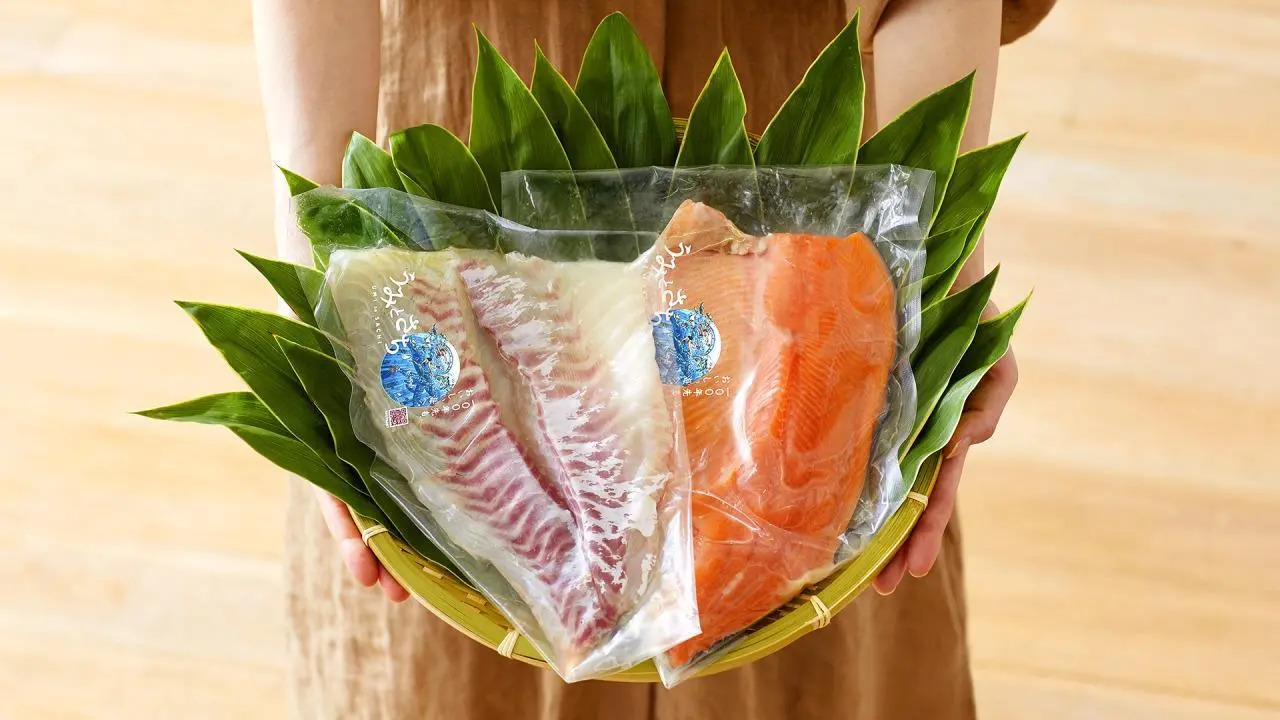
To prove further still that AI works, Umitron is also now producing its own branded seafood line, using technology called Umitrom Farm Smart.
“This is a welcome addition to our portfolio. After all, there’s not that many tech companies that sell their own seafood products,” Ferguson said. “I like to call this putting your mouth where the money is.
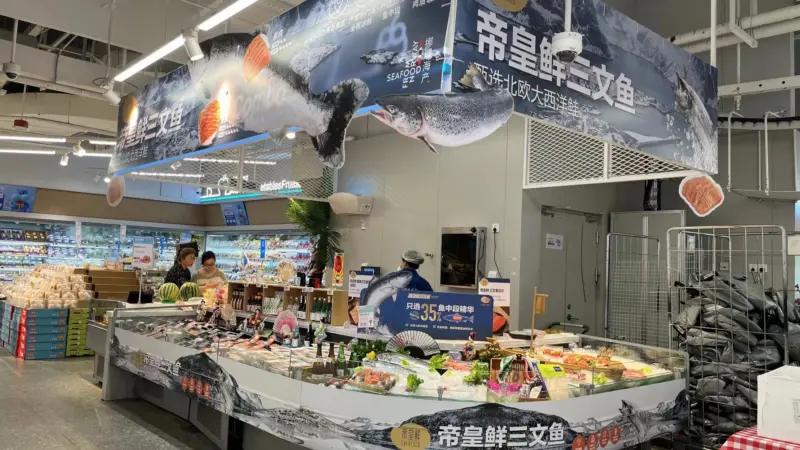
“The products have been adopted and promoted by a group of top Japanese chefs as well as major supermarkets and restaurant chains in Japan who want to give the consumer an informed choice to buy more sustainably grown seafood.”
He also confirmed Umitron has placed Scottish salmon into the Japanese market, and it’s now growing its brand in the US.
“All this is a very tangible benefit of the power of AI.”
Integrating technologies
With regards to the future landscape, Ferguson believes there needs to be much greater integration and interconnection between hardware and software providers.
“As an industry, we’re not quite there yet. Currently, we have multiple technologies – all gathering similar data sets that do not talk to one another. This data is stored in multiple servers consuming a lot of power and generating a lot of heat, and often the data is not used, or full access to it can be difficult to navigate.
“That’s why we are connecting our AI with other companies…We need to be smart, the planet is evolving, and we need to keep pace in a responsible and sustainable way. The future we’re talking about isn’t that far off and we’ve started preparing for it – using multiple data sources from both local and global within an integrated data system that can support efficient production. For example, environmental data can be used to inform daily feeding as well as longer term feeding strategies. This data can be used to tell the provenance of the seafood being produced sustainably, to give consumers an informed choice.
“The trajectory of AI in aquaculture is nothing short of exciting. Our team at Umitron envisions a future where sustainable and efficient farming practices are not just a choice, there are a necessity. Emerging trends, innovations and technologies are on the horizon set to revolutionise our industry further.
“The future promises a symbiotic relationship between technology and aquaculture, shaping a more resilient and efficient industry and by understanding and proactively addressing the challenges for farmers, the aquaculture industry can navigate the evolving technological frontier while maintaining a sustainable and responsible approach and to help this, we will focus even more on being a value chain aware technology provider.”