

Great Grimsby looks to lead UK’s RAS revolution
Grimsby and the wider Humber region is synonymous with fish. It is home to most of the UK’s largest processing companies and manufactures around 80% of the country’s seafood. It’s also estimated the entire industry, including some 5,000 skilled workers, are within a 15-minute radius. But another string could soon be added to its bow, with plans unveiled by new firm AquaCultured Seafood Ltd (ASL) to build and operate a land-based recirculation aquaculture system (RAS) in the port town for the production of around 5,000 tonnes of Atlantic salmon.

ASL was established in 2021 by the current directors, all of whom are active in the running of the business. Importantly, many of these individuals have substantial experience of the salmon industry in the UK, as well as of planning applications and finance.
Director Craig Anderson confirmed the company’s intention is to be the UK’s first on-shore salmon farm.
“Planning permission was recently submitted, and we expect a response back from the planning committee in September 2023. The next stage is to start building the facility and installing it with the latest RAS technology, which will take approximately 18 months to complete,” he said.
“Our target is to complete the building by June 2024 and have our first commercial harvest by December 2025.”
Right place, right time
Anderson told WF that ASL believes the time is right for this project for a number of reasons. First and foremost, technology has been developed that enables salmon to be grown on land at a price which makes it economic to run. At the same time, there is much greater awareness of the increasing importance of food security. It’s also accepted that on-shore production can decrease pressure on the oceans in line with the United Nations’ Sustainable Development Goals (SDGs), particularly SDG14: Life below water.
He also explained that decarbonisation is being demanded by government as is a reduction in food miles by retailers, foodservice companies and consumers and that the facility’s proximity to the fish processors of Grimsby will mean it has over 110,000 tonnes per annum of salmon processing within a couple of miles of the site. Additionally, the closeness that ASL will have to its customers will mean that only minimal if any packaging will be required.
“We have received huge support both locally and nationally, from a wide spectrum of people, businesses and institutions. These include the local council, national government, local and national fish processing businesses, other local businesses and salmon fishing charities.
“Great Grimsby is well named and is an ideal location for the UK’s first land-based RAS aquaculture system. We have freshwater, seawater and a wide pool of local talent that we look forward to working with. Grimsby is a well-known hub for fish processing and has a long history of being involved with the fishing industry.”
It’s widely accepted that land-based aquaculture isn’t a cheap production method and that significant investments are usually required. To keep energy costs down, ASL intends to utilise the maximum amount of solar energy possible using the latest technology of photo voltaic panels on the roof of the 40,000-square-metre building.
“Our technology partner is using the latest tech to ensure that our water is kept in pristine condition and that the filtering systems keep all pathogens out. Sustainable sourced feed will be used at all stages and the fish health and welfare will be monitored on a 24-hour basis,” Anderson said.
Low carbon footprint
Many surveys have already been undertaken in line with the planning permission process, with the ASL team and its advisors working “diligently” to ensure that rules are being followed, Anderson said.
From the outset, ASL has expected the delivery of the farm to take about three years from start to finish, and it remains within that timeframe, he added.
“Being the first UK land-based producer of salmon will be an achievement in its own right,” he said. “Our board of directors have many professional qualities including finance, shellfish aquaculture, and of course the salmon industry itself. We will use our expertise to be hands-on when we hire, develop and build our management team of like-minded people.”
ASL also sees plenty of opportunity to innovate in the RAS space and meet the shifting demands of markets and consumers.
“The food market in general is moving towards locally grown, locally-processed and locally-delivered food. We aim to enter this market with a view that our carbon footprint will be as small as possible. For instance, we will not use any polystyrene boxed to transport the harvested fish, we won’t be using a fleet of trucks to transport the fish, and we won’t have a fleet of vessels at sea.
“Our aim is to supply local processors with top quality salmon an hour after being harvested, which is unprecedented in the UK salmon industry and will add freshness and shelf-life for the consumer.”
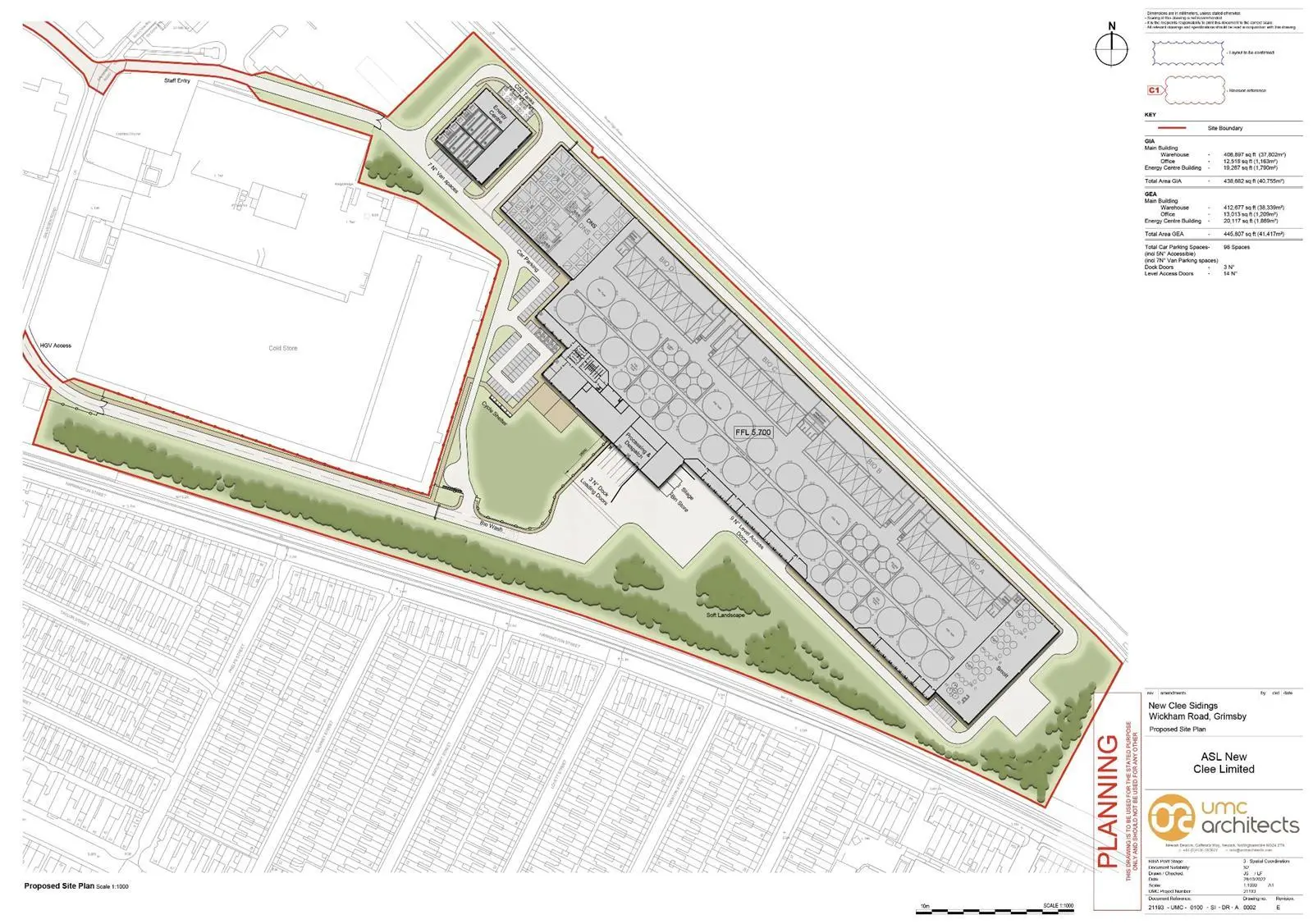
The company also harbours longer-term plans, but for the time-being, the immediate focus is obtaining the planning permission that will enable it to go to the next step which is to build the facility, then hatch eggs and watch the development of the fry, par and then smolt in freshwater, which will grow into 5kg salmon in sea water.
“It is an exciting time and the whole team is highly motivated and working in unison to achieve this and more,” Anderson said.