

Expanding the horizon for RAS
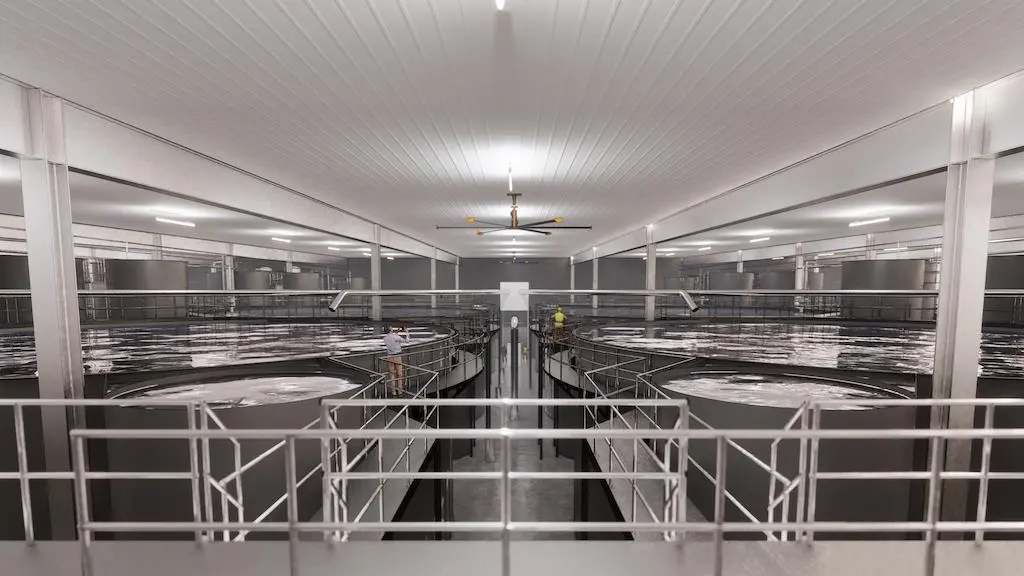
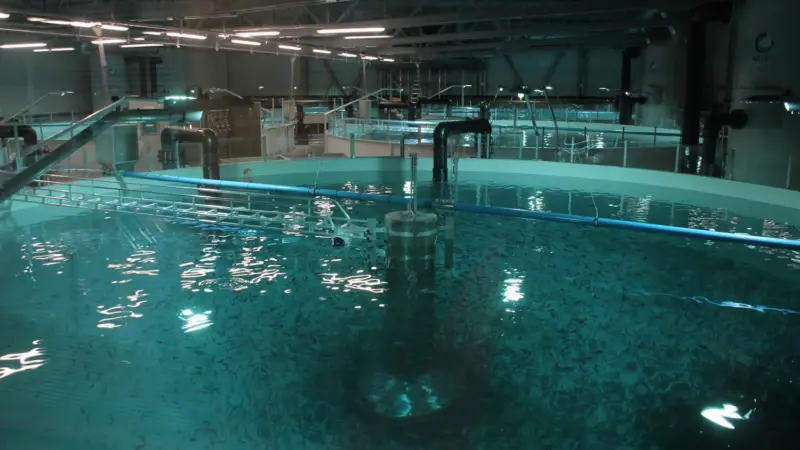
There’s been a lot of talk about recirculation aquaculture systems – or RAS – in recent years, with a torrent of new projects coming onstream for a growing number of species and many more waiting in the pipeline. Indeed, the recent Blue Food Innovation Summit 2023, held in London, heard there are more than 130 RAS projects being readied for salmon production alone, which could represent an additional 2.8 million tonnes of fish. Current global production through traditional systems is around 2.7 million tonnes.
“This is a uniquely exciting time in the development of land-based aquaculture,” said Ohad Maiman, Managing Partner of AquaFounders Capital and Founder of The Kingfish Company. “If you look at the adoption curve of other technologies, it pretty much follows the same pattern: First there’s a lot of scepticism, then there’s arguments about whether it’ll work, but I believe we’ve crossed the rubicon of proof of concept – there are a few companies that have shown you can grow fish to market.”
Maiman’s said: “Now comes the next stage – the maturity of the sector, where it needs to be able to scale and become profitable. That’s a challenge but it’s a challenge that solar, wind power and electric vehicles have crossed. So as soon as there is enough confirmation then the sooner solutions – systems, software, AI etc – come into the sector and enable further success.”
According to Siri Tommeras, Commercial Director – Land Based at AKVA Group, with the proof of concept now in place, it’s important RAS systems are documented so companies have evidence of how they run “as is” before they begin looking at the critical area of reducing costs.
In this regard, Tommeras said: “We have seen an increasing cost of around 30% over the last three years which is making it very difficult to get the business cases right. We have to focus on that, and then we have other elements like operational costs, energy use – what can we do there to reduce the resources going into the daily running of these systems?”
New thinking
In terms of opportunities, Maiman believes there should be a shift in thinking whereby ventures look at which species are capable of maximising the advantages offered by the technology. At the moment, system costs imply the focus is on high-value end-products, but it should also be factored in that they can be deployed almost anywhere, he said.
“The way I looked at kingfish, and the way I analyse any other business case for RAS now, is this trifecta of high-value species deployed in a market where the fish is not otherwise or widely available, and species need to work well within the system.”
Mathew Zimola, Founder & CEO ReelData AI, told the summit RAS “has to be” a big part of feeding people in the future. “When you look at the supply and demand gap, we can’t produce enough fish right now that want to buy it and you map that on top of the fact that traditional aquaculture is built on the finite resource of shoreline.
“How do we produce more fish? I see three ways…we go where we’re able to do it offshore, we can do it on land, or we can do it in bioreactors like one company is trying to do in California. The reality is the economics makes sense for RAS to scale up and fill that supply and demand gap,” he said.
Tommeras also highlighted RAS makes it possible to increase the volumes harvested from traditional at-sea fish farms, particularly in the salmon sector through post-smolt production. “In some cases, you can increase this by 30% with existing licences,” she said, adding that this also tends to lead to less mortality and lower sea lice-related costs.
While the opportunities are clear, the challenge to scale-up RAS while reducing risks remain. Historically, a lot of the associated risks have come from human error, Zimola explained. But using AI to feed fish, for example, enables these companies to understand how hungry their fish really are, an in turn reduce waste and also biosecurity threats.
“Going forward, to reduce risks and allow these farmers to scale, a lot will be in assistive technologies – genetics, fish feed etc – and having these companies work with the farmers so the issues of the past don’t happen again,” he said.
Related Articles
 AQUACULTURE
 AQUACULTURE
 AQUACULTURE