

Bluefront Equity takes a niche approach
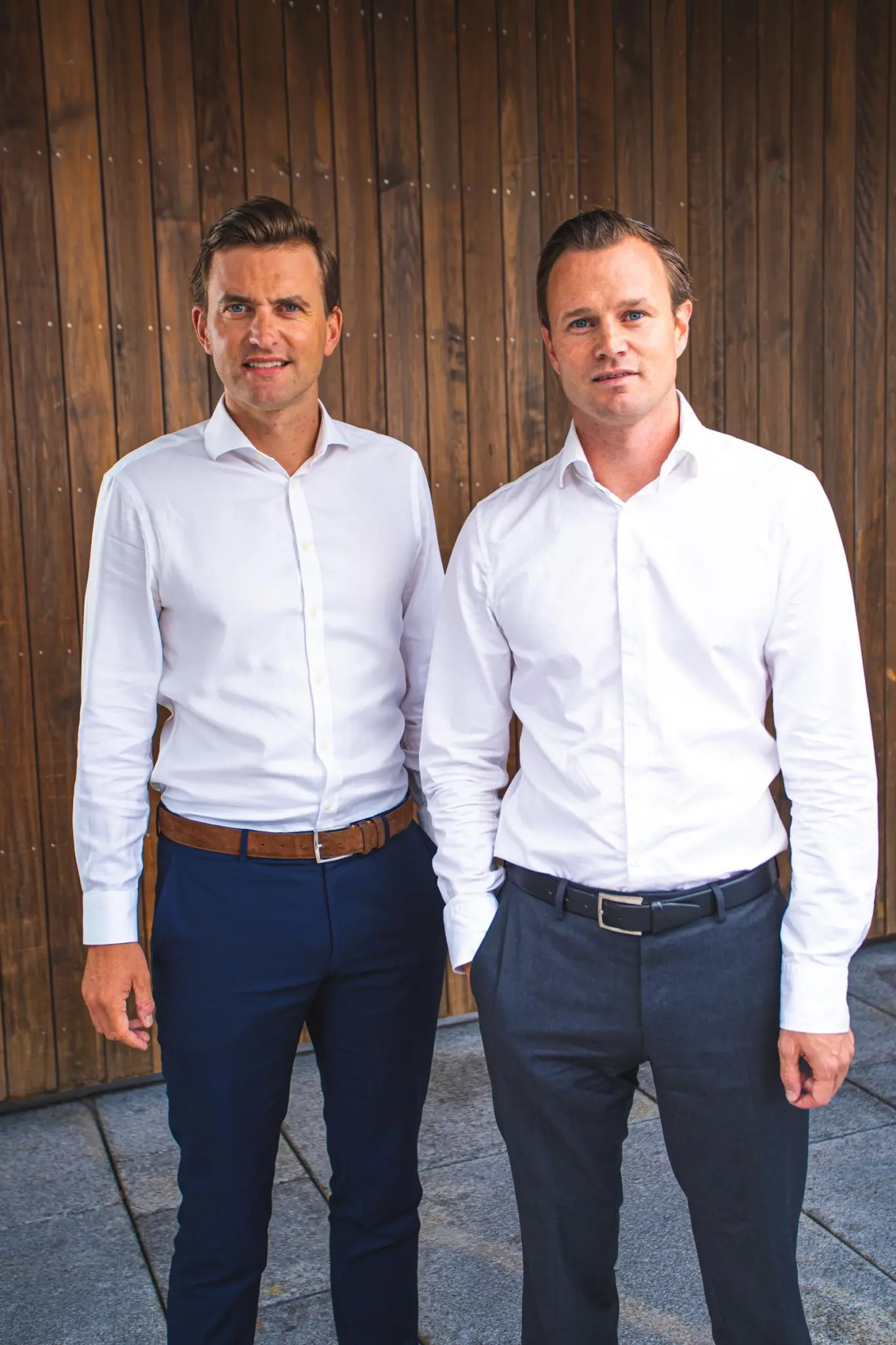
“The potential for land-based aquaculture is huge,” says Kjetil Haga, founding partner of impact seafood investor Bluefront Equity, “and a lot of that is down to events taking place in the salmon industry.”
“If you look at the market today, maybe 99% of the salmon supply is produced in open net pens. But there’s rapid change taking place,” Haga told WF. “In Norway, we have seen politicians say that for animal health reasons – mostly related to sea lice treatments – and to uphold ocean health, salmon farming needs to reduce the impacts of its production. They are withholding new licenses until these two key issues are overcome. Closed containment either in the sea, including offshore farming, or in land-based is a way to do this.”
Land-based is also starting to make sense from a commercial viability perspective, with Haga highlighting that Norway saw zero growth in its salmon production between 2021 and 2022, and with global demand continuing to grow, the price of the fish has soared.
In 2021, the average market price of Norwegian salmon was NOK 60 per kg – the same level that had been achieved since 2016. Over this time period, the volume produced increased at a rate of around 5% per annum. However, with no increase in supply in 2021/22, the price climbed to an average NOK 80 per kg. In the first-quarter of 2023, it climbed further still to NOK 100 per kg.
“The market is still growing, and the supply is lacking,” he said. “The problem is that it will take time. We can’t do it just like that – produce salmon on land with the click of a finger – but the high price makes it more attractive to try. In addition, the cost of producing open net pens is also increasing due to the tightened regulations, so we actually have the situation where the price is high and the cost of land-based is lowering slightly. Then factor in the [new Norwegian] resource tax and suddenly the production costs are around the same.”
Typically, getting a land-based farm up a running takes around six years, estimates Haga. This comprises two years of regulatory work, two years of construction and a further two years to optimise the production.
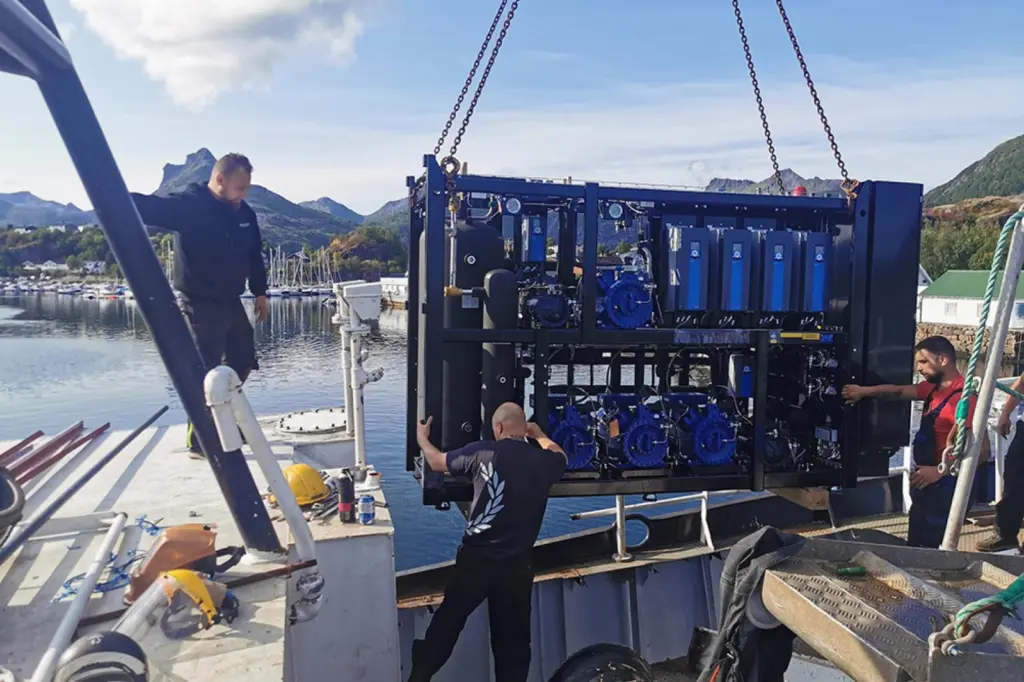
“I believe that during this timeframe and for the next 10 years, there will be massive investments made in closed systems and the suppliers supplying the technologies that go into those new production methods will be the winners, so that’s where I’m putting my capital,” he said.
Beating the tide
The biological side of aquaculture and investing in farming businesses doesn’t appeal to Bluefront. Indeed, Haga had already seen 130 recirculating aquaculture system (RAS) farms built around the world for a variety of species during his time at fish farm design and manufacturing specialistBillund Aquaculture.
“There were a lot of big projects, and they were only getting bigger, especially in land-based salmon farming,” he said.
Instead, Bluefront took the early decision to look more in the direction of investing in suppliers – firms providing technologies and solutions to the likes of companies like Billund to construct and run the farms. In most cases, these are not enterprises that are specifically related to just one production method. They can be involved in closed containment on-land and at-sea, with traditional net pens and in small facilities, and across a wide variety of species. It also only invests in companies that are earning money, with a proven track record, Haga explained.
“Crucially, these are also companies that are targeting niches which we believe will grow more than the overall megatrend,” he said. “If you look at salmon farming over the last 30 years, it has been growing at 10% every year. And, like our industry partner Alf-Helge Aarskog (the former Mowi CEO) says, ‘the tide lifts all boats when you invest in the seafood sector’. So, we try to find those niches where we can grow more than the tide.”
Haga continued: “When we launched Bluefront, we sat down and discussed the key areas we felt were going to grow more. One of those was hygiene systems – it’s an area of the seafood sector that we believe is heavily underinvested. That relates to several things, including processing facilities which are typically still manually cleaned by maybe 30 people. You compare that to other food processing industries, where they push a button and a few minutes later a facility is 100% disinfected. It can be much more automated, and we feel that has potential.”
Raising efficiency levels
“Related to land-based farming, when I was at Billund, we built a lot of smolt facilities and when you have a tank that’s 5 metres in diameter and maybe 3 metres deep, it’s not an issue to climb down and manually clean the tanks. But now with the RAS grow-out tanks, it’s like 30 metres in diameter and 13-15 metres deep, so just to cleaning the tanks after a production cycle is a lot of work. We have to figure out solutions and new ways of doing things that are sustainable. That’s why hygiene systems is an area we want to invest in.”
Areas of equal interest are traceability and digitalisation, with Haga explaining that for the latter, less than 1% of salmon farmers’ revenues are spent on digital initiatives, while other industries are averaging 7 or 8%.
“We believe that investing in digital solutions will also grow more than the overall megatrend,” he said.
Another element that Bluefront would like to build into its portfolio is solutions that lower energy consumption, and Haga believes this is something that could be of great benefit to land-based aquaculture operations in particular – making them a more attractive proposition.
“Land-based farms, especially RAS facilities, consume a lot of energy, so technologies and designs that can make land-based farms more energy efficient and more sustainable is an area that we believe in,” he said.
Overall, there are plenty of reasons to be optimistic about the future of aquatic fish production, including the land-based sector, insisted Haga.
“Aquaculture is gaining good traction. There’s also a lot of capital targeting the ocean through agri-funds and blue-funds and aquaculture is a part of that. There are some huge capital sources out there now targeting the sector,” he said. “However, I still feel the industry is in its infancy; it’s certainly not as far down the road as many of the new investors coming in believe it to be. One reason I say that is because every time I look at a land-based farm, for example, I see they have done something different from the last time I was there. Look also at how much RAS designs have changed in the past few years – dramatic changes from one facility to the next. This tells me, as an investor, that we haven’t found the one, ideal way of doing it.
“Of course, the industry is evolving very fast. That’s why you need investors like us that are industry-specific, and which only work in this space. We won’t make the mistake of investing in something that doesn’t work. Therefore, my advice to investors looking at the sector is to understand that it’s at an early beginning stage and that adds an extra layer of risk. And that layer of risk is hard to understand if you don’t spend a lot of time in the sector.”