





BioFishency ELX: New approaches for RAS farms
As projections continue for the expansion of global seafood demand and concerns rise over the effects of offshore farming, recirculating aquaculture systems (RAS) and the potential of seafood production on land are more in focus than ever. But although their advantages have been documented extensively, some limiting factors restrict their wider application, such as the inefficient removal of nitrogen and phosphorus compounds, the possible increase in pathogens within biofilters and the generation of off-flavour in fish. These can result in increased production costs and fish health issues that affect growth and survival.
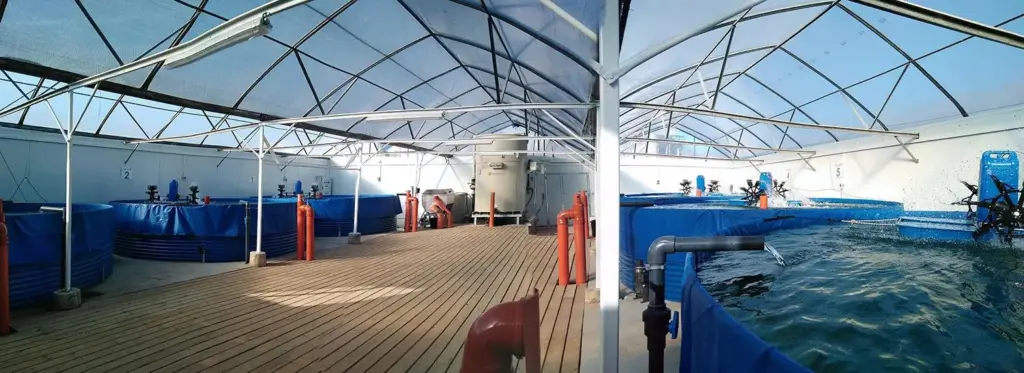
Two other challenges for RAS are the limited availability of water and the build-up of toxic ammonia excreted by fish. In order to solve these particular issues, BioFishency in Atlit, Israel was established in 2013. The company provides electro-chemical and biological aquaculture water treatment solutions for RAS and began as a start-up to develop a plug-and-play biofiltration unit.
“We developed a Single Pass Biofilter, or SPB, with funding from the Israeli government,” said Igal Magen, Co-founder and CTO of BioFishency anda former head of aquaculture at Israel’s Ministry of Agriculture. “In about a year and a half, we completed the design and had fully-operating systems by 2016. We wanted to provide an easy-to-use, affordable unit with a focus on developing countries. Today we have systems in Israel, Ghana Cong, Nigeria, India and China.”
A patented system, the BioFishency SPB is a water treatment filtration unit that strips carbon dioxide from water and enriches it with atmospheric oxygen. A charger converts ammonia to nitrate and a mechanical filter removes solid waste. BioFishency refers to this as a plug-and-play system because it requires minimal technical expertise, enabling farmers to upgrade their facilities using their existing infrastructure.
Considered the bread and butter of the company, the BioFishency SPB is sold and deployed in different locations around the world today.
Off-flavour solution
BioFishency is also addressing other challenges for RAS, such as off-flavour. This occurs when bacteria such as streptomyces, myxobacteria and actinomycetes build up in the water, producing geosmin (GSM) and 2-methylisoborneol (MIB), which are absorbed into the gills and tissues of fish and accumulate in the flesh.
“Without creative strategies to mitigate the unpleasant odour and taste, said Magen, negative perceptions about farmed fish will impact final sales.” To that end, he and his team have been working to eliminate GSM and MIB in RAS and recently developed BioFishency ELX, an advanced electro-chemical water treatment (ECWT) system.
Ideal for both cold- and warm-water species, BioFishency ELX uses a built-in electro-chemical reactor to remove off-flavour in a multi-stage, single-cycle solution.
BioFishency ELX is a cloud-based solution with real-time data collection and management. It transforms ammonia to nitrogen without a denitrification reactor for nitrate and phosphate removal, and operates immediately upon electrical supply, powered by an advanced controller with a dashboard that can conveniently fit into existing control rooms. Its disinfection processes facilitate the removal of ammonia, CO2 and fine particles, while it continuously monitors water pH, temperature, O2, ORP, Cl2 and NH4 levels.
BioFishency conducted multiple tests with the Technion – Israel Institute of Technology – and found that BioFishency ELX eliminates MIB and GSM in less than 10 days. During the testing, fish were exposed to water containing high levels of MIB and GSM and BioFishency ELX was introduced during purging while feeding. In seven days, MIB was not detected in the flesh, and within 10 days, GSM was fully removed from the skin and muscles.
“When MIB and GSM accumulate, a farm must conduct expensive purging, which can take about five to 15 days depending on the species, temperature and severity of the case,” said Magen. “Purging involves moving fish into clean water and supplying a large amount of water to depurate. The fish must also be starved or given minimal feed, so growers lose a considerable amount of fish weight, lowering market value. What’s more, once MIB and GSM are detected, they stay, but our test results have been extremely promising when it comes to the removal of both.”
Improved performance
Additional testing with Atlantic salmon in Bergen, Norway, was carried out to compare fish health and welfare parameters and the levels of organic matter in BioFishency ELX and in a standard biofilter. Fish weighing 190g were stocked at 25kg/m3 for 54 days with temperature, pH, oxygen levels and more analysed daily. Results showed a steady high growth rate and better health, with both mucous cell size and density of the fish smaller than in the biofilter system. This indicated a lower defence activity and more optimal environmental conditions.
While electro-chemical water treatment is a viable, cost-effective alternative to biological processes, some areas require further research. For example, more investigations are needed into the reduction of energy demand by focusing on alternative electrode structures, materials and coatings; on removing compounds with a high affinity for reacting with chlorine, and on optimising the physical and chemical characteristics of the electrolyte.
The disinfection feature of electro-oxidation has also not yet been sufficiently defined in the context of aquaculture applications, with the weight of participating disinfection mechanisms such as electrical field, presence of radicals, presence of chlorine, extreme redox and pH conditions not fully elucidated. However, with BioFishency ELX already well-received, Magen is optimistic that the system will take off.
“Covid hurt us financially because we couldn’t take the system worldwide, but it enabled us to focus on technology for two years,” he said. “As a result, we did a lot of R&D on the control panel and our software. We have just completed the design of our commercial operating system and willbe focusing on marketing and working with commercial farms and companies. We will be looking for innovative partners to work with us and help us highlight that there is something here that has the power to change the future of the RAS industry.”
Related Articles
 PROCESSING & REFRIGERATION
 PROCESSING & REFRIGERATION
 PROCESSING & REFRIGERATION