

Andfjord Salmon looks to capitalise on its natural advantage
At the time of writing, Atlantic salmon farmer Andfjord Salmon AS had just confirmed that it is to progress with plans that will increase the total production volume at it Kvalnes site to 40,000 tonnes of head-on gutted (HOG) fish in the next seven years. To deliver this growth, the company has secured a NOK 700 million bank loan to expand the Kvalnes’ operations.
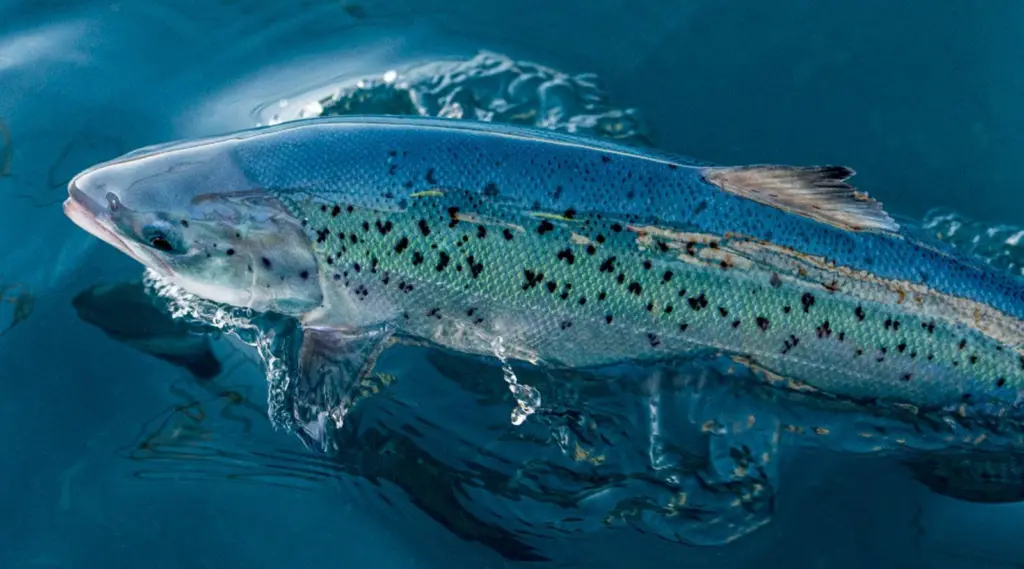
The very first commercial harvest from the facility’s first/pilot pool – an expected 800 tonnes of 4kg fish – is only a matter of weeks away, but the company is looking further ahead, having now proven its concept – a farming system based on flow-through technology that capitalises onAndøya’s close proximity to the oxygen-rich Gulf Stream.
For those unfamiliar with the location, Andøya is the northernmost island in the Vesterålen archipelago, situated about 300km inside the Arctic circle. It’s also where Andfjord Salmon has a licence in place for 10,000 tonnes maximum allowed biomass (MAB) of land-based production. This will allow the Kvalnes’ facility to produce around 19,000 tonnes of HOG salmon.
Its new capacity will gradually be added over five phases between 2025 and 2030, with the next 8,000 tonnes of production scheduled to be added in 2025 via four new pools. From then, the company’s plan is to build four new pools every year to reach the 40,000-tonne target in 2030.
Reaching the 90,000-tonne total will be achieved through Andfjord Salmon’s two other locations on Andøya: Breivik and Fiskenes, which are expected to deliver a combined 50,000 tonnes. Preparatory work on these sites is already underway, with construction anticipated to begin in 2026/27.
‘Simple but ingenious’
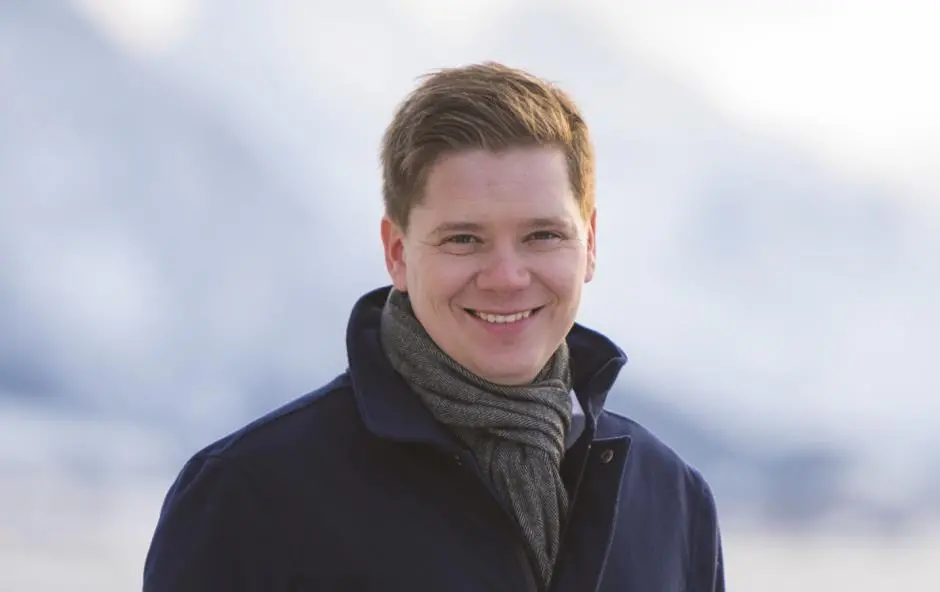
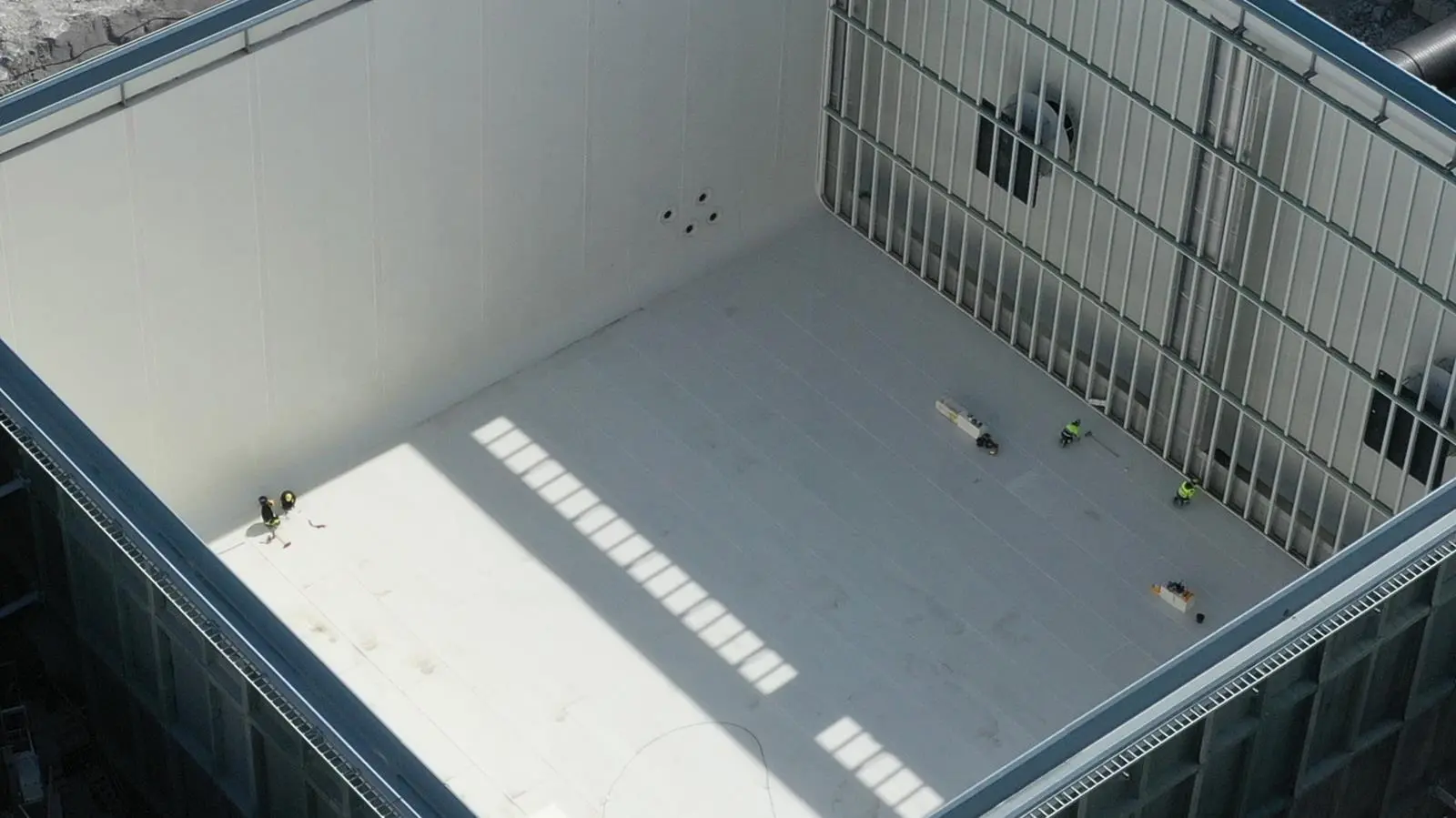
At 30,000 cubic metres each, Andfjord Salmon’s pools are huge. They are also square in shape. The reason for this, explains company CEO Martin Rasmussen is to create enough space for the 200,000 fast-growing salmon in each pool to behave naturally.
Through the company’s own patented technology, it has introduced a laminar waterflow, whereby a parallel current moves from one side of the pool to the other. Not only does this establish an even distribution of water in the system, it means there’s no turbulence.
“The fish can swim where they want to; they can have a schooling behaviour. We are simply housing a cross-section of the Gulf Stream on land,” Rasmussen told WF. “We have endless access to new, clean, clear seawater with the perfect temperature, salinity and oxygen levels for salmon production.”
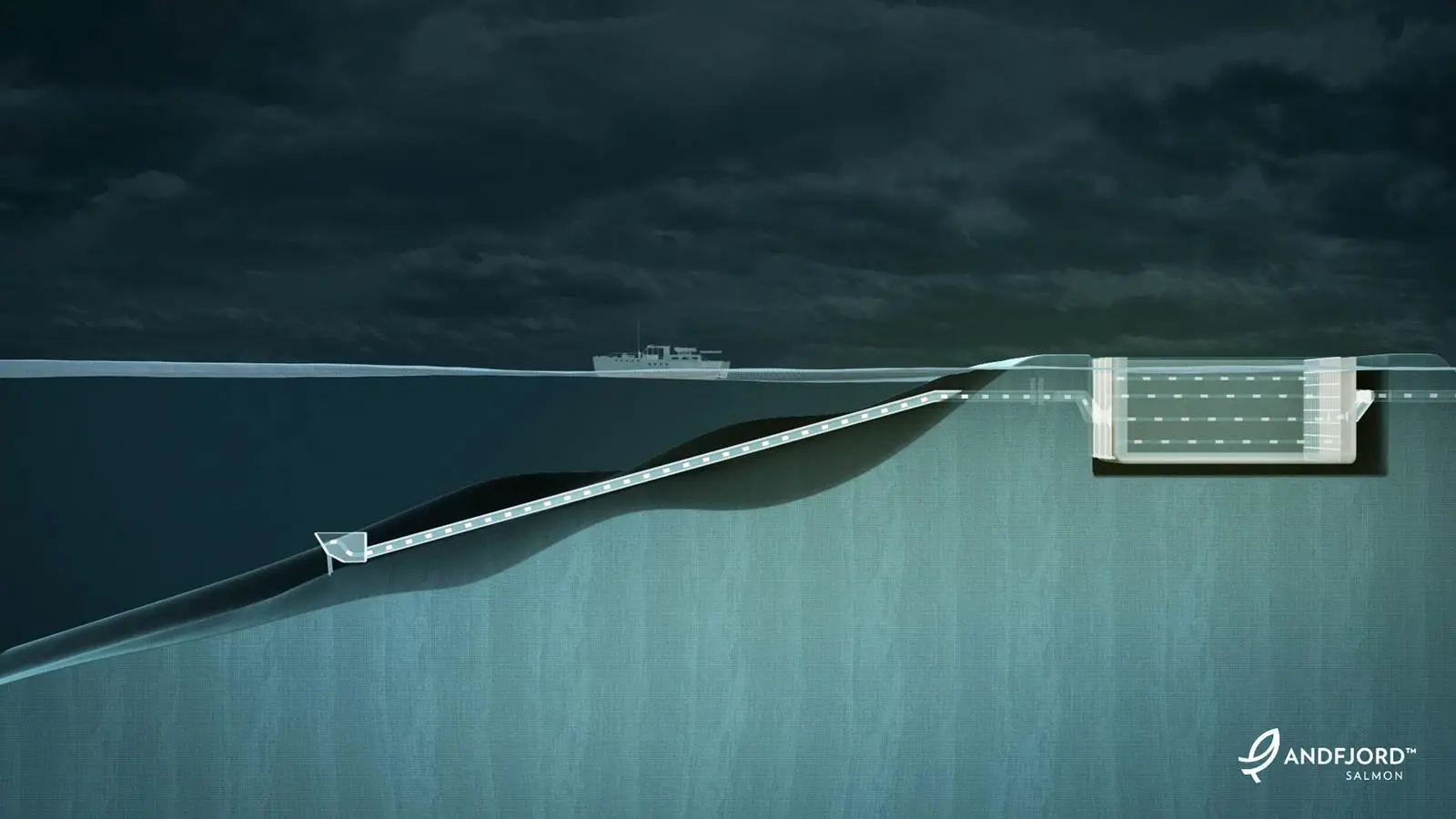
All the pools will be built at sea level to enable the farm to move 5 tonnes of water per second (or 20,000 cubic metres per hour) without the need of additional energy to lift it. With a water intake at approximately 40 metres water depth, this water is also coming from below the upper columns where sea lice and harmful algae tend to be much more prevalent.
“The concept is protecting the fish and protecting the environment,” Rasmussen said. “It’s very simple but it’s also ingenious. It allows us to have a land-based model but with very low operational costs.”
He said the first production cycle has been very successful, with the first Kvalnes’ pool achieving good fish health and welfare, strong growth, low energy consumption whereby one kilogram of salmon can be produced at under 1 kilowatt per hour, and a survival rate of 97.8%, alongside an accumulated feed conversion ratio (FCR) of 0.96.
“When it comes to energy consumption, it’s very important to be below the surface level. We’re not lifting the water, but just pushing it through the pool, and this is why our energy consumption is so low.”
Meanwhile, to achieve its FCR, the producer has put tight biological and feed controls in place, while the feeds themselves contain special ingredients and have properties that slow the rate at which they sink in the pool.
“This allows us to have much better control over the feeding process, which in turn reduces waste. Our feeding can be done with much greater precision than traditional at-sea salmon farmers,” Rasmussen said.
“And where flow-through really differs from RAS [recirculating aquaculture systems] is it’s merely borrowing the water to create a salmon habitat on land with the water passing back into the ocean without negative impacts. However, if you’re in a place where you don’t have these same natural advantages, you must have many processes in place just to change the water parameters. We’re able to avoid all that – there’s much less complexity in our methods compared to models where you don’t have these natural advantages.
“Also, there’s a lot of land-based aquaculture concepts being launched around the world, but we have chosen to be where Atlantic salmon swim naturally. On my way to work every day, I drive over nine salmon rivers. It’s part of the nature here.”
Traditional farming limitations
The Andfjord Salmon concept has been more than 20 years in development, with a great deal of time taken to properly research and develop its location, said Rasmussen. The company was therefore delighted to release its first 120-gram smolt into the pilot pool at the end of June 2022.
By the start of May 2023, these fish had grown to an average weight of 3kg, which demonstrated very stable production during the often-tricky winter period.
“The growth was about 40% better compared to our initial production plan so we have been very satisfied with the salmon production. We tend to compare our operations with those of traditional salmon farmers because its more similar to that sector than to RAS, and compared to traditional at-sea farming, we have very good numbers,” Rasmussen said.
He added that lot of biological performance seen in the first production cycle can be attributed to the emphasis it has placed on having high-quality smolt.
“We have quite a conservative approach when it comes to how fast we want to grow our smolt. I see many producers pushing the biological growth of smolt to levels that are perhaps too fast. They may achieve good growth but lose out when it comes to the maturation of the fish and their organs. This could also have a negative impact in the sea grow-out phase. So, for us it was important that the smolt producer had a similar profile as we have when it comes to temperature profiles. I didn’t want them to push the biology too fast, I wanted a conservative production cycle.
“So far, we have achieved a survival rate of around 98%, so having just 2% mortality in our first commercial production cycle is very, very good.”
As for the potential of land-based salmon farming in general, Rasmussen said it’s “a very interesting time” to be part of the developments in an “industry that’s growing up”, with a number of different models are coming into play.
“When it comes to the sustainable production of food, there are many upsides to land-based aquaculture. But in general, the industry needs more time to get experience so that it can solve many of the early, initial issues that it’s had.
“Ours is a unique concept; it’s quite different from the other land-based production methods because it’s so close to sea-based salmon farming. Therefore, I see us growing and developing alongside traditional production, which has of course become limited in terms of its growth possibilities.”
Immediate potential focus
Once its first harvest is complete, and with “everything already on the upside when it comes to growth, mortality and feed conversion rates” Andfjord Salmon will immediately get to work to have the next batch of pools in place, Rasmussen confirmed, adding that any adjustments to the next pools will only be very minor, as a lot has already been learned getting to this stage.
“We see different things being achieved in the future but they’re more likely to be optimisations,” he said. “We’re extremely proud the concept is working as it should be. But we’ve still seen some ways we can optimise things within our teams and with our equipment, so there’s more we can and shall do to improve the numbers further still.”
The new pools will also be part of a substantial construction stage that will also include the delivery of new infrastructure such as waterways and a port area to support the increased salmon volumes that Kvalnes will produce. This is where a lot of the new financing will be diverted.
Asked whether Andfjord Salmon has any plans to extend its operations beyond Andøya and Norway, Rasmussen insisted that while it’s always tempting to look at additional possibilities, the current focus is very much on the significant plans that are now in place.
“We consider Andøya to be the perfect location for this concept, but of course there are other locations in the world that are suitable for this kind of salmon farming. But we are thinking one step at a time and want to build up our location and the opportunity that we have here before going out further into the world,” he said.
Related Articles
 PROCESSING & REFRIGERATION
 PROCESSING & REFRIGERATION
 PROCESSING & REFRIGERATION