
IceFish 2022 – back to business
Thousands of visitors – spanning the entire fisheries sector – were warmly welcomed to 13th edition of the Icelandic Fisheries Exhibition in Kópavogur
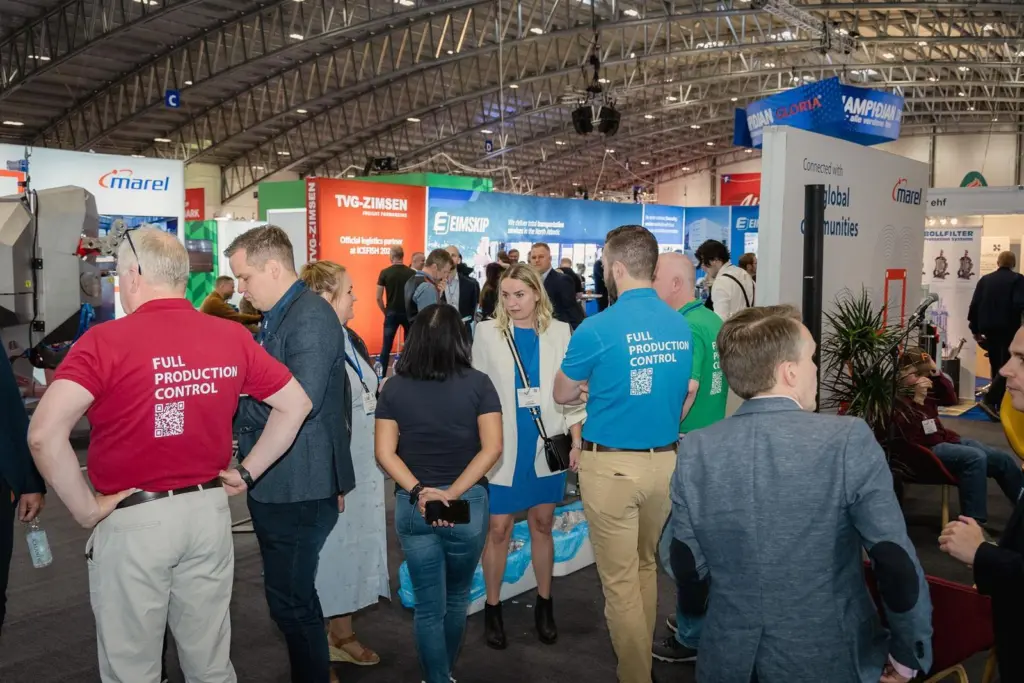
Successfully bringing exhibitors and the global fishing community together face-to-face after a long COVID-enforced break, IceFish 2022, held 8-10 June and organised by Mercator Media, once again proved to be the must-attend event for all commercial fisheries organisations and associated businesses.
Historically, Icefish has always showcased the latest innovations and services coming to the commercial fisheries sector, covering everything from catching and locating fish to processing and packaging, and through to the marketing and distribution of final products. IceFish 2022 certainly didn’t disappoint, with hundreds of companies, products and brands featured from dozens of countries.
Having received “tremendous interest” in the run up to the show, Mercator Media’s Events Director Marianne Rasmussen-Coulling, expressed her delight at being able to once again stage the event.
“There was no shortage of innovation at this year’s exhibition, particularly after a five-year gap since the last IceFish due to the COVID-19 restrictions. IceFish was the first opportunity for commercial fishing industry experts to showcase their latest products, solutions and technologies in person,” she said.

Profit in waste
Among this year’s exhibiting companies, Denmark-headquartered Kroma A/S presented several improved and new generation solutions aimed at dealing with waste, minimising equipment maintenance and optimising profit, particularly from the processing of aquaculture-derived raw materials.
CEO Ivan Kristensen explained, “When we design machinery for fish processing sites, we always put effort into making hygienic, technologically advanced equipment that is effortless in terms of use and cleaning. Yet it must also provide high yields, with solutions for by-products that in return get profit from both the primary product and the waste.”
One such new addition to Kroma’s portfolio is Silagemaster. Designed to utilise by-products from the processing line or dead fish from aquaculture sites, it is an effective waste handling system that processes materials into an easily stored silage that can be later refined into additives for different purposes, including feed ingredients, fertilisers, biofuels and biogases.
Removing mortalities from aquaculture sites in such a way also reduces biosecurity risks.
Silagemaster has attracted a lot of interest since its launch, confirmed Kroma’s Jesper Svendsen.
“By-product handling plays a key role in the management of marine resources and reducing the environmental footprint. At the same time, silage processing is an efficient solution to stabilise by-products for storage and secure its value. What can be more satisfying than to have a no-waste policy at the fish processing plant, and on the top of that, get profit from both the primary product and its waste?” he asked.
Eye on the prize
Meanwhile, amongst the deals reached at IceFish 2022, seafood software provider Maritech signed a partnership agreement with Brim that will see the Icelandic seafood company test Maritech Eye for its whitefish processing and production.
Maritech Eye scans fish early in the production process, enabling a processor to achieve a more sustainable production due to reduced waste and improved resource productivity. It gives each fish a unique quality score and ID based on given criteria, documenting the objective quality assessment. This information is sent to the grader as well as to Maritech’s LINSiGHT IoT platform for storage and visualisation.
The solution for whitefish was launched in November 2020, in close cooperation with innovation partners Nofima, NEO/HySpex, Lerøy Norway Seafoods and Lerøy Havfisk.
According to Maritech, quality scanning enables allocation premium quality for price premium products, while the rest of the fish can be used optimally in other product segments, improving production planning through fact-based decisions.

Double in a decade
Opening this year’s exhibition, Permanent Secretary for the Ministry of Fisheries and Agriculture Benedikt Árnason underlined how vital the seafood industry is for Iceland, both in terms of its importance to many fishing communities and to broader society. He also insisted that Icelandic seafood can double its value in the next 10 years.
“Through the collaboration of fishing and processing, Icelandic companies have developed the technologies and knowledge to enhance the competitiveness of the sector – continuously striving for increasing value and improving the utilisation of the blue resources.”
Climate challenges in the sector are priorities that industry and government need to work on together to achieve Iceland’s emissions reduction target, Árnason said, adding that the IceFish exhibition “provides an important opportunity” to present and monitor the latest developments in energy issues in the seafood sector and how vessel manufacturers and designers, as well as equipment manufacturers are responding.
“The challenges in this sector are many and the government must also ensure that the interests of the Icelandic fisheries sector are protected at an international level.
“I believe the sustainable management of stocks to be a core interest of the Icelandic fisheries sector and that we must all act accordingly.
“By nurturing the strength of Icelandic fisheries, the utilisation of fish stocks, the fisheries management system and the strong cooperation of the seafood and technology sectors, the value of the sector and related industries can double in the next decade,” he said.
And the winners are…
Also returning to the IceFish programme, the 8th Icelandic Fisheries Awards took place on 8 June, in Gerðarsafn, Kópavogur Art Museum. Hosted by the Icelandic Ministry of Industries and Innovation and the City of Kópavogur, the ceremony bestowed some 13 awards, including two that recognised the outstanding career contributions made to the sector.
First introduced in 1999, the accolades distinguish excellence within Icelandic and international fisheries, highlighting the most innovative and ground-breaking products and outstanding service. This year’s event was sponsored by Vonin, Bureau Veritas and Morgunblaðið.
Attending the event, Icelandic Minister of Food, Fisheries and Agriculture Svandís Svavarsdóttir praised the winners for their innovation.
“The awards recipients here demonstrate how vibrant and innovative the seafood sector is – responsive to new challenges and continuously striving for better value creation.
“Awards like those given here should encourage companies and innovators to look for and test out new ideas,” she said.
Visiting the exhibition, the minister met with Javier Lopez de Lacalle, Managing Director of Foro Maritimo Vasco (the Basque Association of Maritime Industries) for an update on Iceland’s new 69.8-metre fishery and oceanographic research vessel, which is being built by the association’s member Astilleros Armón.
The new vessel has been designed by Skipasýn with the build contract awarded after a three-year design process.
The contract for the new vessel was signed at the end of March by Svavarsdóttir, Minister of Finance Bjarni Benediktsson, Institute director Thorsteinn Sigurðsson and representatives of Astilleros Armón. Delivery is expected in the Autumn of 2024.

This year’s award winners were:
Best New Product launched at show – Hampiðjan
The fibre-optic cable developed by Hampiðjan promises to open up a new world for undersea electronics by taking gear-to-ship data transfer rates that have so far been unheard of. This development offers significant opportunities both for fisheries and numerous other undersea applications.
Outstanding Icelandic Skipper – Gísli V Jónsson
Gísli V Jónsson has been at sea since he was 15 and has been skipper since his early twenties. Over a long career he has been successful across a variety of fisheries, and retired from fishing recently, having joined Grindavík company Vísir for what was expected to be a few months – although this turned into 25 years. He skippered both the original Páll Jónsson, and its replacement that was delivered in 2020, having been closely involved with the design and build of the first new longliner of its size to be built for Icelandic owners for many years.
Outstanding Achievement – Guðmundur Gunnarsson
Guðmundur Gunnarsson has worked on the net loft floor, managed sales and been involved in fishing gear design during his long career at Hampiðjan. He’s known around the world as the godfather of the Gloria, having been at the centre of the development of the Gloria pelagic trawl that has since the 1990s been through a great many versions for a variety of fisheries.
Outstanding European Processor – Bakkafrost
Bakkafrost is the largest vertically integrated salmon producer in the Faroe Islands and is also the relatively new owner of the Scottish Salmon Company. In 2021, Bakkafrost’s production increased to more than 2 million meals a day – serving business customers, including importers, food producers, large supermarkets, and restaurant chains, in more than 30 countries across the four key markets of Western Europe, North America, Asia and Eastern Europe.
Efficiency in fishing and aquaculture (large company >50 staff) – WiseFish
Developed by Icelandic company Wise, WiseFish is ERP software that’s been designed and developed specifically for primary and value-added seafood processors, distributors, traders and fishing operations. It ensures that fishing and harvesting operations, processing and handling, and product sales and distribution are conducted in a fully-traceable manner.
Efficiency in fishing and aquaculture (small company <50 staff) – Olen
French-based fisheries innovation company Olen recognises that product quality is fundamental to the future of the fishing sector and that it’s important to offer its technologies to fishing companies and also processing operations. As such, its solutions are not only geared towards optimising freezing in brine or preserving in refrigerated sea water processes, they also transmit vital information to shore-based operations. Its team includes engineers that are specialised in fisheries, metrology, IT architecture, industrial IT, purchasing and international trade.
Processing sector value creation (large company >50 staff) – Sæplast
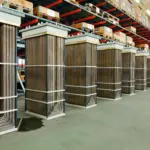
Founded in Iceland 1984, Sæplast today manufactures more that 120,000 insulated containers annually with its production technologies including rotational moulding. Over the past five years, the company has been working on an innovative container with the four goals of reducing the space occupied by empty units, improving the quality of the raw materials being stored, improving hygiene, and making stacked units more secure. The result is its new Twin Containers solution.
Processing sector value creation (small company <50 staff) – ALVAR
ALVAR – formerly known as D-Tech ehf – has always been closely connected with Iceland’s fisheries and the sector’s pelagic, whitefish, seafood and salmon factories. ALVAR’s “flagship solution” is its Mist Core system, which deploys a high-density disinfectant mist in each of the processing rooms chosen within a factory. The mist density guarantees thorough disinfection, including the small gaps between equipment units. Furthermore, the automation of the disinfection process allows fish and seafood businesses to preserve resources and keep a tight rein on costs, including up to 90% less water and 70% less chemicals, while also dramatically decreasing the bacteria count.
Smart award for by-product innovation – Marine Collagen
Applying circular economic thinking to fishery and aquaculture products offers the opportunity to mimic a more natural system to regenerate “waste” into new and valuable products and side streams. At the forefront of this movement in Iceland, Marine Collagen extracts collagen – a structural protein that is responsible for healthy joints and skin elasticity – from Atlantic cod skin.
Overall outstanding supplier – Vonin
Vónin is a major developer and manufacturer of high-quality fishing gear and aquaculture equipment. Its expertise is based around specialised pelagic trawls, purse seine nets, semi-pelagic trawls, and robust trawl gear for groundfish and shrimp fisheries, as well as net cages, mooring systems, plastic cages, and net washing systems for the fish farming sector. The company is committed to maximising the efficiency of its products in order to help its customers keep a tight rein on costs and elevate their sustainability credentials. Its new Twister pelagic doors, for example, are designed for low drag and high efficiency. They also incorporate Vónin’s Smart system technology.
Best individual stand up to 50m2 – Kaeling & Micro
Best individual stand over 50m2 – Baader
Best national, regional or group stand – Pavilion of Denma