

Salmon farmer brings in biggest landing craft
Scottish Sea Farms has taken delivery of its biggest landing craft to date, designed to support the company’s move to farms of fewer but larger pens.
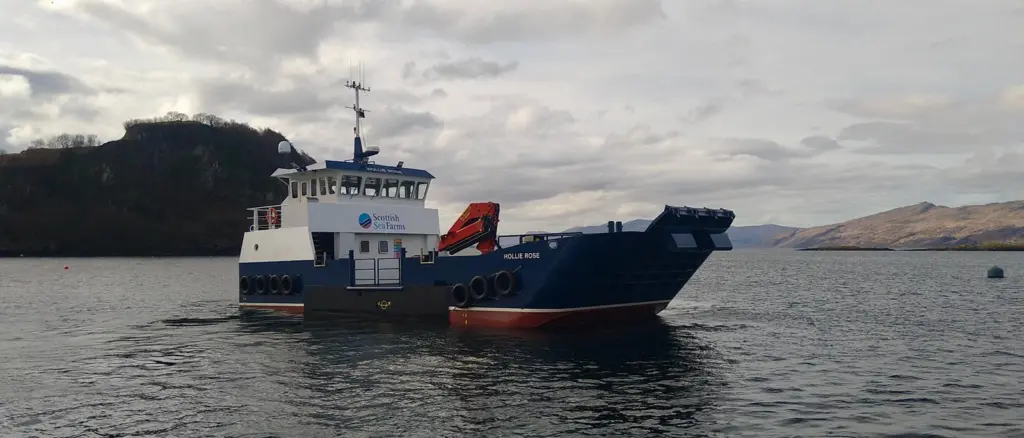
The 19-metre Hollie Rose was built in Scotland by Bute Boatbuilders to a design by Argyll-based naval architect AG Salmon.
The vessel, equipped with a PK32080 Palfinger crane and twin MD196TI Doosan diesel engines, will be based between Mull and Oban, and deployed across Scottish Sea Farms’ mainland estate, assisting with net washing, inspections and treatments.
In a first for Scotland, the boat is fitted with a state-of-the-art remotely operated vehicle (ROV) Manta net washer, supplied by Norwegian company Mainstay, that removes marine debris from pens during washing, helping create an optimum environment for fish.
The Manta net washing system also has hole detection software, recording any possible damage to the nets and further improving containment surveillance.
The landing craft also has onboard accommodation for two crew, enabling faster reaction times and greater flexibility.
Scottish Sea Farms Mainland Marine Engineering Manager Craig Cameron, who was involved in commissioning the new boat, said Hollie Rose will be ready to go where needed at short notice.
“Having accommodation on a landing craft is new for us. It gives the farms a better service and makes the vessel more flexible. The two crew will work two weeks on/two weeks off, which is becoming an increasingly popular working pattern in rural areas where housing is scarce,” he said.
Skippers David McKie and Jacob Ellis were appointed via internal promotion, with each bringing 10 years’ experience with Scottish Sea Farms, most recently in managerial roles at Bloody Bay farm.
Cameron said the company’s future landing craft are likely to be at least the size of Hollie Rose, if not bigger, in line with the move towards installing wider diameter pens at farms.
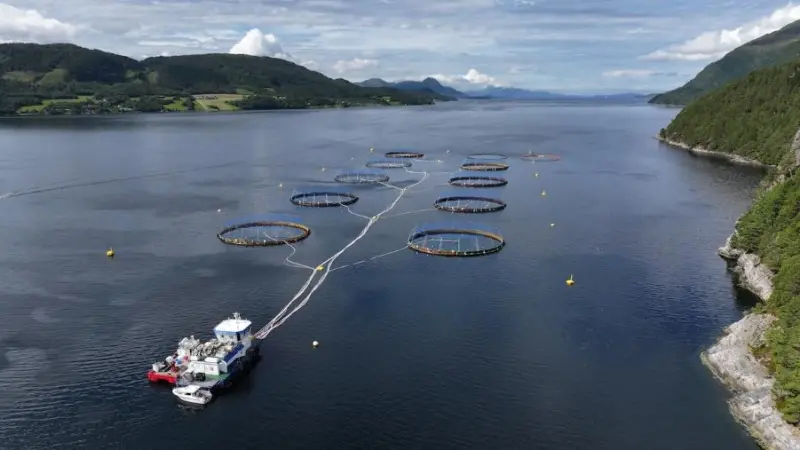
Scottish Sea Farms installed its first 160-metre circumference pens at its Fishnish A farm, off Mull, late last year, with four of the larger pens replacing the 10 existing 100-metre pens, while maintaining the same biomass.
The switch to fewer, but heavier and safer, pens not only provides better conditions for the fish but also frees up the farm team’s time so they can focus on the stock’s health and welfare. It is a strategy due to be rolled out at other Scottish Sea Farms locations.
Cameron said there are several Scottish yards that could build boats to Hollie Rose’s specifications.
“We contacted different yards in Scotland to get prices and availability and Bute was the best fit for us. We always look to local builders first.”
Hollie Rose has been in service since the beginning of April. The vessel is named after Cameron’s two daughters.