




EcoSea technology used in Chilean offshore aquaculture prototype
Breeding fish where it was not thought possible and in a sustainable way is now possible thanks to an antifouling technology developed by the Chilean company EcoSea.
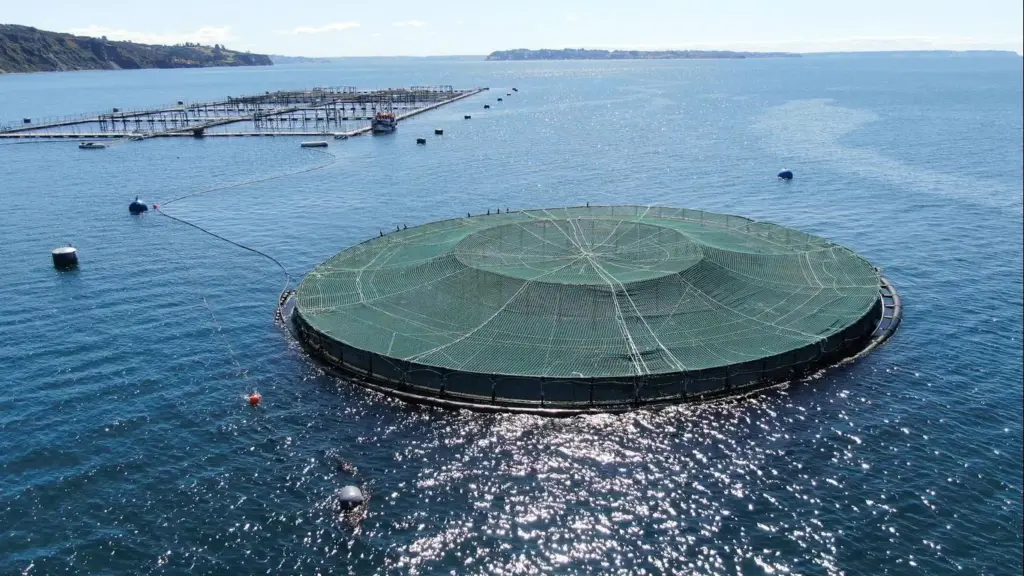
Since 2007, the company has been developing containment systems with antibacterial copper alloy meshes that are also antifouling, reducing maintenance and operating costs. Over the past 12 years, EcoSea has deployed more than 70 of these systems around the world, growing more than 10 million salmon and reducing carbon emissions by around 10,300 tonnes.
Now the technology is being used in the Technological Development Program for Ocean Aquaculture, Chile 2023, to establish the technical requirements for offshore aquaculture with submersible cages, as well as help inform its future legislation in the country.
Chile has more than 4,200 kilometres of coastline. “We have extraordinary possibilities to successfully move towards a more sustainable aquaculture, far from the coastline and using state-of-the-art technologies that allow the industry to grow sustainably,” said Fabián Avilés, director of the Technological Development Program for Ocean Aquaculture.
Prototype testing
The program completed the prototype test, with a 40m diameter submersible cage developed by EcoSea. Results showed that the fish were less stressed and grew faster and larger with a 2% lower mortality rate. Production costs dropped by 18% and an estimated 27 tonnes of CO2 were saved from being released.
Related Articles
 AQUACULTURE
 AQUACULTURE
 AQUACULTURE