





IOTC’s ‘missed opportunity’
The Indian Ocean Tuna Commission’s failure to reach agreements on reducing yellowfin and skipjack tuna catches and to adopt a new management measure for drifting fish aggregating devices (FADs) has disappointed the EU’s Directorate-General for Maritime Affairs and Fisheries (DG-MARE), which described the outcome of the IOTC’s latest annual session as a “missed opportunity for the sustainable management of the Indian Ocean fisheries”.
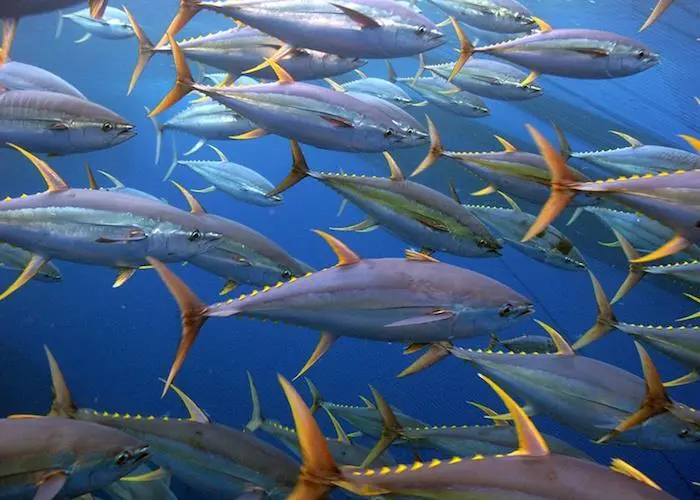
DG-MARE said in a statement that the EU went to the 16 to 20 May 2022 meeting engaged to discuss further catch reduction for yellowfin tuna, as explicitly advised by the IOTC scientific committee.
It highlighted that since the establishment of the rebuilding plan for yellowfin tuna in 2016, the EU, as the biggest contributor, has continuously reduced its yellowfin catches by more than 21% as compared to 2014 levels (more than 20,000 tonnes), adding that no other IOTC member has matched this reduction.
“Unfortunately, our efforts (and those of other IOTC members) have been nullified by the decision of six IOTC members (India, Indonesia, Iran, Madagascar, Oman and Somalia) to object to the rebuilding plan.
“Last week at the 2022 annual meeting, the same countries have reiterated their unwillingness to participate to the conservation effort or to engage in any discussion.”
Faced with this failure, IOTC agreed, on the basis of an EU proposal, to further engage with those objecting countries in order to try to reconcile positions, before calling a special session that should discuss future solutions at latest by the first-quarter of 2023.
DG- MARE said it was even more disappointed that IOTC could not adopt a new regulatory framework for FADs, with the EU having tabled a proposal that included reducing the number of deployed FADs to 240 and imposing the use of biodegradable FADs in 2025.
But at the end of the five-day meeting, despite many concessions agreed by the EU, the other IOTC members “remained inflexible in their positions” and “failed to recognise the incredible step forward the proposal would have meant”, it said.
The EU has also tabled a proposal to counteract the increasing trend of skipjack tuna catch. But as last year, the IOTC did not manage to adopt the proposal to bring back catches within the agreed total allowable catch (TAC).
“Some parties of the IOTC were not willing to take action to ensure that the fisheries on skipjack remain sustainable on the long-term. In the views of the EU, it is again a lost occasion to mitigate the risk of deterioration of skipjack stock,” DG-MARE said.
On a positive note, IOTC did adopt a far-reaching management procedure on bigeye tuna as well an EU proposal on observer coverage – creating the basis for the introduction of more electronic monitoring onboard vessels.
Related Articles
 FISHERIES
 FISHERIES
 FISHERIES