






Europêche: European tuna fleet hit hard by IOTC’s double standards
The Indian Ocean Tuna Commission (IOTC)’s 28th session, held 13-17 May 2024 in Bangkok, Thailand, ended on a bitter note for the European fleet, according to fishing body Europêche. The organisation said that, focusing on FAD measures, IOTC “successfully created a smoke screen” to mask “its serious governance deficiencies and failure to adequately manage fish stocks”, especially yellowfin and neritic tunas or to enforce proper monitoring, control and surveillance.
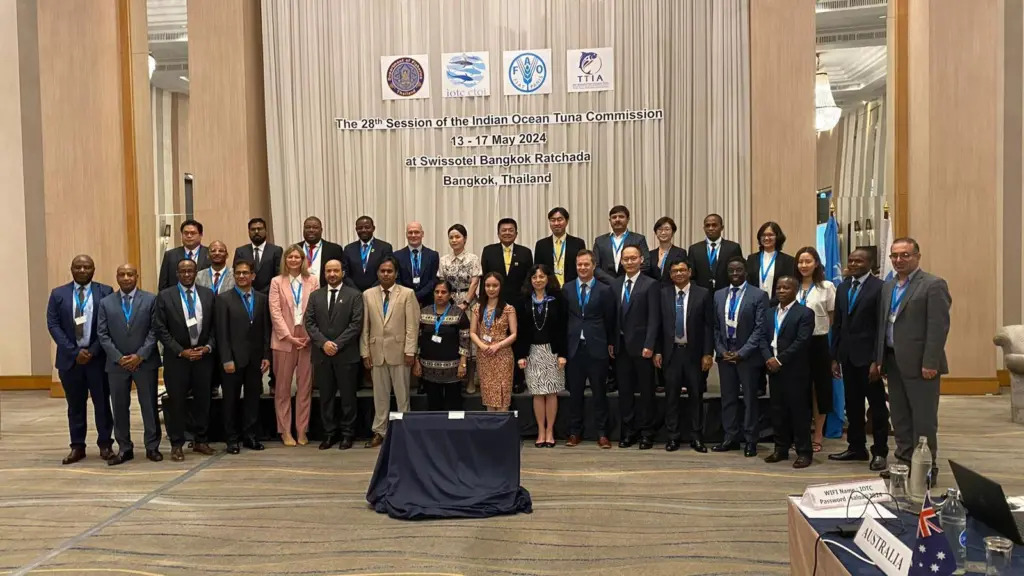
Europêche Tuna Group Director Anne-France Mattlet voiced her deep regret that “all measures proposed that were meant to improve transparency and better data for scientific analysis were either rejected or deeply weakened. This included Seychellean proposals to improve data collection and reporting, catch and effort, tropical tuna discard ban, the European Union’s High Sea Boarding and Inspection Scheme and observer coverage increase.
“We believe that monitoring, control and surveillance, as well as data transparency, are the key for good management and urge IOTC members and other stakeholders to work in that sense during the intersessional period until the next Commission meeting in April 2025,” she said.
Europêche explained that as discussions were focused on FAD measures, not much time was devoted to try to revert the overfishing and overexploitation of yellowfin tuna. It said the fisheries closure was rejected and that several states kept objecting to the recovery plan for yellowfin tuna.
This plan is strictly observed by the European purse seine fleet, which also has 24/7 satellite monitoring (VMS), 100% observer coverage and applies all EU control regulations, it said.
Europêche also stated that IOTC was “extremely diligent in multiplying FAD measures” that will have “absolutely no effect of the yellowfin tuna stock recovery”, as the purse seine fishery represents barely 20% of the catches and because a quota, respected by the European fleet, is already in place.
It further highlighted that exemptions were granted to Small Island Developing States (SIDS) and countries with a limited number of purse seiners, such as Korea, but not to other developing or less developed states. This, Europêche maintains, creates a significant disparity, disadvantaging notably European fleets and disrupting the level playing field.
Additionally, IOTC continues to reduce the number of supply vessels allowed per flag state without any scientific justification, it said. “This policy discriminates against shipowners with only one or two purse seiners within the same flag state, as they may lose their supply vessels. Coupled with the prohibition on registering new supply vessels in the IOTC’s authorised vessel register, this measure also hinders developing states from expanding their fleets.”
Supply vessels are crucial for the purse seine fishery, as they help manage and recover deployed FADs and reduce fleet fuel consumption – a vital factor given the current surge in global fuel prices, it said.
“These measures are threatening the economic viability of the EU purse seine fleet in the Indian Ocean, with little to no effect on the recovery of yellowfin tuna.”
Europêche Tuna Group President Xavier Leduc commented: “Despite assurances from DG Mare’s Director General Vitcheva that the EU would commit to preserving a level playing field in the IOTC, the European delegation, under pressure from pole-and-line states, continues to accept non-science-based exemptions and reductions in FADs and supply vessels, which only exacerbate the inequality.”
The organisation was pleased that IOTC adopted a management measure for skipjack and a full FAD biodegradability calendar, which have both been required for tuna freezers for a long time.
“It is excellent news, though not a surprise as they essentially affect countries having purse seiners, which are definitely in favour of better management and science. As long as the usual objectors and non-complying states are not affected, there is no problem for IOTC to adopt science-based innovative management measures,” Mattlet said.
Related Articles
 PROCESSING & REFRIGERATION
 FISHERIES
 FISHERIES