




‘Decarbon EU fleet quicker’
There are many potential paths to achieve the EU’s ambition of reducing the fishing sector’s contribution to greenhouse gas (GHG) emissions by 30% by 2030 and of becoming climate neutral by 2050, according to a new report by conservation organisation Oceana.
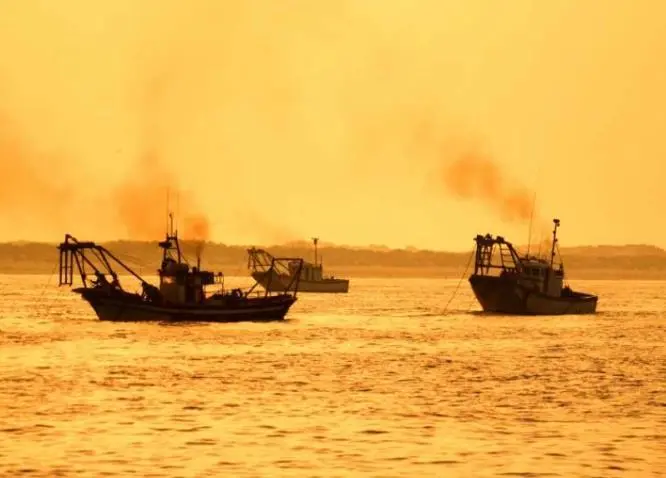
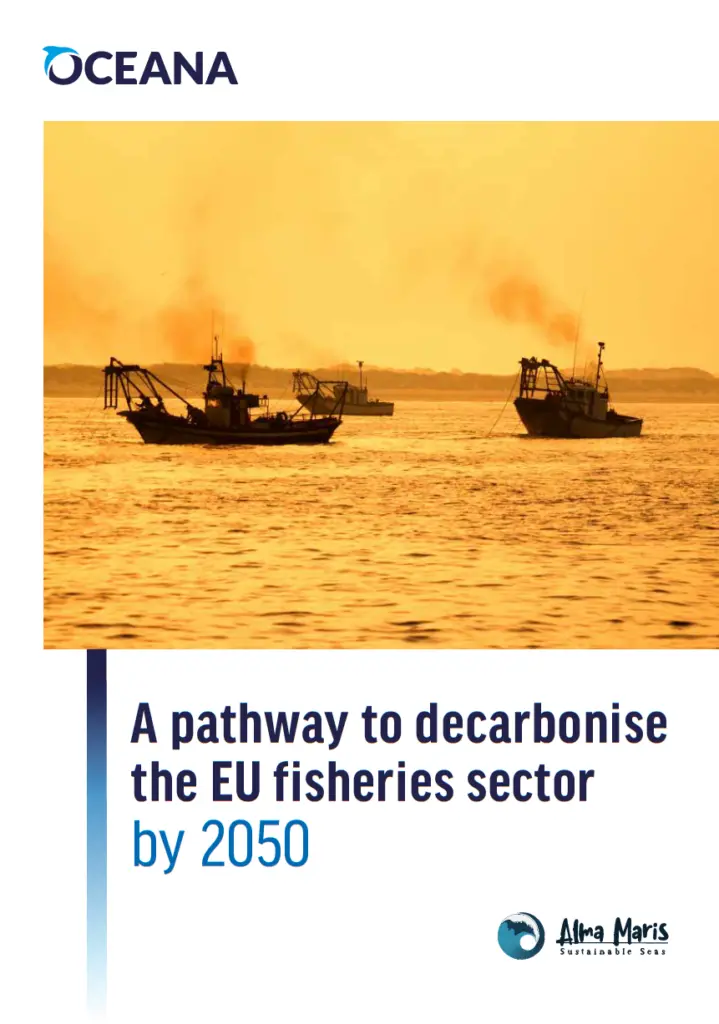
The report, “A pathway to decarbonise the EU fisheries sector by 2050”, has been released by Oceana ahead of the European Commission’s preparations to publish a strategy to accelerate the energy transition in the EU fisheries sector.
It identifies that in terms of litres of fuel used per kg of landed fish, mobile bottom-contacting fisheries such as bottom trawlers are the most fuel-intensive fishing techniques in the EU. This high fuel dependency is largely due to bottom trawlers requiring particularly large quantities of fuel and powerful engines to drag their gear across the seabed.
Bottom-contacting gears also release large amounts of carbon stored in the seabed into the water, possibly as much as 10 to 15 times the amount of carbon released through fuel burnt during fishing activities, according to the report.
It also states that while fishing tends to be considered a low-carbon source of food, the most fuel-intensive and least energy-efficient fishing techniques available, could result in emissions comparable to those of land-based animal protein production.
Oceana suggests that phasing out the most energy intensive and destructive fisheries, and replacing them with more passive fishing techniques, offers multiple win-wins for the environment, the economy and society. These include contributing to reducing global GHG emissions through reduced fuel use, increased benefits from catching higher value fish with less fuel and lower operational costs, and protected carbon stores.
It is the responsibility of all sectors, including the fishing industry, to reduce greenhouse gas emissions, Oceana Senior Advisor Alexandra Cousteau said.
“Oceana’s report shows how adopting specific technical measures and management approaches would make it feasible for the EU fishing fleet to help achieve the EU’s environmental goals and deadlines to mitigate climate change. Reaching these objectives is now a matter of will.”
Vera Coelho, Senior Director of Advocacy at Oceana in Europe, added, “The EU needs to better reconcile environmental and economic priorities in fisheries management and stop viewing one as opposing the other. Decision-makers must start by decoupling the fishing industry from its heavy reliance on fossil fuels and aid its transition to low-carbon alternatives, which will also help it economically. Climate inaction has a higher environmental and economic cost than a transition to a net-zero carbon future.”
Despite some barriers to innovation, the report identifies short and long-term solutions for reducing emissions in the EU fisheries sector and meeting EU climate targets. These include the uptake of existing technologies, such as vessel and gear optimisation, to make fishing techniques and activities less fuel-intensive, incentivising the use of alternative gears to partially replace the most energy-intensive fishing gears, and implementing a full ban on the most detrimental fisheries in marine areas where blue carbon habitats are known to occur.
Oceana said its report’s findings serve to feed into the European Commission’s upcoming strategy to promote the EU fisheries sector’s energy transition, in the context of the EU’s efforts to make its climate, energy, transport and taxation policies fit for reducing net GHG emissions by at least 55% by 2030, compared to 1990 levels. In the fishing sector, this translates to a reduction of 30% by 2030 compared to 2005 levels.
Missing the mark
The report has been criticised by European fishing representative body Europêche, which describes it as both “deceptive and unhelpful”.
In a statement, Europêche said Oceana has taken an overly simplistic, biased approach and does not rely on the advice of experts and scientists or offer “a fair portrayal of the great challenge” of decarbonising the European fishing fleet.
Europêche said it welcomes and supports the effort to make the decarbonisation of the sector a reality and highlighted that the EU fleet has been continuously investing in technologies to reduce energy consumption, improved gear design and vessel efficiency, upgraded waste management plans, smarter procurement of sustainable materials and supplies to decarbonise the industry.
By way of example, EU vessels are more and more installing diesel-electric engines, efficient propeller and refrigeration systems and participating in fishing for litter and in circular economy schemes, it said. But it also explains that complete decarbonisation is a serious challenge that will require time, research, funding, innovation, digitalisation, training and port infrastructures to make technologies and low-emission energy sources commercially available, cost-efficient and safe.
“For years, the sector has been preparing for its decarbonisation within the regulatory and technological possibilities available and in a context of global pandemics and crisis. We are not waiting for NGOs to initiate this path. On the contrary, it is sad to see that many environmental NGOs, instead of proposing realistic solutions hand in hand with the sector, prefer to invest millions of euros in campaigns to demonise fishing gears such as bottom trawling and to ‘sell’ the mistaken benefits of marine protected areas,” Europêche President Javier Garat said.
Europêche also pointed to the constant reduction of an ageing EU fleet, which currently has 65,000 active vessels (75% under 12 metres), compared to 81,600 in 2018 and 103,800 in 1996.
Related Articles
 FISHERIES
 FISHERIES
 FISHERIES