


Atlantic cod and squid occur much further north than previously expected, with scientists participating in the international MOSAiC expedition with German research vessel Polarstern finding single individuals in deep water in the middle of the Arctic Ocean.
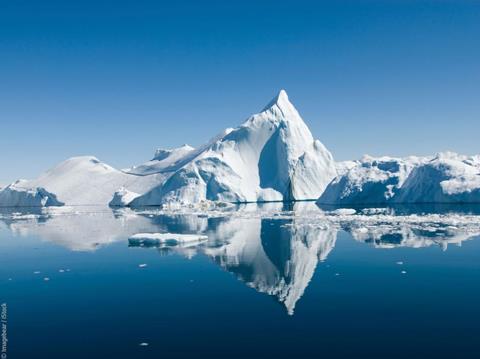
For over more than a full year through to autumn 2020, scientists from 20 nations participating in MOSAiC (Multidisciplinary drifting Observatory for the Study of Arctic Climate) travelled the Artic Ocean onboard Polarstern to better understand climate processes.
As part of the expert team, scientists from the EU-funded EFICA (European Fisheries Inventory in the Central Arctic Ocean) Consortium conducted research into the ecosystems present, with their research providing new and significant insights, including into the functioning of the Arctic pelagic food web.
A deepwater layer of zooplankton and fish was found in, along with evidence of a continuous immigration of larger Atlantic fish.
Laboratory analysis found that the Atlantic cod originated from Norwegian spawning grounds, and had lived in Arctic water temperature (-1 to 2oC) for up to six years.
According to biologist Dr Hauke Flores of the Alfred Wegener Institute, one of the EFICA Consortium scientists onboard the MOSAiC expedition, the availability of small and even some larger fish in the Atlantic water layer could explain why seals, walruses and polar bears can be found even at the North Pole.
“Both fish and mammals are very few, but they are there,” Flores said.
Among other conclusions, which have been published in the scientific journal Science Advances, the EFICA scientists infer that – at least in the Eurasian Basin – there are no harvestable fish stocks today or in the foreseeable future.
“The capacity of the Central Arctic Ocean ecosystem to support larger fish stocks is without doubt rather limited,” said Pauline Snoeijs Leijonmalm, coordinator of the EFICA Consortium and professor in marine ecology at Stockholm University.
The European Commission advises that these findings show “it is of great importance that this unique and fragile ecosystem is subject to robust international protection”.
In June 2021, following international negotiations between Canada, China, Denmark (in respect of Greenland and the Faroe Islands), Iceland, Japan, the Republic of Korea, Norway, Russia, the United States and the European Union, the ‘Agreement to Prevent Unregulated High Seas Fisheries in the Central Arctic Ocean’ entered into force.
This agreement bans commercial fishing for at least 16 years, and sets up a joint scientific research and monitoring programme to improve the understanding of ecosystems in the Central Arctic Ocean.