





40% jump in Iceland catch
A huge capelin catch helped Iceland’s fishing fleet to land 40% more last month, with the capture of 145,432 tonnes of fish and shellfish, according to preliminary data from the country’s Directorate of Fisheries.
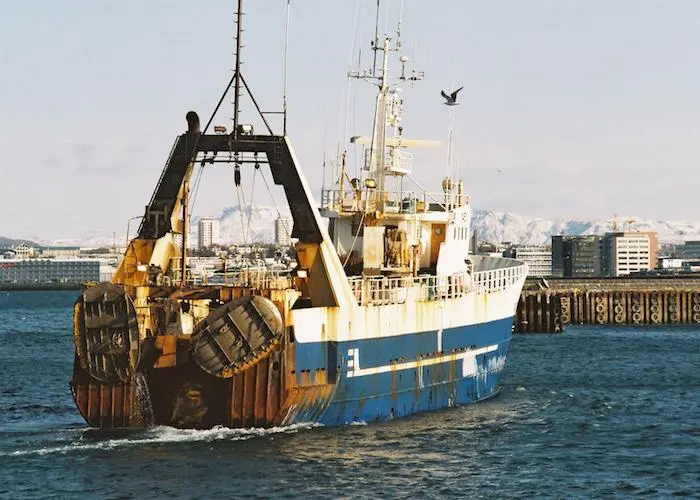
The March pelagic catch was up 106% year-on-year to 95,236 tonnes, with capelin accounting for almost the entire volume. Just 101 tonnes of herring were caught, with no mackerel or blue whiting recorded.
In the demersal sector, landings totalled 48,068 tonnes, which was 13% less than in March 2021. Icelandic cod catches fell 11% to 29,459 tonnes, while the haddock volume slipped 4% to 5,505 tonnes. The saithe and redfish volumes dropped 14% and 36% respectively to 7,040 tonnes and 3,265 tonnes.
There was also an 18% decrease in Iceland’s flatfish catch to 1,620 tonnes, while shellfish landings were up 42% to 508 tonnes.
The authority also calculated the overall April 2021 through March 2022 catch at almost 1.5 million tonnes, a rise of 37% on the previous 12 months. This increase included a 76% increase in the pelagic category, with the total capelin volume soaring 637% to 521,473 tonnes, and the herring catch up 37% to 184,383 tonnes.
Iceland’s total blue whiting and mackerel volumes fell 23% and 13% respectively to 167,023 tonnes and 132,000 tonnes.
The demersal catch amounted to 448,819 tonnes, down 6%, with 8% less cod (259,118 tonnes), 6% less haddock (53,042 tonnes) and 13% less redfish (45,723 tonnes). Bucking the declining trend, saithe catches increased 11% to 59,386 tonnes.
At 22,888 tonnes, the flatfish catch was 10% lower than in the previous 12 months, while Iceland’s shellfish catch increased 23% to 6,353 tonnes.
Related Articles
 FISHERIES
 FISHERIES
 PROCESSING & REFRIGERATION