



Fishermen could not believe that a organisation backed by one of the largest fish buyers in the world, Unilever and the WWF could actively launch a sustainability label which would attempt to make the world fisheries more sustainable. To them it seemed the MSC was tarnished too much with the 'eco-green' brush and others thought it was an attack on their sovereignty.
The criticism has continued throughout the past five years though, with the most recent coming from America where a US lobstermen said the certification scheme was too expensive and then created its own 'eco-friendly' label. Others have said certification labels such as the MSC's are a waste of time and are making uneccessary demands on fishermen when they have enough regulations and restrictions to deal with in the current economic climate fuelled by cuts in quotas and restricted fishing.
100th product line
Despite all this, last month the MSC celebrated certifying its 100th labelled product line and it is that figure that makes you think the organisation is a lot more worthy than its harshest critics would make you believe, especially with names like New Zealand hoki and Alaska salmon heading its client list.
Chief Execuive of the MSC, Brendan May, is keen to highlight how the MSC label has grown significantly to be recognised around the world. He says the response from consumers, retailers and stakeholders in the global industry has been very positive.
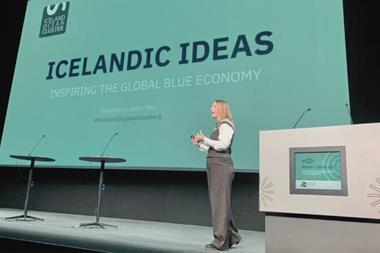
Speaking at the Icelandic Fisheries Exhibition held last month, Brendan May says even the Nordic companies like Iceland are starting to take notice of the MSC. The MSC has previously not been received well by countries such as Iceland and Norway and plans are still in motion for the Nordic countries to develop their own label.
But a recent meeting with Icelandic Fisheries Minister Arni Mathiesen was more positive."Iceland hasn't closed the door on us by any means," says Brendan May, "The Government is happy for our information to be introduced and that is very promising."
Some of the Icelandic processors are using New Zealand Hoki and the MSC has had contact with other Icelandic fishing companies. "We certainly aren't as alien as we used to be in Iceland and we have definitely made progress," says Brendan May.
"But it is all about perception, not just with the Icelandic people but with the rest of the world," says Brendan May. "People think we are heavily backed by Unilever and the WWF but the reality is that they provide less than 5% of our income and that's what people don't realise."
World Summit
The recent announcement of a fisheries agreement at the World Summit has pleased Brendan May because it will no doubt help the MSC's long-term cause. "It is very encoraging to see even though the targets are very ambitious," says Brendan May, adding: "But of course it is useless unless there is legislation enforcing it."
CFP
Like most in the industry, Brendan May describes the Common Fisheries Policy (CFP) as a failure. His suspition is that the new proposals are too much like the old CFP to make a significant difference. " There is no doubt the CFP has failed desperately, it has to be common and it just has not achieved what it should have done," he says adding: "Issues have to be addressed otherwise Governments are going to have to face the issue of subsidy."
But getting back more specifically to the MSC itself, Brendan May says the target for the next five years is to build on the success of the last and of course for the MSC label to grow even more. Brendan May is also thinking about how best to reach the consumer although he is please how some companies such as Young's have used the label and certification process on its products.
"It's good to see companies using the marketing potential to its full advantage," says Bredan May.
Scepticism
"There is still scepticism in the industry about what we do but hopefully attitudes are changing," says Brendan May. He especially thinks the attitudes of fishermen are changing for the better. "Traditionally fishermen have been anti-conservation and that is mainly because Governments have let them down and basically what you conserve someone else will take," he says adding: "But now they are definitely thinking about sustainability and that's is very promising, I think there has been a huge shift in attitudes already."
Award
The MSC has also been recently awarded the UK Charity Awards' Best Practice category for operating an open and transparent organisation.
Ian Harris, Director of risk reward consultancy Zyen, felt the award for best practice was extremely significant: "With a team of just twenty, the MSC is one of the smallest and youngest international charities to win this year's UK Charity Awards.
One of the main criteria used for choosing the MSC for was the quality of the governance review and I hope the MSC will use the honour to go from strength to strength."
The MSC says it is delighted to have won this award, recognising its extensive governance review, completed last summer, which was held in consultation with all the MSC stakeholders and included the innovative use of web-based questionnaires.
According to the MSC, the results of the governance review have been promptly implemented and the core outcome is a greater balance of views and representation from different sectors that have formal input into the MSC's governance process.
Simultaneously, as a result of this strategic planning, the MSC has managed to quadruple its funding and increase, by nearly tenfold, the number of MSC labelled products in the global marketplace.
www.msc.org