


State ends fish farming
The US state of Washington’s public aquatic lands will no longer be home to commercial finfish net pen aquaculture after Commissioner Hilary Franz announced an executive order prohibiting such activities in areas managed by her agency, the Washington State Department of Natural Resources (DNR).
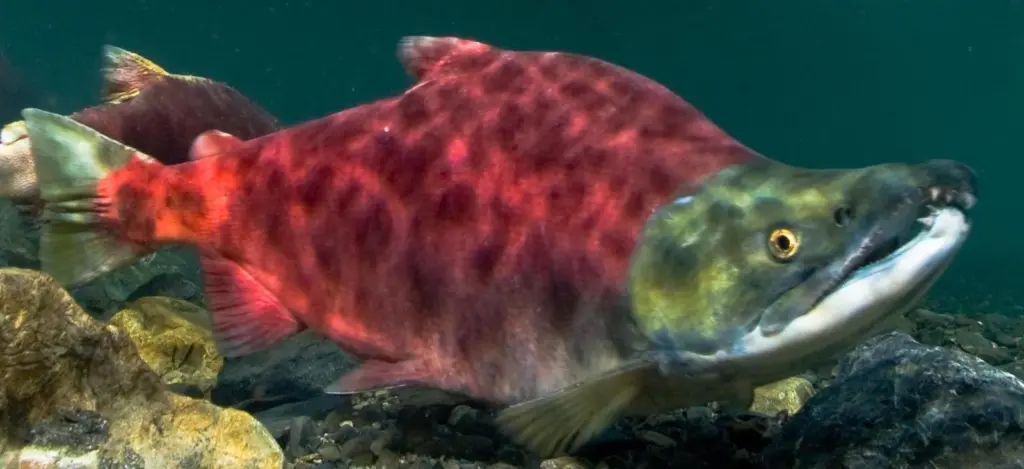
“As we’ve seen too clearly here in Washington, there is no way to safely farm finfish in open sea net pens without jeopardising our struggling native salmon. Today, I’m announcing an end to the practice. We, as a state, are going to do better by our salmon, by our fishermen, and by our tribes,” Franz said. “Commercial finfish farming is detrimental to salmon, orcas and marine habitat. I’m proud to stand with the rest of the west coast today by saying our waters are far too important to risk for fish farming profits.”
Commissioner Franz’s order will align Washington’s net pen salmon aquaculture policy with policies already in place in Alaska, California and Oregon.
She was joined in her announcement by Chairman Leonard Forsman of the Suquamish Tribe and Emma Helverson, Executive Director of the Wild Fish Conservancy.
“On behalf of the Suquamish people, I want to thank Commissioner Franz for listening to Tribes and others who place the health of the Salish Sea as their top priority.” said Forsman. “Ending commercial finfish farming in our ancestral waters is an important step towards protecting marine water quality, salmon populations, and the endangered southern resident killer whales. The impacts of commercial finfish farming put all of that at risk and threatened treaty rights and ultimately our way of life and culture.”
“The importance of this new policy for wild fish, water quality, and the greater health of Puget Sound cannot be overstated. We are so grateful to Commissioner Franz for listening to the public and taking action to protect Puget Sound, not just today, but far into the future for the benefit of so many generations to come,” said Helverson. “All week, we have been hearing from people throughout our region and colleagues around the world already celebrating Commissioner Franz’s decision earlier this week to deny leases to the net pen industry. Now, this historic and bold policy is setting a new model that will go on to bolster efforts around the world working toward this same end. What we’ve accomplished together is truly something for Washington to be proud of.”
“The Salish Sea is one of our eldest relations and was here long before us. It is one of our most powerful teachers, and we have a sacred obligation to preserve, promote, and protect it at all costs,” said Anthony “Tse Sum Ten” Hillaire, Lummi Nation Chairman. “Since time immemorial, we have harvested finfish and shellfish, and ensuring that our children and grandchildren have access to those same rights is of utmost importance, as a healthy and productive Salish Sea is essential to our survival.”
“Tulalip is committed to protecting the environment and restoring historic fish numbers, and this is why we urge caution as alternative methods of production are considered. The Salish Sea is a delicate ecosystem which requires our conservation and stewardship,” said Teri Gobin, Chairwoman of the Tulalip Tribes.
“We say, ‘the table is set when the tide goes out.’ Seafoods have always been a staple of Samish diet and traditions,” said Tom Wooten, Samish Indian Nation Chairman. “By removing the Sound’s remaining net pens, our delicate ecosystem now gets a chance to replenish, repair and heal. We are grateful and lift our hands to the DNR’s partnership in helping protect the Salish Sea that tie us to our history and culture.”
Franz’s order directs DNR staff to develop necessary changes to agency rules, policies, and procedures to prohibit commercial finfish aquaculture on state-owned aquatic lands. The order only applies to commercial net pen fin fish aquaculture and does not apply to hatcheries that restorative or boost native stocks.
Commercial finfish farming has operated in marine net pens in Puget Sound for more than 40 years, operating on aquatic lands leased from DNR.
Meanwhile, DNR’s denial of Cooke Aquaculture’s request to re-lease the sites to continue finfish net pen aquaculture gives the company until 14 December to finish operations and begin removing its facilities and repairing any environmental damage.
The Hope Island lease expired in March and has been in month-to-month holdover status since. The Rich Passage lease expired in November.
DNR determined that allowing Cooke to continue operations posed risks of environmental harm to state-owned aquatic lands resulting from lack of adherence to lease provisions and increased costs to DNR associated with contract compliance, monitoring, and enforcement.
Related Articles
 ICELANDIC FISHERIES EXHIBITION
 SEAFOOD
 AQUACULTURE