



New research has revealed that an early immune response is the key to natural sea lice resistance in some Pacific salmon species, offering fresh hope for combatting one of aquaculture’s most persistent challenges.
A recent study run by Nofima, the Norwegian Institute of Food, Fisheries and Aquaculture Research, examined how examining how coho salmon, known for their resilience against sea lice, respond to louse attachment.
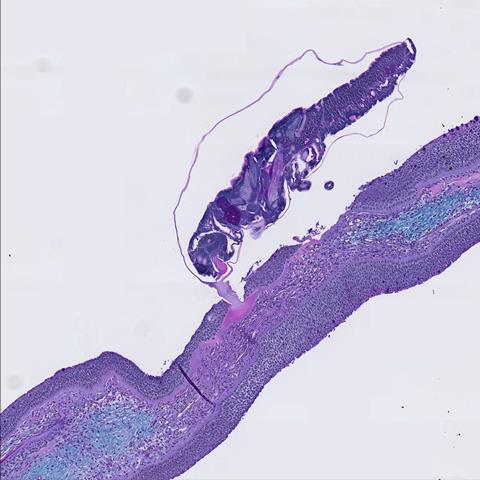
“When sea lice attach, certain Pacific salmon species mount a rapid and robust response, causing the lice to fall off,” said lead author, Lene Sveen.
Rather than looking at the entire immune system, researchers focused on the initial site of attachment on the skin.
“This is precisely where the battle begins,” explained project leader Nick Robinson. “If the salmon can respond quickly enough, it can prevent the louse from gaining a foothold.”
The study found that coho salmon trigger a strong inflammatory response within two days of louse contact. Immune cells rapidly flood the area, making it difficult for the lice to stay attached. Atlantic salmon, by comparison, show a much weaker response.
Other Pacific species like chum and pink salmon also display impressive defences, with researchers noting a high density of mucous cells on their skin. In fact, lice struggled to attach without anaesthetising the fish.
“This suggests that their skin surface is inherently unsuitable for the parasite, and that several mechanisms are at play,” said Sveen.
The study is part of the CrispResist project, which brings together global experts to understand why Pacific salmon resist sea lice more effectively than Atlantic salmon.