


Iranian aquaculture on a pathway to growth
Iran’s government has set out ambitious plans to double the country’s production in the next four years, with hopes it will ramp-up domestic seafood consumption and generate more export earnings. But despite some steady growth, such bold targets might be unrealistic.
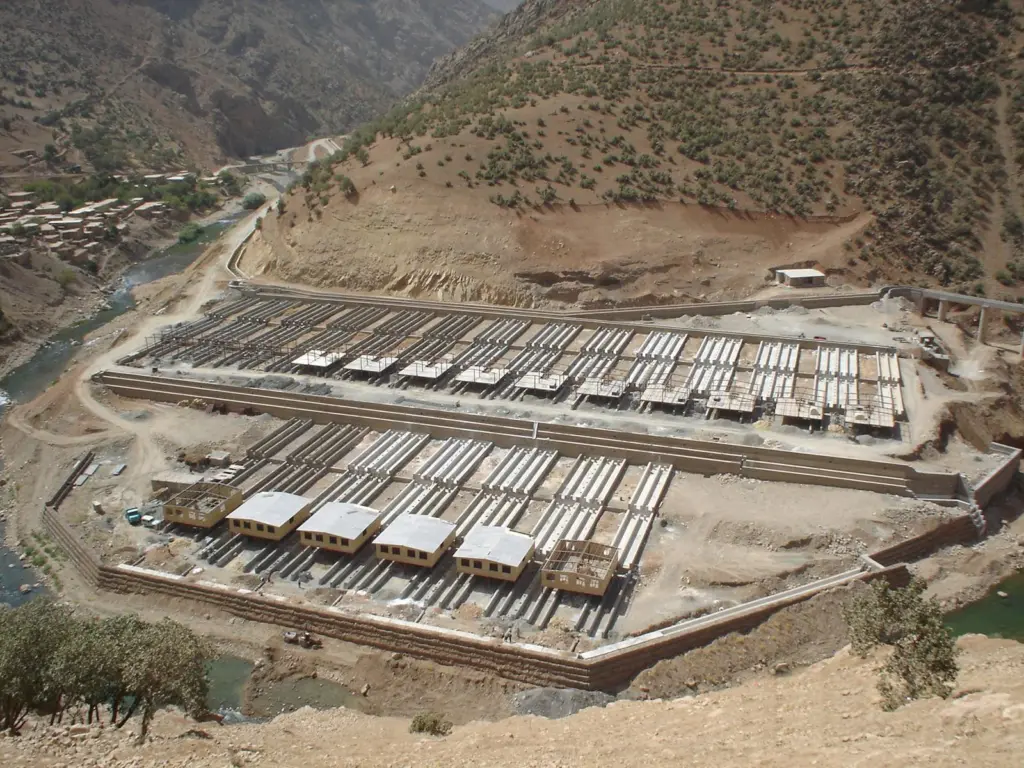
Under the latest development plan of the Iranian Fisheries Organisation (IFO), the country will seek to boost its fish and seafood production from 1.26 million tonnes last year to 2.6 million tonnes annually by the Iranian calendar year 1404 (starts March 2025), IFO chief Seyed Hossein Hosseini told WF.
To provide some context of aquaculture’s contribution to this target, last year’s production stood at 557,000 tonnes, including 57,000 tonnes of shrimp.
Hosseini, who also serves as Deputy Minister of the Agricultural Jihad said Iranian scientists believe the country could lift its marine aquaculture production to as much as 1.5 million tonnes per year. However, he added that the plan for the next four years is to raise its fish production in cages by a more modest 500,000 tonnes, primarily in the Persian Gulf and the Oman Sea.
A shift in production is also expected. Historically, Iranian aquaculture has been dominated by freshwater species, including cyprinids (Cyprinidae), trout (Salmo gairdneri), sturgeon (Acipenser), and crayfish (Palinurus vulgaris), but under the new development plan, the focus will increasingly be on more valuable marine fish species – primarily sturgeon, seabream and seabass.
Building aquaculture cities
Breeding fish in cages is a relatively young industry in Iran, said Rajab Ali Ghorbanzadeh, Director of the IFO’s Planning and Budgeting Department. Last year, this segment’s output reached just 18,000 tonnes. And despite IFO spending on average some 10 billion tomans (approximately US$25 million) on research and development and several other initiatives in this field, the growth rate of cage farming continues to lag behind government forecasts.
Ghorbanzadeh assumes this is because of limited resources.
“This industry has vast prospects of production growth. Nearly 5,800 km of coastline can be used to grow fish in cages. However, this segment is also very expensive,” he said.
The solution, though, is already on the table. In the next four years, the Iranian government plans to additionally spend 50 to 70 billion tomans ($120 to $170 million) on encouraging investors to build cage farms.
It’s widely felt that a significant proportion of that money should be allocated to the development of some necessary infrastructure. This is because Iranian fish farmers are suffering from Western sanctions, so to achieve the bold targets, they need aquafeeds, broodstocks and equipment.
Stakeholders suggest some of the new production capacities should be located in the five agricultural and fisheries cities that the Iranian government plans to build in the Khuzestan, Bushehr, Hormozgan, Sistan and Baluchistan provinces over the coming several years.
The idea is to create a production cluster where fishing and aquaculture will be the core business. It’s hoped these new cities will help Iran to unravel its aquaculture industry’s potential.
In theory, Iran could produce nearly 4 million tonnes of fish in cages, Ghorbanzadeh estimated.
However, some environmentalists are warning that these ambitious development plans could harm coral reefs in the Persian Gulf.
In a model prepared by a group of local scientists in 2021, it was estimated that when new cage farms begin operation, most of the reefs on the Iranian side will be bathed in waters with nutrient levels higher than will allow for reef survival.
The scientists have gone on the record to say that these planned aquaculture projects have the potential to damage the mangroves and kill every reef in the Persian Gulf in a very short period of time. They also say there is a high probability of affecting fisheries resources in the neighbouring countries – a situation to be avoided in politically volatile regions.
Instead, they suggest either running the fish farms so that nutrient discharges are kept to acceptable levels, using an ironclad monitoring system, or to bring the operations on land by establishing recirculating aquaculture systems (RAS).
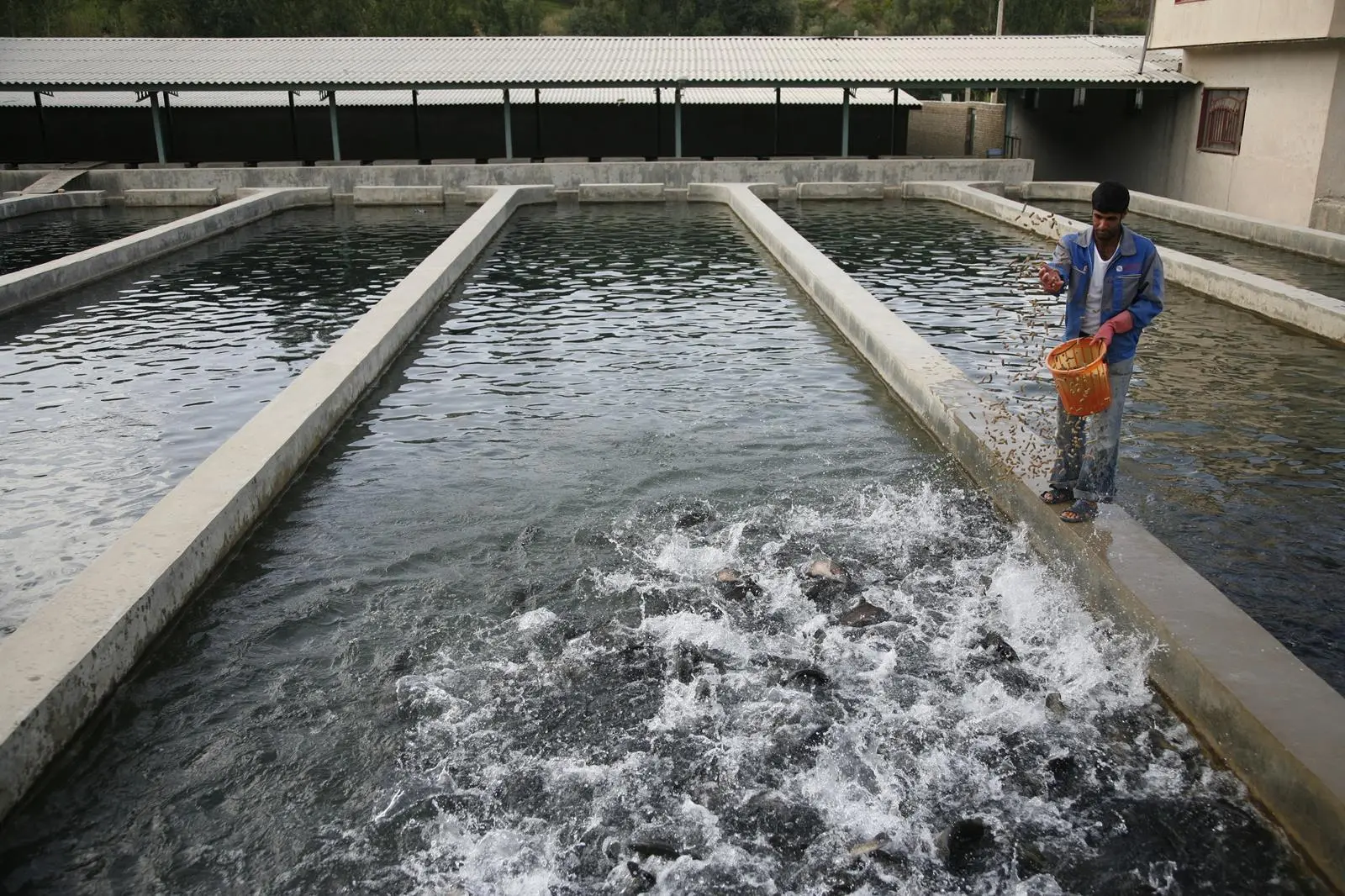
Exports for viable operations
Crucially, the planned upcoming growth should fill the Iranian treasury with much-needed foreign exchange currency. Last year, Iran exported 166,000 tonnes of fish and seafood worth $554 million. If all goes according to plan, in 1404, the exports are expected to jump to 660,000 tonnes, bringing $2.4 billion in foreign currency.
“Fishery product exports played an important role in our country’s economy in the past years when Iran faced the worst period of monetary and banking sanctions and it was difficult for exporters to return their currency to their homeland,” Ghorbanzadeh said.
Nevertheless, Iran managed to establish fish trades to numerous markets, including some large countries, like Russia and China, he added.
Now though, the Western sanctions have come at a considerable cost for Iranian fish farmers – they are currently stripped of European technologies and constantly suffer from high aquafeed prices.
Iran largely relies on imported feeds, and in order to tame domestic food inflation during the past several years, the government has been purchasing these at a subsidised rate for distribution amongst the country’s farmers.
But this system has faced a lot of criticism, not only in aquaculture circles but also in the poultry and dairy industries, as supplies were insufficient and distributed unevenly, thereby putting some operations at a disadvantage.
Therefore, in 2022, the Iranian government took steps to liberalise the aquafeed market.
Ali Akbar Khodayi, Secretary of the Iranian union of aquaculture producers and trade companies, explained that after the state control was abandoned, aquafeed prices soared, but paradoxically, Iranian producers managed to increase their exports by 33% to 30,700 tonnes in the first nine months of last year.
The key sales markets for Iranian aquafeeds are Iraq, Armenia, Uzbekistan and Afghanistan, but last year’s sales were also on the rise to Russia (including possibly through third-countries,) where the aquafeed market was in turmoil – also due to the Western sanctions, Khodayi said.
In general, it’s believed the export growth should help Iranian aquafeed companies to keep their operations running.
Additionally, the new programme is seeking to bolster the demand in the domestic fish and seafood market. IFO’s Hosseini estimates that this amounted to just 13kg per capita last year, compared to a 25kg world average.
The production growth is also expected to lower prices in the Iranian market.
In general, the Iranian authorities see bolstering domestic food security as a paramount task. Low living standards are believed to be one of the factors fuelling the unprecedented protests that have been taking place on the streets of Iran over the past several months.
Shrimp need a market
A significant part of the growth in Iranian aquaculture production in the next four years is expected to be achieved by the shrimp industry. In the current Iranian year, shrimp production is projected to rise 5% to 61,000 tonnes, IFO estimates.
The organisation also stressed that this sector has a high level of self-sufficiency, as the domestic production of shrimp feed currently stands at 90,000 tonnes, and broodstock at 5.5 million units per year.
However, as the domestic consumption of shrimp remains relatively low, almost the entire growth in production could go to expanding overseas sales.
During the first nine months of the current Iranian year, the country exported 26,400 tonnes of shrimp, 5.5% less than in the previous year. But the trade picked up pace in December when a monthly record 5,400 tonnes went to foreign markets, Khodayi said.
A decrease in exports to China – from 12,000 tonnes in the first nine months to only 3,000 tonnes in the same period of the current Iranian year – could have dealt “a fatal blow for the industry”, Khodayi highlighted. But Iran’s shrimp farms were saved by rising exports to Russia, which totalled 13,000 tonnes, compared to only 3,171 tonnes in the same period of the previous year.
The current turmoil, caused by the Ukraine conflict, could still derail the growth plans, however. Russia increased its shrimp buying from alternative destinations after imports from Western countries came to a virtual halt. But it’s also making efforts to boost domestic shrimp production so as to lessen its dependency on imports.
Khodai also advised that some countries, like Turkey, Oman and Lebanon, increased their shrimp imports from Iran, and supplies also started to go to some new markets, including Belarus and Romania.
With IFO’s plans envisaging that Iran could boost its shrimp production to 130,000 tonnes by 2025, almost all the additional volume will probably be destined for export, although its currently not clear to which markets.
In the meantime, observers believe the future of all Iranian fish farming industry will most likely depend on political developments, as the easing or lifting of Western sanctions would probably help the country fulfil its new production and export goals.
Related Articles
 AQUACULTURE
 AQUACULTURE
 AQUACULTURE