


European aquaculture leaders urge political action to halt decades-long stagnation
Europe’s leading aquaculture organisations have called for strong political leadership and urgent regulatory reform after meeting with EU Commissioner for Fisheries and Oceans Costas Kadis to discuss the future of the sector.
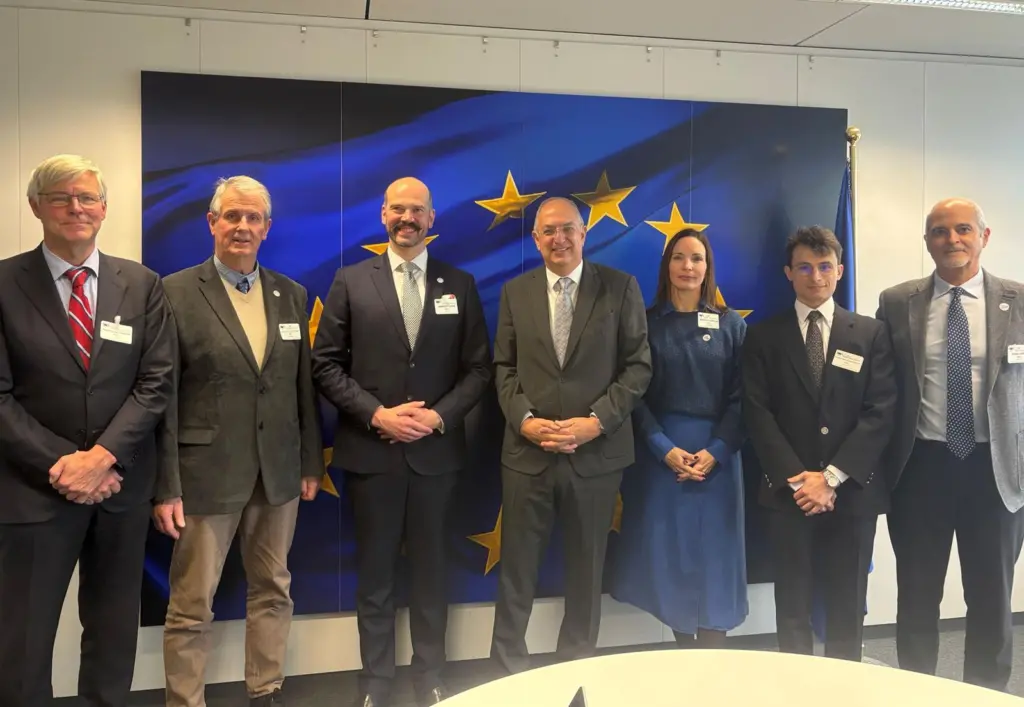
Senior representatives from the European Molluscs Producers’ Association (EMPA), the Federation of European Aquaculture Producers (FEAP), and the European Aquaculture Technology and Innovation Platform (EATIP) — together representing the full breadth of EU aquaculture — met the Commissioner to outline concrete priorities for reversing the region’s long-term production decline and strengthening competitiveness as the EU prepares its Vision for Aquaculture to 2040.
The organisations warned that, while global aquaculture output has surged, European production has stagnated or even declined for more than 25 years. They attributed this not to a lack of innovation or investment but to “excessive bureaucracy, burdensome administrative processes, fragmented initiatives and policy frameworks that generate consultations but deliver few results.”
This regulatory drag, they said, leaves European producers unable to scale up or compete with imports, despite strong demand for locally produced seafood.
The delegation urged the Commission to embed aquaculture firmly within the EU’s food policy, competitiveness strategy, environmental legislation and research agenda. They stressed that coherent spatial planning, clearer production targets and streamlined licensing processes are essential if Europe is to regain momentum.
EMPA President Addy Risseeuw called for aquaculture to be recognised as a “strategic sector” crucial to food security and climate resilience. He proposed setting quantitative goals, including a 25% increase in EU aquaculture production by 2040, backed by better site access and simpler rules.
FEAP Secretary General Javier Ojeda emphasised that without explicit targets “there is no accountability and no progress.” Environmental protection, he said, must be aligned with food production goals—not inadvertently block sustainable growth.
EATIP President Lorenzo Gennari highlighted chronic gaps in EU aquaculture research funding and poor uptake of innovation on farms. Research outputs too often fail to reach SMEs, he said, urging more coherent EU-wide priorities in the forthcoming Ocean Research and Innovation Strategy and the next Horizon Europe programme.
Commissioner Kadis welcomed the concerns and reaffirmed his commitment to elevate aquaculture within the EU’s food and blue-economy agendas.
“Aquaculture is a top priority in my portfolio, both for food security and for competitiveness in coastal and river areas,” he said, stressing the importance of reducing import dependency and making demand-driven research a central pillar of future EU programmes.
The organisations said they were encouraged by the Commissioner’s engagement but stressed that tangible action must follow. They also reviewed several major policy files now shaping the sector’s future, including the upcoming EU Vision for Fisheries and Aquaculture by 2040, the European Ocean Pact, the next Multiannual Financial Framework and the evaluation of the Common Fisheries Policy.
With Commissioner Kadis inviting regular follow-up meetings, the coalition said it stands ready to help ensure that Europe’s aquaculture ambitions translate into measurable outcomes on the ground.
Related Articles
 BUSINESS & FINANCE
 AQUACULTURE
 ICELANDIC FISHERIES EXHIBITION