



Canada’s new government must prioritise sustainable aquaculture development as a key economic and environmental opportunity.
Seafood farming has enormous potential to create jobs, boost food security, support Indigenous communities and revitalise coastal regions, says the Canadian Aquaculture Industry Alliance (CAIA), pointing out that the country currently uses just 1% of its viable ocean area for farming, compared with Norway’s third.
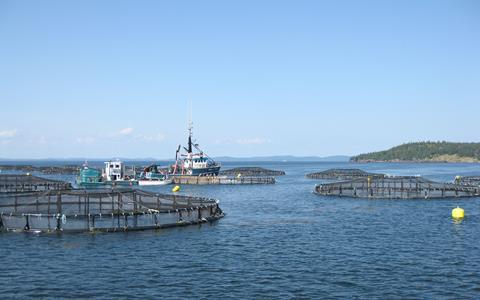
“Canada has the most cold-water aquaculture production potential in the world but we are not responsibly developing this,” said Timothy Kennedy, CAIA president & chief executive.
“It is the lowest carbon-footprint and most sustainable large-scale animal protein production in the world and should be embraced as a major opportunity for Canada.”
In its ‘Blue Economy Insights’ report, Canada’s Ocean Supercluster highlights the opportunities for aquaculture and other ocean-related biological and food innovations.
Three solutions are proposed to help boost the sector which, according to the report, has stagnated for the past twenty years.
Firstly, Agriculture and Agri-Food Canada must be given federal responsibility for all development activities so as to properly support sustainable growth. Secondly, a truly responsible pathway must be established for salmon farming in British Columbia, and thirdly, the federal shellfish management system must be modernised.
“Canada has a choice before it,” continued Kennedy, “continue to be complacent about this major opportunity, or seize the moment to make Canada more economically and food secure and revitalise coastal communities.”