



Can Trump make a bigger fish out of America?
Through its new executive order, the White House is seeking to propel the nation’s seafood sector into the big league.
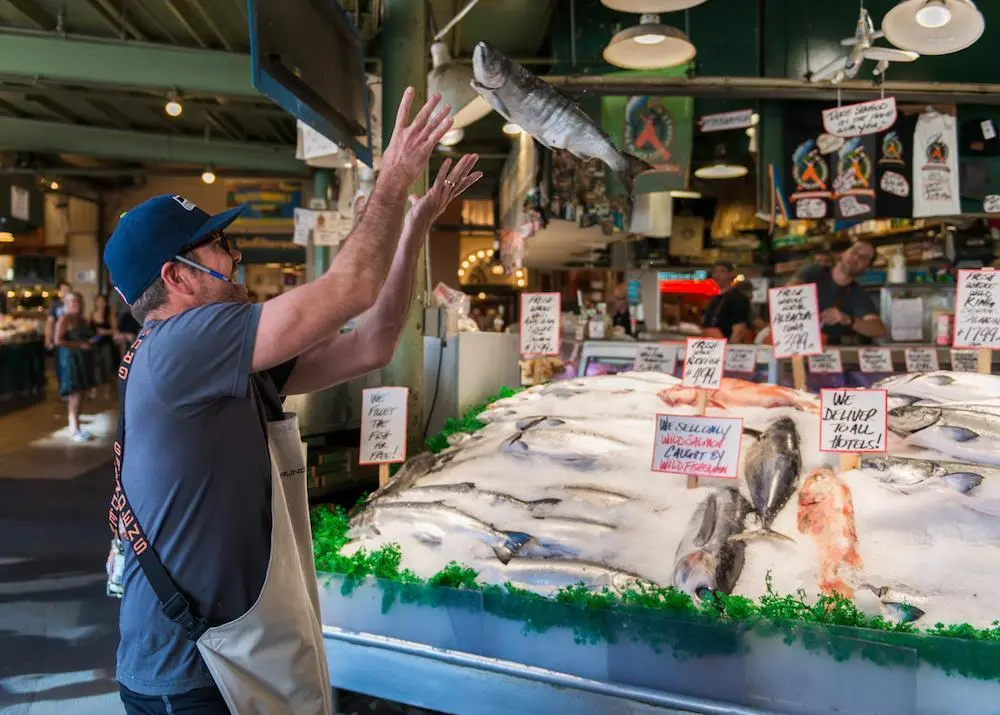
In terms of consumer demand, the United States is one of the most important seafood markets in the world, with a per capita consumption of fish and shellfish that has now reached a level of 16.1 pounds or around 7.3 kg. As positive as this trend is, it’s also recognised that only a small fraction of the products eaten in the market of some 326 million people are actually the result of domestic fisheries or aquaculture operations.
According to the latest National Oceanic and Atmospheric Administration (NOAA) analysis, US commercial capture landings in 2018 amounted to 9.4 billion pounds or 4.3 million tonnes valued at US$ 5.6 billion, and the nation’s aquaculture sector provided a further 626 million pounds (283,948 tonnes) of seafood products worth around US$ 1.5 billion. Factoring in a huge and increasing import trade and more modest and declining exports, of 6.1 billion pounds (2.8 million tonnes) and 2.9 billion pounds (1.3 million tonnes) respectively, the US supply of edible seafood that year was 12.8 billion pounds or 5.8 million tonnes.
Insisting that America needs a healthy and competitive seafood industry; one that can create jobs, food and economic wealth, President Donald Trump issued an executive order on 7th May that seeks to increase the country’s seafood production by enhancing multiple aspects of the catching sector and by laying out instructions designed to take US aquaculture to another level.
At the same time, the availability of US$ 300 million to support fishermen and related businesses hurt by the Covid-19 coronavirus was announced.
Revolutionary approach
Identifying that more than 85% of the seafood consumed in the US is imported and also that China’s aquaculture industry is producing 100 times more seafood in volume terms, the White House’s ‘Executive Order on Promoting American Seafood Competitiveness and Economic Growth’ maintains that more effective permitting related to offshore aquaculture and additional streamlining of fishery regulations have the potential to “revolutionise American seafood production, enhance rural prosperity, and improve the quality of American lives”.
Moving forward, the new order is looking to remove “outdated and unnecessarily burdensome” regulations; strengthen efforts to combat illegal, unreported, and unregulated (IUU) fishing; improve the transparency and efficiency of environmental reviews; and last but not least, renew the nation’s focus on long-term strategic planning to facilitate aquaculture projects.
To remove barriers to commercial fishing, each Regional Fishery Management Council (RFMC) is required to submit a prioritised list of recommended actions to the Secretary of Commerce within 180 days of the order that will reduce burdens on domestic fishing and to increase production within sustainable fisheries. The councils also need to include a proposal for initiating each action within one year. These actions must remain consistent with the Magnuson-Stevens Act, the Endangered Species Act, and the Marine Mammal Protection Act.
New farming locations
With regards to US aquaculture, which is currently ranked at just 17th in the world, the executive order defines five different action categories: Removing barriers to permits; establishing opportunity areas; improving regulatory transparency; updating the National Aquaculture Development Plan; and promoting aquatic animal health. Each of these has specific time frame requirements.
Most of these areas are self-explanatory, but there’s value in highlighting that any revisions to the aquaculture plan will seek to strengthen the nation’s domestic production and improve the efficiency and predictability of the permit processes.
The creation of aquaculture opportunity areas, meanwhile, tasks multiple federal agencies and officials, the RFMCs and state governments with identifying “at least two geographic areas containing locations suitable for commercial aquaculture” within a year. Furthermore, within two years of identifying those areas, the relevant agencies must have completed environmental impact statements (EIS) for those areas. Then, in the following four years, two more suitable locations for aquaculture must be identified.
To support efforts in both the wild-catch and aquaculture sectors, the executive order also calls for a new Interagency Seafood Trade Task Force to be established that will in turn create a “comprehensive interagency seafood trade strategy” that identifies opportunities to improve access to foreign markets through trade policy and negotiations. It’s also required to resolve technical barriers to US seafood exports, and to support fair market access for the country’s seafood products.
Industry support
Not surprisingly, the executive order has been broadly welcomed by many in the US seafood sector, with several statements of support issued. Among the first to voice approval, industry coalition Stronger America Through Seafood (SATS) hailed it as an important step towards improving the competitiveness of the US seafood supply chain.
SATS president andvice-president of corporate sustainability and government affairs at High Liner Foods, Bill DiMento, said, “It provides regulatory reform to maximise commercial fishing while also enabling producers to revolutionise American seafood production through sustainable offshore aquaculture. Combined, these measures will strengthen our coastal and agricultural communities and create thousands of jobs.”
DiMento added, “The United States has the technology, the skilled work force, the coastal infrastructure, and the growing market for healthy farmed seafood. Our country needs economic stimulus – not just in terms of immediate cash assistance, but also in the form of new job opportunities. Why not put Americans back to work in an emerging industry like aquaculture at a time when it is needed most?”
Meanwhile, Glenn Cooke, CEO of the Cooke family of companies, which collectively farm fish and shellfish and participate in wild fisheries across the country, is delighted that the regulatory challenges will be addressed and also that a nationwide permit authorising aquaculture activity in federal marine waters is to be implemented.
“I am very pleased President Trump has recognised that domestic farmed production of aquaculture seafood is vital to help correct the severe trade imbalance and strengthen local food security. This should be viewed as a call to state and local governments that the country is in dire need of domestically produced seafood protein and that they should find ways to support, promote, and expand this essential food sector as other countries have,” Cooke said.
Concerned parties
At the same time, some environmentalists and fishing groups are less enamoured with the package, aiming particular criticism at its aquaculture ambitions as well as the timing of the order – launched as the country contends with the ongoing coronavirus crisis.
“Instead of supporting the corporate takeover of our oceans while they hope we aren’t paying attention, the President should be focusing on providing immediate support to fishermen and small businesses suffering from the financial impacts of the pandemic,” said Rosanna Marie Neil, policy counsel for Northwest Atlantic Marine Alliance and a member of the Don’t Cage Our Ocean Coalition.
Marianne Cufone, an environmental attorney and director of the Recirculating Farms Coalition, insisted that the government should be strengthening local food security by supporting sustainable seafood, “rather than allowing corporations to pollute the ecosystems”.
Cufone said, “It’s shameful that the President is using the current pandemic to push through dangerous short-cuts to regulatory processes, while communities struggle to stay healthy, pay rent and put food on the table.”
This view was echoed by Hallie Templeton, senior oceans campaigner at Friends of the Earth, who said it was both “outrageous and unethical” for the government to use the current public health crisis “to bolster this polluting industry and its floating factory farms.”
She added, “Now is the time to prioritise our health, security, sustainable food systems, and American farmers and fishermen, not corporations.”
Overcoming deficits
The US president certainly isn’t alone in his seafood ambitions. The EU – the world’s largest consumer of seafood – has long talked about scaling up domestic production and reducing its heavy reliance on imports to meet the rising market demand. With consumption across the EU28 reaching almost 12.9 million tonnes in 2018, equating to 25.1 kg per capita, some 62.5% of the seafood products eaten by Europeans that year were imported.
With Europe’s capture fisheries only able to supply small additional volumes, aquaculture has long been seen as the route to address the colossal trade imbalance in fisheries and aquaculture products. And yet, despite a wide variety of species and production systems, a strong entrepreneurial base and markets in waiting, the sector has long been in a state of stagnation, producing a very modest 1.4 million tonnes.
Like in the US, the main hindrances to aquaculture expansion in Europe are licence-based. Across much of the bloc, the procedure for obtaining a license for a new farm is regarded as highly unpredictable, it’s often costly and can take three to four years to achieve, which in turn is regarded as the biggest deterrent to outside investment.
With previous endeavours to reignite the industry failing to hit the mark, the Aquaculture Advisory Council (AAC), which is part-funded by the EU, has been working on and refining recommendations on how to reinvigorate European aquaculture. These are intended to inform the European Commission as it drafts new guidelines for the sector.
AAC’s most recent recommendations, issued in January, include: Securing sustainable growth in aquaculture by optimising licensing procedures; enhancing the competitiveness of EU aquaculture; establishing a level playing field; improving the social acceptability of aquaculture and its products; and improving the integration of aquaculture into the environment.
With the White House’s executive order implementing some tight schedules for action, the global seafood economy will soon see if Trump has indeed administered the shot in the arm that the industry in the States has long been angling for. It’s also conceivable that it could provide part of the blueprint for other regions to reinvigorate their respective industries, not least EU aquaculture.